
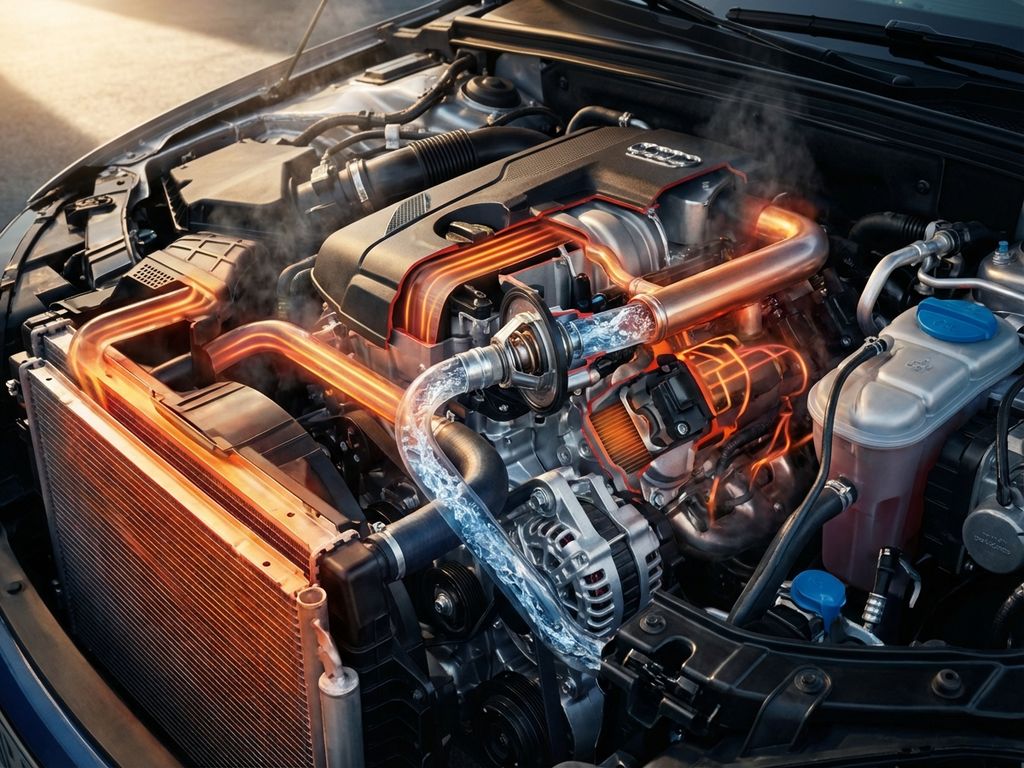
Thermal management automotive systems control heat distribution throughout vehicles to maintain optimal operating temperatures. These systems prevent overheating while ensuring engines reach ideal performance temperatures quickly. Effective automotive cooling systems, combined with precise thermostats and temperature sensors, maximise fuel efficiency and reduce emissions while protecting critical components from thermal damage.
What is thermal management in automotive applications?
Thermal management automotive systems regulate heat flow within vehicles to maintain optimal operating temperatures across all components. These systems control when heat is absorbed, stored, or released to ensure engines perform efficiently while preventing damage from excessive temperatures.
Modern vehicles generate substantial heat through combustion processes, friction, and electrical systems. Without proper thermal management systems, this heat would cause engine damage, reduced performance, and premature component failure. The system works by circulating coolant through the engine block, absorbing excess heat, and transferring it to the radiator, where it dissipates into the surrounding air.
Vehicle thermal efficiency depends on several interconnected components working together. The cooling system includes the radiator, water pump, thermostat, cooling fans, and various sensors that monitor temperatures throughout the vehicle. These elements coordinate to maintain the engine within its optimal temperature range, typically between 85–105°C for most petrol engines.
Temperature regulation extends beyond just engine cooling. Modern automotive thermal management systems also control heating for passenger comfort, transmission cooling, and increasingly complex thermal requirements in hybrid and electric vehicles, where battery temperature management becomes critical for performance and safety.
How do automotive cooling systems actually work?
Automotive cooling systems circulate coolant through the engine block to absorb heat, then pump this heated fluid to the radiator, where it cools before returning to the engine. This continuous circulation maintains consistent engine temperatures and prevents overheating during operation.
The process begins when the water pump, driven by the engine’s crankshaft, forces coolant through passages in the engine block and cylinder head. As the coolant flows around hot engine components, it absorbs thermal energy and becomes heated. This hot coolant then travels through the upper radiator hose to the radiator.
Inside the radiator, the hot coolant flows through thin tubes surrounded by metal fins. Air flowing through these fins, either from vehicle movement or cooling fans, removes heat from the coolant. The cooled fluid then returns to the engine through the lower radiator hose, completing the circulation cycle.
Engine cooling technology incorporates several control mechanisms to optimise this process. The thermostat remains closed when the engine is cold, allowing it to warm up quickly. Once the optimal temperature is reached, the thermostat opens to allow full coolant circulation. Temperature sensors monitor coolant temperature and activate cooling fans when additional airflow is needed.
The system also includes an expansion tank that accommodates coolant volume changes as temperatures fluctuate. A pressure cap maintains system pressure, which raises the coolant’s boiling point and improves heat transfer efficiency throughout the automotive cooling system.
Why are thermostats so important for engine performance?
Car thermostat function directly impacts engine performance by controlling coolant flow to maintain optimal operating temperatures. Thermostats prevent overcooling during warm-up and ensure consistent temperatures during operation, which maximises fuel efficiency, reduces emissions, and protects engine components from thermal stress.
When engines run too cold, fuel combustion becomes incomplete, leading to increased emissions and poor fuel economy. Cold engines also experience increased wear as oil does not flow properly and metal components have not expanded to their designed tolerances. The thermostat prevents this by blocking coolant flow until the engine reaches its optimal temperature range.
Engine temperature control through precise thermostat operation ensures complete fuel combustion. Modern engines are designed to operate within narrow temperature ranges where fuel injection, ignition timing, and emissions control systems work most effectively. Maintaining these temperatures reduces harmful emissions while maximising power output and efficiency.
Quality automotive thermostats respond quickly to temperature changes, opening gradually as coolant temperature rises. This prevents sudden temperature fluctuations that could cause thermal shock to engine components. The thermostat’s response characteristics directly influence how quickly engines warm up and how stable operating temperatures remain under varying load conditions.
Thermostat failure can cause significant engine problems. A stuck-closed thermostat leads to overheating and potential engine damage, while a stuck-open thermostat causes the engine to run too cold, reducing efficiency and increasing wear. Regular thermostat maintenance ensures reliable engine temperature control and optimal vehicle performance.
What happens when automotive thermal management fails?
Thermal management system failures cause engine overheating, reduced fuel efficiency, increased emissions, and potential catastrophic engine damage. Failed components like thermostats, water pumps, or radiators disrupt heat removal, leading to temperatures that exceed safe operating limits and compromise engine reliability.
Engine overheating is the most immediate consequence of thermal management failure. When coolant cannot circulate properly or heat removal becomes insufficient, engine temperatures rise rapidly. This can cause cylinder head warping, blown head gaskets, and complete engine seizure in severe cases.
Reduced fuel efficiency occurs when thermal management systems malfunction. Engines running too hot or too cold cannot achieve optimal combustion, leading to increased fuel consumption and reduced power output. Cold-running engines from failed thermostats can increase fuel consumption by up to 15% while producing higher emissions.
Component damage accelerates when thermal management fails. Excessive heat breaks down engine oil, reducing its lubricating properties and causing increased wear on moving parts. Overheating can also damage sensors, gaskets, and electronic components throughout the engine bay.
The cascading effects of thermal management failure often result in expensive repairs extending far beyond the original failed component. What might start as a simple thermostat replacement can escalate to major engine rebuilds if overheating causes secondary damage to pistons, valves, or the engine block itself.
How is thermal management technology evolving for modern vehicles?
Modern thermal management technology incorporates electronic controls, smart thermostats, and integrated systems that adapt to driving conditions in real time. These advanced systems optimise temperature control for improved efficiency, reduced emissions, and enhanced performance across conventional, hybrid, and electric vehicles.
Smart thermostats represent a significant advancement in engine cooling technology. Unlike traditional mechanical thermostats that respond only to coolant temperature, electronic thermostats can consider engine load, ambient temperature, and driving conditions. This allows for more precise temperature control and faster warm-up times.
Hybrid and electric vehicles require sophisticated thermal management for battery systems alongside traditional engine cooling. Battery thermal management maintains optimal operating temperatures for lithium-ion batteries, which is crucial for performance, longevity, and safety. These systems often include dedicated cooling circuits and heat pumps.
Variable-flow water pumps adjust coolant circulation based on actual cooling requirements rather than engine speed. This reduces parasitic losses and improves fuel efficiency while maintaining proper engine temperatures. Electronic controls can modify pump speed to match cooling demands precisely.
Integrated thermal management systems coordinate multiple heat sources and cooling requirements throughout the vehicle. These systems can redirect waste heat from the engine to warm the passenger compartment or battery pack, improving overall energy efficiency and reducing the load on heating systems.
How BTT Solutions helps with automotive thermal management
We specialise in manufacturing high-precision thermal management components that optimise vehicle performance and efficiency. Our patented thermostat technologies and comprehensive automotive solutions help manufacturers achieve superior engine temperature control while meeting stringent emissions and fuel efficiency requirements.
Our expertise covers the complete spectrum of automotive thermal management:
- Precision thermostats designed for exact temperature control and rapid response times
- Advanced temperature sensors that integrate seamlessly with modern engine management systems
- Custom thermal management solutions for conventional, hybrid, and electric vehicle applications
- End-to-end development support from concept through production implementation
- Global manufacturing capabilities ensuring consistent quality and reliable supply chains
With eight manufacturing locations worldwide and over 600 skilled professionals, our company delivers thermal management components that meet the evolving demands of the automotive industry. Our solutions reduce energy consumption through efficient coolant flow management and help vehicle manufacturers achieve their sustainability goals.
Contact us today to discover how our automotive thermal management expertise can enhance your vehicle’s performance, efficiency, and reliability through precision-engineered components designed for demanding automotive applications.


