
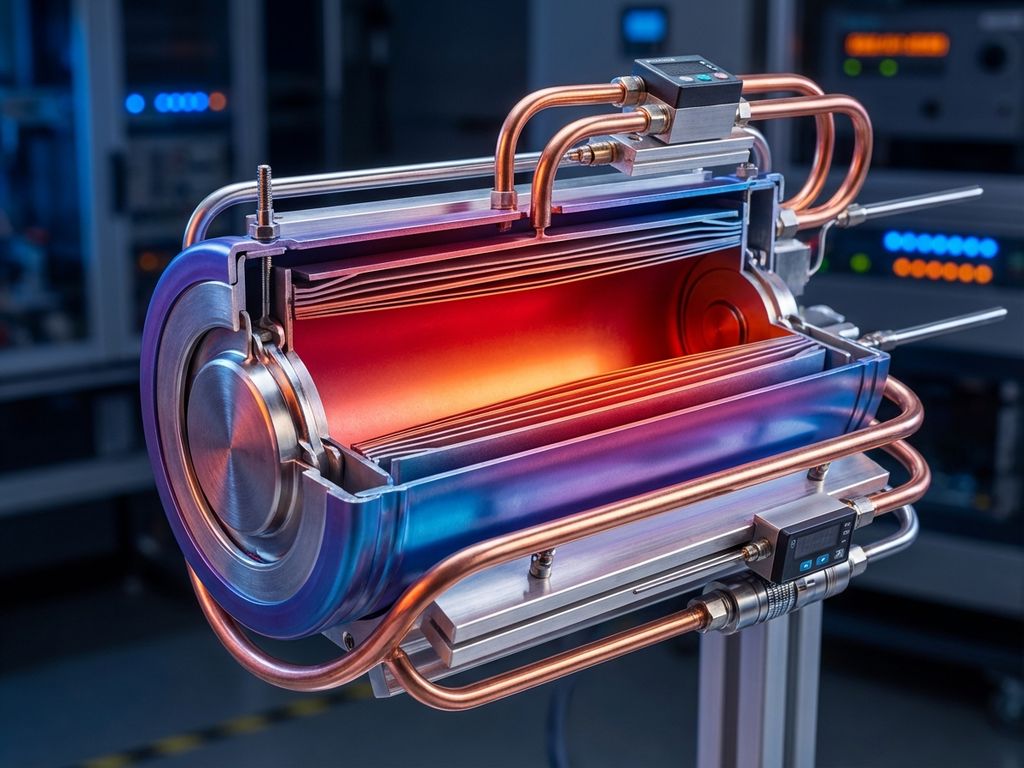
Thermal management is essential for battery performance because it maintains optimal operating temperatures that directly affect capacity, charging speed, safety, and lifespan. Without proper temperature control, batteries experience reduced efficiency, shortened life cycles, and potential safety hazards. Effective thermal regulation ensures batteries operate within their ideal temperature range for maximum performance and reliability across automotive, industrial, and consumer applications.
What is thermal management and why does it matter for batteries?
Thermal management in battery systems involves controlling and maintaining optimal temperatures through various heating, cooling, and insulation techniques. This process is crucial because battery chemistry is highly sensitive to temperature variations, affecting everything from power output to safety performance.
Battery cells generate heat during charging and discharging cycles through internal resistance and chemical reactions. When temperatures rise beyond optimal ranges, the electrolyte becomes less stable, internal resistance increases, and chemical reactions can become unpredictable. Conversely, cold temperatures slow down ion movement, reducing available capacity and power delivery.
Temperature control plays a vital role in battery efficiency by maintaining the chemical processes at their most effective rates. Proper thermal regulation prevents thermal runaway scenarios, extends battery lifespan, and ensures consistent performance across different environmental conditions. This becomes particularly important in demanding applications like electric vehicles, where batteries must perform reliably in various climates while maintaining safety standards.
How does temperature affect battery performance and efficiency?
Temperature directly influences battery capacity, charging speed, and discharge rates through its impact on internal chemical processes. Battery efficiency peaks within specific temperature ranges, typically between 15–25°C for most lithium-ion batteries, where ion mobility and chemical reactions occur at optimal rates.
Higher temperatures initially increase battery capacity and reduce internal resistance, allowing faster charging and higher discharge rates. However, excessive heat accelerates chemical degradation, leading to permanent capacity loss and shortened lifespan. The electrolyte breaks down more rapidly, and unwanted side reactions consume active materials.
Cold temperatures present different challenges by slowing ion movement through the electrolyte, effectively reducing available capacity and power output. Charging becomes less efficient and potentially dangerous at very low temperatures, as lithium plating can occur on the anode, permanently damaging the battery.
Operating outside optimal temperature ranges creates a performance penalty that compounds over time. Batteries consistently exposed to temperature extremes lose capacity faster, require longer charging times, and deliver less reliable power output when needed most.
What happens when batteries overheat or get too cold?
Overheating causes accelerated chemical degradation, reduced lifespan, and potential thermal runaway, where batteries generate uncontrollable heat. Cold temperatures drastically reduce capacity and can cause permanent damage during charging through lithium plating.
When batteries overheat above 60°C, several dangerous processes begin. The electrolyte starts decomposing, creating gas buildup and pressure within cells. Internal resistance increases, generating even more heat in a dangerous feedback loop. In extreme cases, thermal runaway occurs where batteries reach temperatures exceeding 150°C, potentially causing fires or explosions.
Cold conditions below 0°C present different but equally serious issues. Battery capacity can drop by 20–50% as ion movement slows dramatically. Charging cold batteries risks lithium metal deposition on anodes, creating permanent capacity loss and potential short circuits. The electrolyte may become viscous or even freeze, stopping normal operation entirely.
Temperature optimization prevents these extreme scenarios by maintaining batteries within safe operating windows. Both hot and cold extremes accelerate aging processes, reduce performance, and create safety risks that proper thermal management systems are designed to prevent.
What are the most effective battery thermal management strategies?
Active cooling systems, passive heat dissipation, and integrated heating solutions provide the most effective approaches to maintaining optimal battery temperatures. These strategies work together to create comprehensive thermal solutions that adapt to different operating conditions and applications.
Active cooling methods include liquid cooling systems that circulate coolant through plates or tubes near battery cells, removing heat efficiently during high-demand periods. Air cooling uses fans and ducting to move heated air away from batteries, while refrigerated cooling provides precise temperature control for demanding applications.
Passive strategies focus on heat dissipation through thermal interface materials, heat sinks, and phase change materials that absorb excess heat without requiring power. These approaches work continuously without energy consumption, providing baseline temperature regulation.
Heating systems become essential in cold climates, using resistive heaters or heat pumps to warm batteries before operation. Smart thermal management systems combine multiple approaches, using sensors and controllers to automatically adjust cooling or heating based on real-time conditions and usage patterns.
How do different battery types handle thermal management challenges?
Lithium-ion batteries require the most sophisticated thermal management due to their sensitivity to temperature extremes and thermal runaway risks. Lead-acid batteries are more temperature-tolerant but still benefit from temperature optimization to maintain capacity and prevent sulfation in extreme conditions.
Lithium-ion chemistries vary in their thermal characteristics. Lithium iron phosphate (LiFePO4) batteries handle higher temperatures better but lose more capacity in cold conditions. Nickel-based lithium batteries offer better cold-weather performance but require more careful thermal monitoring to prevent overheating.
Lead-acid batteries naturally generate less heat and handle temperature variations more gracefully, but extreme cold reduces their capacity significantly. They benefit from heating in cold climates and ventilation in hot conditions to prevent electrolyte evaporation.
Automotive applications demand the most robust thermal management systems due to varying environmental conditions and high power demands. Industrial applications often allow for more controlled environments but require reliable long-term temperature control. Consumer electronics prioritize compact, lightweight thermal solutions that do not compromise device portability while maintaining safety standards.
How BTT Solutions advances battery thermal management technology
We provide precision thermal management components specifically designed for battery applications, including advanced thermostats, temperature sensors, and integrated cooling solutions. Our technology ensures optimal battery temperature control across automotive, industrial, and consumer applications through innovative thermal regulation systems.
Our comprehensive battery thermal management solutions include:
- Precision thermostats that maintain exact temperature ranges for optimal battery performance
- Advanced temperature sensors providing real-time monitoring and control feedback
- Integrated cooling systems designed for space-efficient battery pack installations
- Thermal interface materials optimized for battery applications
- Custom thermal management solutions for specific battery chemistries and applications
Our proven thermal management expertise helps manufacturers achieve superior battery performance, extended lifespan, and enhanced safety across diverse applications. Contact us today to discuss how our thermal solutions can optimize your battery systems for maximum efficiency and reliability, backed by our decades of thermal management expertise.
Related Articles
- How do thermostat components perform under extreme temperature cycling?
- What is the relationship between compression ratio and engine efficiency?
- What is the role of housing materials in thermostat component design?
- What factors should you consider when selecting thermostat elements?
- Why is thermal management important for fuel efficiency?


