
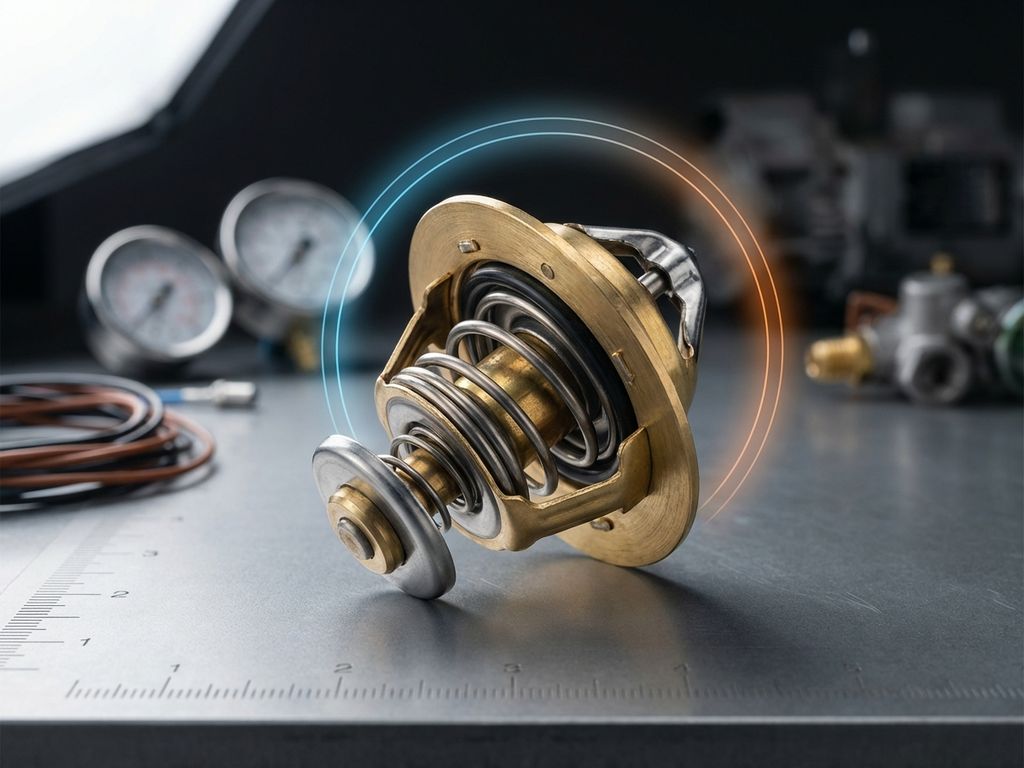
Wax element thermostat response time typically ranges from 30 seconds to 3 minutes, depending on temperature differential and design specifications. The thermal actuator response varies based on wax composition, housing materials, and operating conditions. Understanding these response times helps optimize thermostat performance across automotive, industrial, and household applications where precise temperature control is essential.
What is the typical response time of a wax element thermostat?
Most wax element thermostats achieve full actuation within 1 to 3 minutes when exposed to their target opening temperature. The initial response begins within 15–30 seconds, with the wax element starting to expand as heat transfers through the housing material.
The complete thermostat opening time depends on several key factors. Temperature differential plays a crucial role – larger gaps between ambient and target temperatures naturally extend response times. A thermostat designed to open at 80°C will respond faster when transitioning from 70°C than from 40°C.
Application requirements also influence acceptable response times. Automotive cooling systems typically require faster thermal response times, often achieving full opening within 60–90 seconds. Industrial heating systems may accommodate longer response periods of 2–3 minutes, while household radiator thermostats often operate effectively with response times between 90 seconds and 2 minutes.
The wax element technology itself affects performance timing. Higher-quality wax formulations with optimized thermal expansion properties deliver more consistent response characteristics across varying temperature ranges. Manufacturing precision in the wax motor assembly also contributes to reliable, predictable opening times.
How does temperature affect wax element thermostat response time?
Higher temperature differentials significantly accelerate wax element thermostat response times, while smaller temperature gaps result in slower actuation. The relationship between ambient temperature and target opening temperature directly influences how quickly thermal energy transfers through the system.
Heat transfer rates increase with larger temperature differences. When a thermostat encounters rapid temperature changes, the wax element receives thermal energy more quickly, causing faster expansion and shorter response times. Conversely, gradual temperature increases lead to slower thermal response times as heat transfer occurs more gradually.
Thermal mass considerations also impact performance. The surrounding fluid or air temperature affects how efficiently heat reaches the wax element. In automotive applications, engine coolant temperature changes create rapid thermal input, enabling quick thermostat response. Industrial systems with larger thermal masses may experience more gradual temperature transitions.
Ambient conditions influence overall thermostat efficiency. Cold-start conditions require longer warm-up periods before the wax element begins responding. Operating in consistently warm environments reduces the thermal differential needed for activation, potentially improving response consistency.
The thermal conductivity of housing materials affects heat transfer efficiency. Brass and copper housings conduct heat more effectively than plastic alternatives, contributing to improved thermal actuator response times across various operating conditions.
What factors slow down or speed up thermostat response times?
Wax composition, housing material selection, and thermal conductivity are the primary factors influencing thermostat response speed. Design optimization in these areas can significantly improve or hinder performance timing.
Material choices directly impact thermal transfer efficiency:
- Wax formulation quality affects expansion rates and consistency
- Housing materials with higher thermal conductivity transfer heat faster
- Thinner housing walls reduce thermal barriers
- Surface area optimization improves heat exchange
Environmental conditions also play crucial roles. Fluid flow rates around the thermostat influence heat transfer – higher flow rates typically improve response times by maintaining consistent temperature exposure. Conversely, stagnant conditions can slow thermal response.
Manufacturing tolerances affect performance consistency. Precise wax element positioning ensures optimal heat exposure, while poor assembly can create thermal barriers that delay response. Quality control in production directly correlates with reliable thermostat opening times.
Installation factors influence real-world performance. Proper positioning within the system ensures adequate thermal contact. Incorrect installation angles or obstructed heat transfer paths can significantly extend response times beyond design specifications.
Why do some wax element thermostats respond faster than others?
Advanced manufacturing techniques and precision engineering create significant variations in wax element thermostat response times. Premium thermostats incorporate optimized wax formulations and enhanced thermal transfer designs that outperform standard alternatives.
Engineering approaches differ substantially between manufacturers. Some focus on maximizing surface area contact between the wax element and housing, improving heat transfer efficiency. Others optimize wax composition for specific temperature ranges, creating faster expansion rates within target operating windows.
Manufacturing precision affects response consistency. Tighter tolerances in wax element positioning and housing dimensions ensure predictable thermal response times. Premium manufacturers invest in quality control processes that maintain consistent performance across production batches.
Design innovations contribute to performance advantages. Some thermostats incorporate multiple thermal transfer paths, reducing response times through enhanced heat distribution. Advanced wax motor designs may include thermal conductivity enhancers that accelerate expansion rates.
Application-specific optimization also creates performance differences. Automotive thermostats often feature faster-responding designs compared to general industrial applications. Specialized formulations for specific operating temperature ranges can significantly improve response characteristics within those parameters.
How BTT Solutions optimizes wax element thermostat response times
We engineer high-precision wax element thermostats with optimized thermal response characteristics for automotive, industrial, and household applications. Our advanced thermal management technologies deliver superior performance through innovative design approaches and precision manufacturing. Learn more about BTT and our commitment to engineering excellence.
Our optimization approach includes:
- Proprietary wax formulations engineered for specific temperature ranges and faster expansion rates
- Enhanced thermal conductivity housing materials that accelerate heat transfer
- Precision manufacturing tolerances ensuring consistent response times across all units
- Application-specific designs optimized for automotive, industrial, and household requirements
- Advanced testing protocols validating performance under various operating conditions
We combine decades of thermal management expertise with cutting-edge engineering to deliver thermostats that exceed industry standards for response time and reliability. Our end-to-end solutions ensure optimal performance across diverse applications while maintaining the precision required for modern thermal management systems. Explore our complete range of products to find the ideal thermal management solution for your specific requirements.
Contact us today to discover how our advanced wax element thermostat technology can improve your thermal management system performance and efficiency.
Related Articles
- What is the impact of carbon buildup on long-term engine efficiency?
- How does consistent temperature control reduce engine wear?
- Why are regulators focusing on cold start emissions in new standards?
- What are the most common automotive thermostat component failures?
- How do you optimize thermal management for emissions reduction?


