
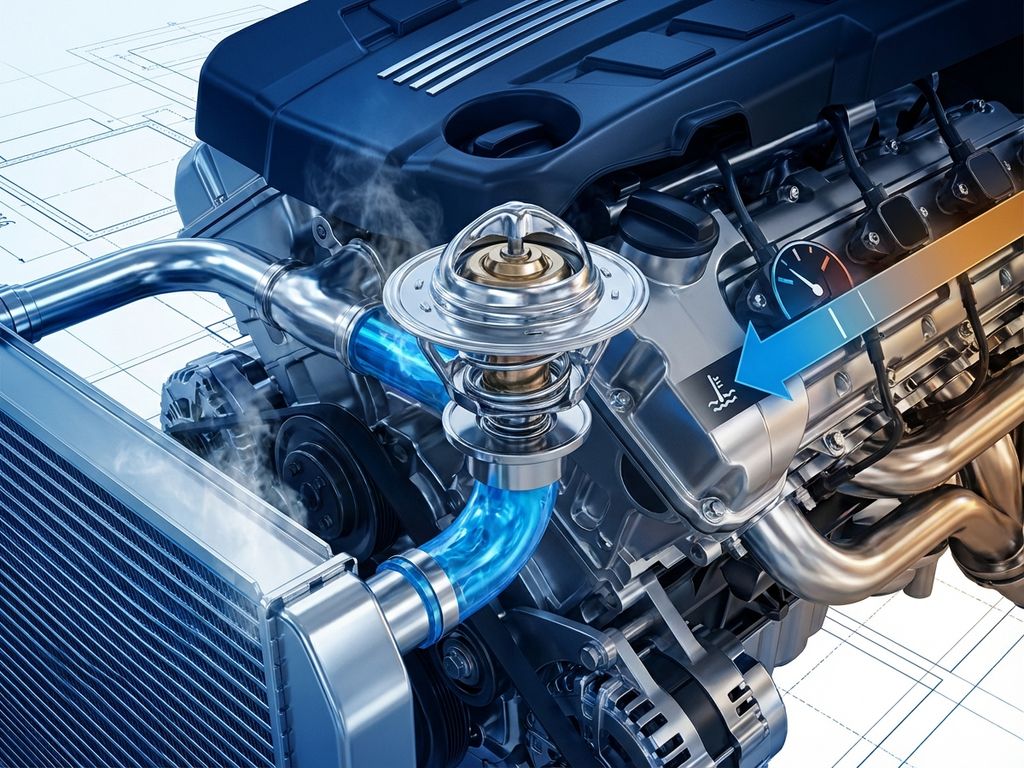
A thermostat regulates engine temperature by controlling coolant flow between the engine and radiator. When the engine is cold, the thermostat remains closed, allowing coolant to circulate only within the engine block for rapid warm-up. Once optimal operating temperature is reached (typically 160°F to 195°F), the thermostat opens to allow coolant to flow through the radiator for cooling. This precise temperature control ensures optimal engine performance and fuel efficiency, and prevents overheating damage.
What is an engine thermostat and why is it essential?
An automotive thermostat is a temperature-controlled valve that manages coolant flow within the engine cooling system. This small but crucial component acts as a gatekeeper, determining when coolant should circulate through the radiator based on engine temperature.
The thermostat serves several critical functions that directly impact vehicle performance. During cold starts, it keeps coolant circulating only within the engine block, allowing the engine to reach optimal operating temperature quickly. This rapid warm-up reduces wear, improves fuel efficiency, and ensures proper lubrication throughout the engine.
Without a properly functioning thermostat, engines would either run too cold or overheat. Cold engines suffer from poor fuel economy, increased emissions, and accelerated component wear. Conversely, overheating can cause severe damage, including warped cylinder heads, blown head gaskets, and complete engine failure.
How does a thermostat valve actually open and close?
The thermostat valve operation relies on a wax pellet mechanism that expands and contracts with temperature changes. Inside the thermostat housing is a sealed chamber containing a special wax that melts at a precise temperature, typically between 160°F and 195°F depending on the engine specifications.
When coolant temperature rises to the thermostat’s opening point, the wax pellet begins to melt and expand. This expansion pushes against a piston connected to the valve, gradually opening the passage between the engine and radiator. Spring tension works against this expansion, ensuring the valve closes when temperatures drop.
The opening process happens gradually rather than instantly. Most thermostats begin opening at their rated temperature and reach the fully open position about 20°F higher. This progressive operation prevents sudden temperature fluctuations that could stress engine components or cause uncomfortable cabin heating variations.
What happens when coolant flows through the thermostat system?
Coolant temperature control follows a carefully orchestrated sequence that begins the moment you start your engine. Initially, the thermostat remains closed, creating a bypass circuit that circulates coolant only through the engine block, cylinder head, and heater core.
During this warm-up phase, the water pump continues circulating coolant through the restricted circuit, allowing engine temperature to rise efficiently. The heater core receives flow during this period, which is why you can get cabin heat even before the thermostat opens to the radiator.
Once the thermostat opens, coolant flows through the upper radiator hose into the radiator’s cooling fins. Air flowing through the radiator removes heat from the coolant, which then returns to the engine through the lower radiator hose. The bypass circuit typically remains partially open even when the thermostat is fully open, maintaining consistent flow patterns.
Why do engines need different thermostat opening temperatures?
Different engines require specific engine thermal management strategies based on their design, intended use, and operating environment. High-performance engines often use thermostats that open at higher temperatures (around 195°F) to maintain tighter temperature control and improve combustion efficiency.
Climate considerations also influence thermostat selection. Vehicles operating in extremely cold environments may benefit from higher opening temperatures to ensure adequate cabin heating and prevent overcooling during highway driving. Conversely, vehicles in hot climates might use slightly lower opening temperatures to provide additional cooling margin.
Engine design factors such as combustion chamber configuration, cooling system capacity, and intended operating loads all influence optimal thermostat temperature. Modern engines with precise fuel injection and emission control systems particularly benefit from the consistent operating temperatures that thermostats help maintain.
What are the warning signs of thermostat failure?
Thermostat malfunction symptoms typically manifest as temperature irregularities that affect both engine performance and cabin comfort. The most common sign is engine overheating, which occurs when a thermostat fails in the closed position, preventing coolant flow to the radiator.
Conversely, a thermostat stuck open causes the engine to run too cold, resulting in poor fuel economy, rough idling, and inadequate cabin heating. You might notice the temperature gauge reading lower than normal or taking an unusually long time to reach operating temperature.
Other warning signs include:
- Temperature gauge fluctuations during normal driving
- Coolant leaking around the thermostat housing
- Unusual engine noises during warm-up
- Poor heater performance despite adequate coolant levels
- Check engine lights related to engine temperature sensors
How do BTT solutions advance engine temperature regulation?
We specialize in developing precision engine temperature regulation technology that optimizes thermal management across automotive, industrial, and residential applications. Our advanced thermostat components feature enhanced wax pellet formulations and precision-engineered valve mechanisms that provide superior temperature control accuracy.
Our comprehensive thermal management solutions include:
- High-precision thermostats with tighter temperature tolerances for improved fuel efficiency
- Advanced temperature sensors that provide real-time feedback for optimal engine performance
- Patented valve designs that reduce engine overheating prevention risks through reliable operation
- Custom thermal management components tailored to specific engine requirements
- Integrated solutions that optimize coolant flow patterns for maximum efficiency
Whether you need automotive thermostat solutions for high-performance engines or industrial thermal management components, our engineering expertise ensures optimal temperature regulation that enhances performance while reducing energy consumption. Contact us today to discuss how our precision thermal management technology can improve your engine cooling system’s efficiency.
Related Articles
- How do thermostat components perform under extreme temperature cycling?
- What testing standards apply to thermostat components in 2026?
- What is the impact of electrical contact resistance on thermostat accuracy?
- What is engine efficiency and why should businesses care
- What are the benefits of thermal management systems?


