
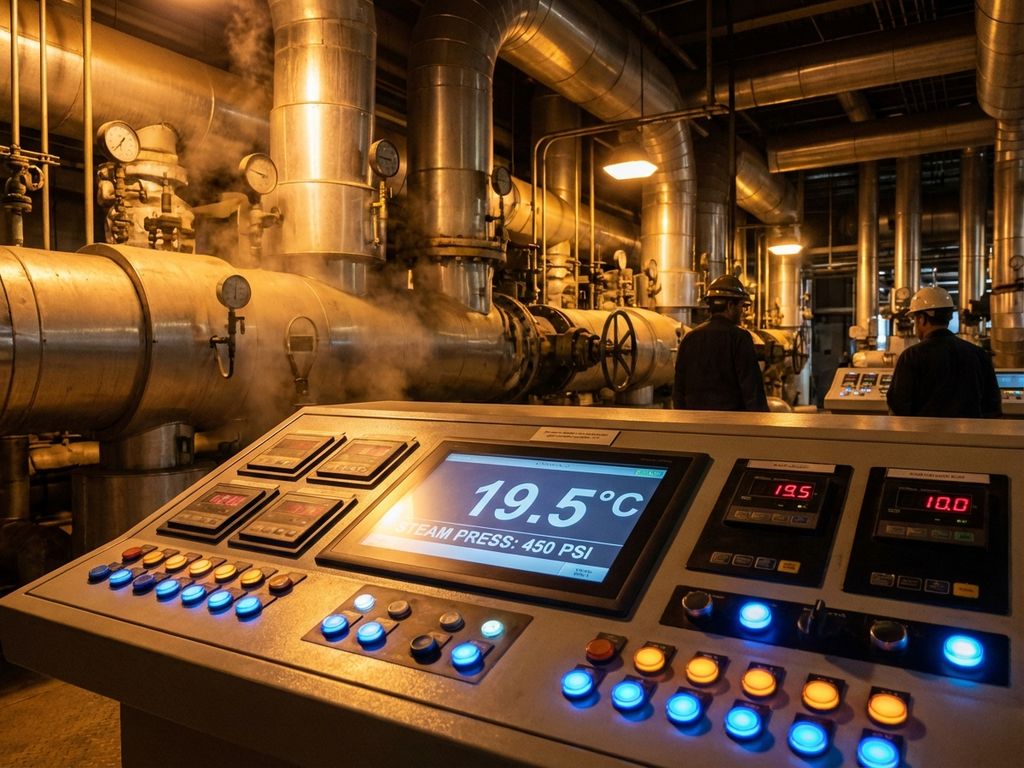
Thermostats in industrial systems maintain precise temperature control through automated sensing and regulation mechanisms. Unlike residential units, industrial thermostats handle extreme temperatures, provide superior accuracy, and integrate with complex thermal management systems. They use mechanical or electronic sensors to trigger heating or cooling responses, ensuring optimal process conditions across manufacturing, chemical processing, and industrial automation applications.
What is a thermostat and how does it function in industrial environments?
A device that regulates temperature in industrial settings is fundamentally different from residential thermostats. Industrial thermostat control systems are precision engineered devices that automatically manage heating and cooling equipment in manufacturing and processing environments. These sophisticated units continuously monitor ambient temperatures, process heat levels, and equipment thermal conditions, then activate appropriate control responses to maintain predetermined setpoints with exceptional accuracy. Modern factory temperature control systems can handle multiple zones simultaneously while providing real time data logging and remote monitoring capabilities essential for industrial automation.
Understanding how temperature is controlled in industrial applications requires knowledge of several sophisticated mechanisms. Bimetallic strips represent the foundation of mechanical temperature control, expanding and contracting with thermal changes to create precise switching action in traditional units. Electronic sensors utilize advanced thermocouples, resistance temperature detectors, and thermistors to provide highly accurate digital temperature readings that instantly trigger automated control responses. These sensors can detect temperature variations as small as 0.01°C, enabling the precise control temperatures required for sensitive manufacturing processes like pharmaceutical production or semiconductor fabrication.
The fundamental difference between residential and industrial temperature control systems lies in their engineering specifications and operational capabilities. Industrial units withstand extreme temperature ranges from -40°C to 300°C or higher, compared to typical home thermostats handling modest 10°C to 35°C ranges. They deliver precision accuracy within ±0.1°C rather than the ±1°C tolerance found in residential models. Industrial thermostats feature robust construction with sealed enclosures, corrosion resistant materials, and electromagnetic interference protection to survive harsh manufacturing environments including chemical plants, steel mills, and food processing facilities where standard thermostats would fail within days.
These advanced devices integrate seamlessly with building management systems and process control networks, enabling comprehensive remote monitoring and centralized temperature control across entire manufacturing facilities. Their exceptional durability ensures reliable operation in challenging conditions including dusty environments, high humidity areas, and chemically aggressive atmospheres where conventional thermostats would quickly deteriorate. This integration capability allows facility managers to monitor and adjust temperatures from central control rooms, reducing labor costs while improving response times to temperature variations that could impact product quality or equipment performance.
How do different types of industrial thermostats control temperature?
Industrial temperature control systems utilize various sophisticated mechanisms depending on their design specifications and application requirements. Mechanical thermostats harness the physical expansion properties of specialized materials, while electronic versions employ digital sensors and programmable logic controllers for precise management of thermal systems. The choice between these technologies depends on factors including required accuracy, environmental conditions, integration needs, and budget considerations. Modern facilities often combine multiple thermostat types to optimize control temperatures across different production zones and processes.
Mechanical thermostats rely on bimetallic elements or gas-filled bulbs that expand with heat. When temperatures rise above setpoints, these components physically move switches to activate cooling systems. As temperatures drop, contraction reverses the process, triggering heating equipment. These units provide reliable operation without external electrical power but offer limited precision.
Electronic thermostats utilize advanced temperature sensors connected to microprocessors that continuously compare actual readings against programmed setpoints. They provide superior accuracy and enable complex programming schedules essential for industrial automation thermal control. Digital displays present real time temperature data and system status information, while multiple sensor inputs allow simultaneous monitoring of different production zones. These systems can log temperature data for quality control documentation, send alerts when conditions deviate from specifications, and integrate with enterprise resource planning systems for comprehensive facility management.
Programmable systems offer advanced scheduling capabilities essential for modern industrial automation and temperature control optimization. Operators can configure different temperature profiles for various production shifts, weekend operations, maintenance periods, or seasonal requirements. These systems automatically adjust setpoints based on production schedules, reducing energy consumption during non production hours while ensuring rapid temperature recovery when operations resume. Non programmable units maintain constant setpoints but require manual adjustment for process changes, making them suitable for applications with stable temperature requirements like storage areas or simple heating applications.
Specialized thermostat types serve specific industrial needs:
- Capillary thermostats use liquid-filled sensing tubes for remote temperature monitoring in hazardous locations
- Gas-filled units provide explosion-proof operation in volatile environments
- Digital thermostats integrate with facility networks for centralized process temperature control
What are the key benefits of proper thermostat control in industrial systems?
Proper industrial temperature control delivers substantial energy efficiency improvements, equipment protection, and operational consistency across manufacturing facilities. Well calibrated temperature regulation solutions reduce energy consumption by 15 to 25 percent while preventing costly equipment damage from thermal stress and ensuring consistent product quality. Advanced control systems also provide real time monitoring capabilities that enable predictive maintenance, reducing unexpected downtime and extending equipment lifespan. These benefits translate directly into improved profit margins and competitive advantages in today’s demanding manufacturing environment.
Energy efficiency represents the most immediate and measurable benefit of effective industrial temperature control systems. Precise thermostats prevent unnecessary heating and cooling cycles, reducing power consumption and operational costs by maintaining optimal temperatures without overshooting setpoints. This eliminates energy waste from excessive thermal cycling that can account for 20 to 30 percent of total facility energy costs. Modern programmable systems automatically adjust temperatures based on production schedules, further reducing energy consumption during non production hours while ensuring rapid recovery when operations resume.
Equipment protection stems from preventing overheating and overcooling damage. Industrial machinery, electronic components, and process equipment operate within specific temperature ranges. Thermostats safeguard these investments by maintaining proper thermal conditions, extending equipment lifespan, and reducing replacement costs.
Process consistency ensures product quality and manufacturing reliability. Many industrial processes require stable temperatures for chemical reactions, material processing, or quality control. Accurate thermostat control eliminates temperature variations that could compromise product specifications or cause batch failures.
Maintenance cost reduction occurs through several mechanisms:
- Reduced thermal stress on equipment components
- Prevention of condensation-related corrosion
- Elimination of temperature-induced material fatigue
- Decreased frequency of emergency repairs
Compliance with industrial safety standards becomes achievable through documented temperature control. Many regulations require specific thermal conditions for worker safety, environmental protection, or product safety. Properly functioning thermostats provide the control and monitoring capabilities necessary for regulatory compliance.
Why do industrial thermostats fail and how can you prevent temperature control issues?
Industrial thermostats fail primarily due to calibration drift, sensor degradation, mechanical wear, and environmental factors. Common prevention strategies include regular calibration checks, protective housing maintenance, sensor cleaning, and environmental monitoring to extend equipment lifespan and maintain accuracy.
Calibration drift occurs gradually as sensors age or experience thermal cycling stress in industrial temperature control systems. Temperature readings become inaccurate, causing improper heating or cooling responses that directly impact how temperature is controlled across manufacturing processes. This affects process temperature control and energy efficiency throughout factory operations. Prevention involves quarterly calibration verification using certified reference thermometers and annual professional recalibration to maintain precise temperature regulation.
Sensor degradation happens through corrosion, contamination, or physical damage in demanding industrial environments where precise temperature control is critical. Chemical exposure, moisture ingress, or vibration can compromise sensor accuracy, affecting how effectively a device that regulates temperature maintains optimal conditions. Regular sensor inspection and cleaning prevent most degradation issues. Replace sensors showing physical damage or persistent calibration problems to ensure reliable industrial temperature monitoring.
Mechanical wear affects moving parts in traditional thermostats used for industrial automation thermal control applications. Bimetallic strips fatigue, switch contacts corrode, and linkages wear loose over time in continuous operation environments. These failures cause erratic operation or complete system shutdown, disrupting critical factory temperature control processes. Preventive maintenance includes systematic inspection schedules, lubrication protocols, and component replacement strategies:
- Annual inspection of mechanical components
- Contact cleaning and adjustment
- Lubrication of moving parts where specified
- Replacement of worn components before failure
Environmental factors accelerate thermostat degradation. Excessive humidity, temperature extremes, dust accumulation, and chemical exposure damage sensitive components. Proper enclosure selection, regular cleaning, and environmental monitoring minimize these impacts.
Troubleshooting strategies include systematic testing of sensor accuracy, electrical connections, and mechanical operation. Document temperature readings, system responses, and maintenance activities to identify patterns indicating impending failures. This enables proactive replacement before critical system disruption.
How BTT Solutions helps with industrial temperature control systems
We specialize in precision thermal management components designed specifically for demanding industrial applications. Our advanced thermostat technology optimizes thermal performance across manufacturing, processing, and automation systems through patented solutions that enhance energy efficiency and operational reliability.
Our comprehensive industrial temperature control solutions include:
- High-precision thermostat components with accuracy ratings exceeding standard industrial requirements
- Patented thermal management technology that reduces energy consumption through efficient fluid control
- Customized temperature sensors designed for specific industrial environments and applications
- Integrated control systems that seamlessly connect with existing facility automation networks
- Robust construction engineered to withstand harsh industrial conditions while maintaining calibration accuracy
Our solutions optimize industrial heating and cooling systems by storing thermal energy only when needed and directing heat precisely where required. This approach significantly reduces operational costs while improving system reliability and process consistency.
Contact our thermal management specialists to discuss how our precision thermostat components can enhance your industrial temperature control systems and reduce energy consumption across your operations. Our team at BTT Solutions brings decades of experience in developing innovative thermal control solutions for industrial applications.
Related Articles
- How are thermostat components manufactured at scale?
- Should thermostat testing procedures differ for industrial versus residential use?
- What is the role of piston ring wear in engine efficiency loss?
- Why do heavy-duty engines require robust thermal protection?
- How do electric vehicle thermostats differ from gas engines?


