
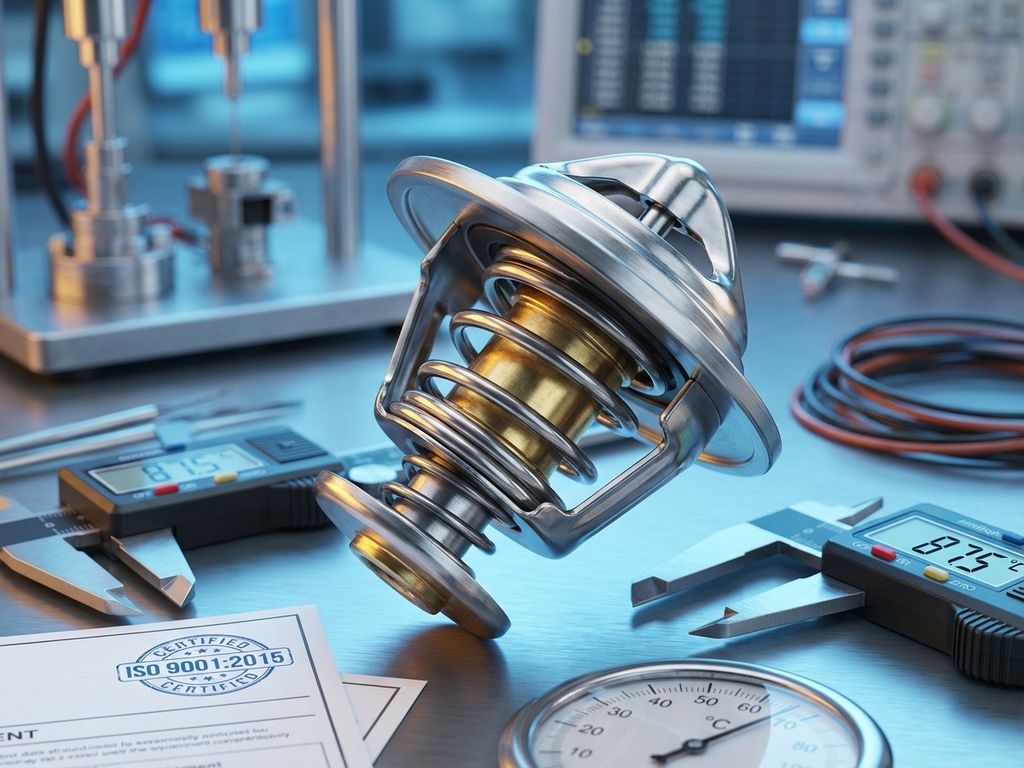
Automotive thermostat testing follows rigorous international standards to ensure these critical thermal management components perform reliably across all operating conditions. Testing protocols evaluate temperature accuracy, durability, flow characteristics, and environmental resistance. These automotive testing requirements guarantee that thermostats maintain optimal engine performance while meeting stringent automotive component standards for safety and emissions control.
What are the main testing standards for automotive thermostats?
International automotive thermostat testing relies on several key standards, including ISO 2418 for temperature control devices, SAE J1831 for thermostat performance, ASTM D7896 for automotive cooling systems, and JIS D1606 for Japanese market requirements. These standards establish uniform testing protocols for thermostat quality control across global automotive markets.
The International Organization for Standardization provides the foundational framework through ISO 2418, which specifies testing methods for automotive cooling system thermostats. This standard covers opening temperature accuracy, hysteresis limits, and performance consistency requirements that manufacturers must meet.
SAE International’s J1831 standard focuses specifically on automotive thermostat testing protocols, detailing procedures for temperature calibration, response time measurement, and durability assessment. This standard ensures thermostats perform consistently across different vehicle applications and operating environments.
ASTM International contributes through D7896, which addresses thermal management testing for automotive cooling systems. This standard emphasizes the integration of thermostats within complete cooling system performance rather than isolated component testing.
Regional standards like JIS D1606 provide market-specific requirements that complement international protocols. These standards account for local climate conditions, driving patterns, and regulatory requirements that affect thermostat performance expectations.
How do manufacturers test thermostat opening and closing temperatures?
Temperature testing involves precision calibration using controlled water baths with accuracy within ±0.5°C. Manufacturers monitor thermostat valve movement through displacement sensors while gradually increasing and decreasing water temperature to verify that opening and closing points match specifications exactly.
The testing process begins with thermostats mounted in specialized fixtures that allow unrestricted valve movement while maintaining proper coolant flow simulation. Calibrated temperature sensors monitor both the testing medium and thermostat body temperature to ensure accurate readings.
Opening temperature verification requires gradual heating at controlled rates, typically 1–2°C per minute, to simulate realistic engine warm-up conditions. Testing equipment records the precise temperature when initial valve movement occurs, ensuring it falls within the specified tolerance range.
Hysteresis testing measures the temperature difference between opening and closing points. This automotive testing protocol verifies that thermostats close at appropriate temperatures during engine cool-down, preventing overcooling that reduces efficiency.
Response time measurement evaluates how quickly thermostats react to temperature changes. Advanced testing systems use high-speed data acquisition to capture valve movement timing, ensuring thermostats respond rapidly enough to maintain optimal engine temperatures during varying load conditions.
What durability tests must automotive thermostats pass?
Automotive thermostats undergo extensive endurance testing, including thermal cycling between extreme temperatures, vibration testing simulating engine operation, pressure testing for cooling system compatibility, and long-term reliability assessments spanning millions of operational cycles.
Thermal cycling tests expose thermostats to repeated temperature variations from -40°C to +120°C, simulating years of seasonal operation and daily driving cycles. This automotive component standards testing reveals potential material fatigue, seal degradation, and calibration drift over time.
Vibration testing subjects thermostats to multi-axis mechanical stress patterns that replicate engine mounting conditions. Testing frequencies range from idle vibrations through high-RPM operation, ensuring thermostats maintain calibration accuracy despite constant mechanical stress.
Pressure testing validates thermostat integrity under cooling system operating pressures up to 2.5 bar. This testing confirms that thermostat housings, seals, and valve mechanisms withstand pressure cycling without leakage or performance degradation.
Accelerated life testing compresses years of operation into weeks through continuous cycling under elevated stress conditions. These tests predict long-term reliability and identify potential failure modes before thermostats reach production vehicles.
Contamination resistance testing exposes thermostats to coolant additives, corrosion inhibitors, and potential contaminants such as metal particles or organic deposits. This ensures consistent performance throughout extended service intervals.
Why do automotive thermostats need flow rate testing?
Flow rate testing ensures thermostats maintain proper coolant circulation at all operating positions, preventing hot spots and ensuring adequate heat transfer. Testing measures flow characteristics through partially and fully open positions to verify cooling system performance across all engine operating conditions.
Coolant circulation depends on unrestricted flow through thermostat openings when valves reach operating positions. Flow testing uses calibrated flow meters and pressure sensors to measure actual coolant flow rates compared to cooling system requirements.
Partial opening flow characteristics are particularly critical during engine warm-up phases. Testing verifies that thermostats provide graduated flow increases as temperatures rise, maintaining optimal engine temperatures without sudden temperature swings.
Pressure drop measurement across thermostat assemblies ensures minimal flow restriction when fully open. Excessive pressure drops can reduce cooling system effectiveness and increase pump load, affecting overall engine efficiency.
Flow testing also validates thermostat performance under varying coolant viscosities caused by temperature changes. Cold, viscous coolant requires different flow characteristics than hot, low-viscosity coolant to maintain consistent thermal management.
Dynamic flow testing simulates real-world conditions, including varying engine speeds, load conditions, and coolant temperatures. This comprehensive approach ensures thermostats support optimal thermal management across complete vehicle operating ranges.
How do environmental testing standards affect thermostat design?
Environmental testing requirements drive thermostat design considerations for temperature extremes, humidity exposure, corrosion resistance, and contamination tolerance. These standards ensure thermostats function reliably across global climate conditions and with diverse coolant formulations used in automotive applications.
Temperature extreme testing validates thermostat operation from Arctic cold starts at -40°C through desert operation exceeding 50°C ambient temperatures. Design materials and manufacturing processes must accommodate this thermal range without performance degradation.
Humidity testing exposes thermostats to saturated moisture conditions that can affect electronic components and promote corrosion. Modern thermostats with integrated sensors require enhanced sealing and moisture-resistant materials to maintain accuracy.
Salt spray corrosion testing simulates coastal and winter road salt exposure that can degrade thermostat housings and internal components. This testing drives material selection toward corrosion-resistant alloys and protective coatings.
Coolant compatibility testing ensures thermostats function properly with various coolant formulations, including traditional ethylene glycol, newer organic acid technologies, and hybrid formulations. Different coolant chemistries can affect seal materials and metal components.
Contamination exposure testing validates performance when thermostats encounter particulates, oil contamination, or coolant degradation products. Design features such as self-cleaning valve seats and contamination-resistant mechanisms emerge from these testing requirements.
How BTT Solutions helps with automotive thermostat testing compliance
We provide comprehensive automotive thermostat testing capabilities that ensure full compliance with international standards while supporting product development and quality assurance throughout the manufacturing process. Our testing facilities maintain calibration traceability and certification for all major automotive testing protocols.
Our products include:
- Complete temperature calibration and accuracy verification using precision-controlled testing environments
- Durability and endurance testing with accelerated life cycle simulation capabilities
- Flow rate characterization and pressure drop analysis across all operating conditions
- Environmental testing including temperature extremes, humidity, and corrosion resistance validation
- Compliance verification for ISO, SAE, ASTM, and regional automotive standards
- Development of custom testing protocols for specific application requirements
Our quality assurance processes combine automated testing equipment with expert analysis to identify potential issues before production. We maintain testing documentation that supports automotive supplier certification and regulatory compliance requirements.
Contact us today to discuss your automotive thermostat testing requirements and learn how our comprehensive testing capabilities can support your product development and compliance objectives.
Related Articles
- How do thermostat components perform under extreme temperature cycling?
- How does corrosion resistance factor into thermostat material selection?
- Should thermostat testing procedures differ for industrial versus residential use?
- How do automotive thermostats compare to industrial temperature control systems?
- What materials are used in wax element thermostats?


