
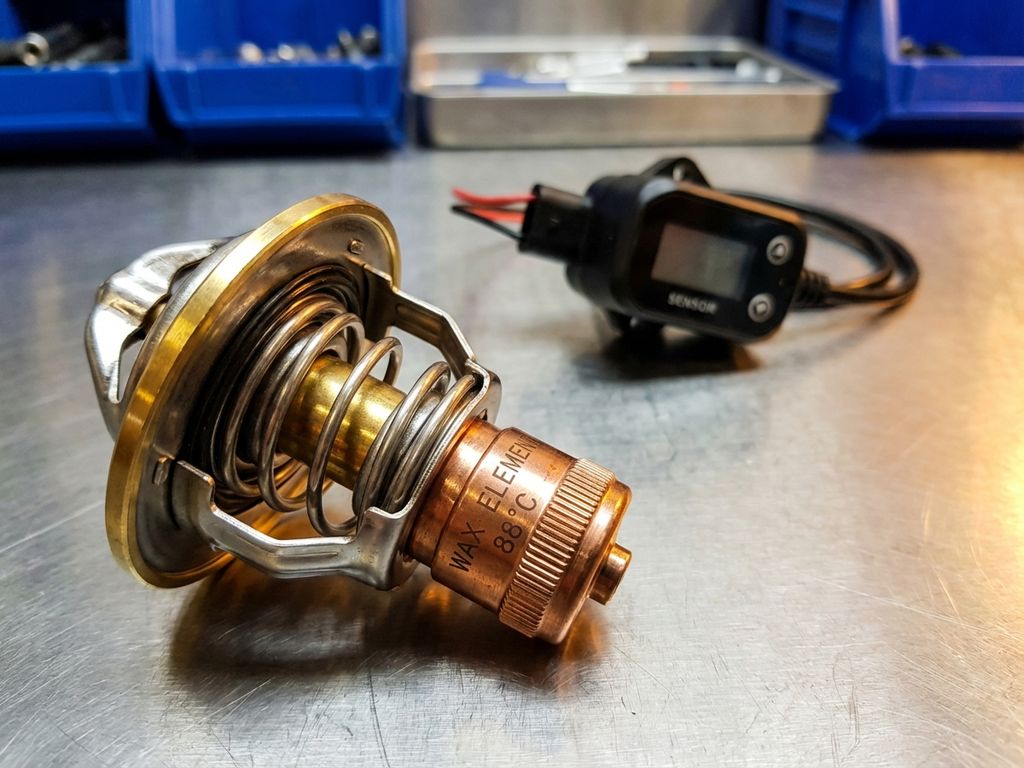
When designing engine cooling systems, OEMs face a critical decision that impacts reliability, cost, and long-term performance. Should they opt for the latest electronic thermal control components or stick with proven wax element thermostats that have powered automotive applications for decades? This choice affects everything from manufacturing costs to field reliability, making it one of the most important decisions in thermal management.
The answer is not always obvious, especially when electronic alternatives promise advanced features and precise control. However, many experienced OEMs continue to choose wax element thermostats for compelling reasons that go beyond simple tradition. Understanding these factors can help engineers make informed decisions about OEM thermostat selection that balance innovation with proven performance.
1: Superior reliability in extreme conditions
Wax element thermostats excel where electronic alternatives often struggle: in the harsh environment of modern engine cooling systems. These mechanical devices operate through the thermal expansion of specially formulated wax, creating a response that remains consistent across temperature extremes, vibration, and mechanical stress that would challenge electronic sensors.
Unlike electronic thermostats that rely on complex circuits and sensors prone to failure, wax elements function through pure physics. When coolant temperature rises, the wax expands predictably, opening the valve without requiring any electrical input. This mechanical operation eliminates failure modes common in electronic systems, such as sensor drift, circuit corrosion, or electromagnetic interference that can plague modern vehicles packed with electronic components.
The robust nature of wax element technology means these automotive thermostats continue operating reliably even when exposed to coolant contamination, electrical system faults, or extreme temperature cycling that might disable electronic alternatives. This reliability translates directly into reduced warranty claims and enhanced customer satisfaction.
2: Cost-effective manufacturing and maintenance
Manufacturing costs play a significant role in OEM decision-making, and wax element thermostats offer substantial economic advantages. These devices require fewer precision components than their electronic counterparts, eliminating expensive sensors, control circuits, and protective housings needed for electronic systems. The simpler manufacturing process reduces both initial tooling costs and ongoing production expenses.
Maintenance requirements further enhance the economic appeal of wax elements. Electronic thermostats often require periodic calibration, software updates, or sensor replacement throughout their service life. Wax element thermostats, however, operate maintenance-free for the engine’s entire lifespan, reducing service costs and eliminating the need for specialised diagnostic equipment.
The absence of electronic components also means no risk of obsolescence due to changing technology standards or discontinued electronic parts. This long-term availability provides OEMs with supply chain stability that is particularly valuable for replacement parts markets and long-production-run vehicles.
3: Proven track record across decades of use
Wax element technology brings the confidence of extensive field testing across millions of vehicles and countless operating conditions. This proven performance history provides OEMs with reliable data about failure rates, service intervals, and real-world durability that newer electronic alternatives simply cannot match.
Automotive manufacturers value this established track record because it reduces development risk and accelerates time to market for new vehicles. Rather than investing in extensive testing programmes for unproven electronic systems, OEMs can rely on decades of successful wax element performance data to validate their thermal management solutions.
The consistency of wax element performance across different vehicle platforms and applications also simplifies engineering processes. Design teams can confidently specify these components knowing their behaviour is well understood and documented, reducing the need for extensive prototype testing and validation cycles.
4: What makes wax elements immune to electrical failures?
The fundamental advantage of wax element thermostats lies in their complete independence from electrical systems. These devices operate purely through mechanical principles, using the predictable thermal expansion properties of specially engineered wax compounds to control coolant flow.
When coolant temperature reaches the thermostat’s opening point, the wax element expands, pushing against a piston that opens the valve. As temperatures drop, the wax contracts, allowing spring pressure to close the valve. This mechanical operation continues reliably regardless of battery voltage, electrical system faults, or electromagnetic interference that could disrupt electronic alternatives.
This electrical independence becomes particularly valuable in modern vehicles, where complex electronic systems can interact in unexpected ways. Wax element thermostats eliminate any possibility of thermal control being affected by compatibility issues between electronic vs wax thermostats, software glitches, or electrical system failures that might compromise engine protection.
5: Simplified integration with existing systems
Integration simplicity represents another significant advantage of wax element thermostats in OEM applications. These devices install directly into existing cooling system designs without requiring additional wiring harnesses, control modules, or software programming that electronic alternatives demand.
The mechanical nature of wax elements means they interface seamlessly with traditional engine cooling systems, requiring only proper mechanical mounting and coolant flow paths. There is no need for electrical connections, sensor calibration, or integration with engine management systems that could complicate installation or create additional failure points.
This straightforward integration reduces manufacturing complexity and eliminates potential assembly errors related to electrical connections or software configuration. Production line workers can install wax element thermostats using standard mechanical assembly techniques without requiring specialised training for electronic system integration.
How BTT Solutions delivers advanced wax element solutions
We specialise in manufacturing high-precision wax element thermostats that meet the demanding requirements of modern OEM applications. Our expertise combines decades of thermal management experience with advanced manufacturing capabilities to deliver reliable, cost-effective solutions for engine cooling systems.
Our comprehensive OEM support includes:
- Custom wax formulations engineered for specific temperature response characteristics
- Advanced manufacturing processes ensuring consistent performance and quality
- Global production capabilities with local support for major automotive markets
- Comprehensive testing and validation services for new applications
- Long-term supply agreements providing parts availability throughout vehicle lifecycles
Ready to explore how proven wax element technology can enhance your thermal management solutions? Contact our engineering team to discuss your specific OEM requirements and discover why leading manufacturers continue to choose wax element thermostats for their most demanding applications.
Related Articles
- What role does temperature stability play in engine protection?
- What role do thermal components play in meeting real-world driving emission tests?
- Why are regulators focusing on cold start emissions in new standards?
- How do thermostats handle stop-and-go city driving stress?
- How are OEMs targeting fuel efficiency gains through thermal components?


