
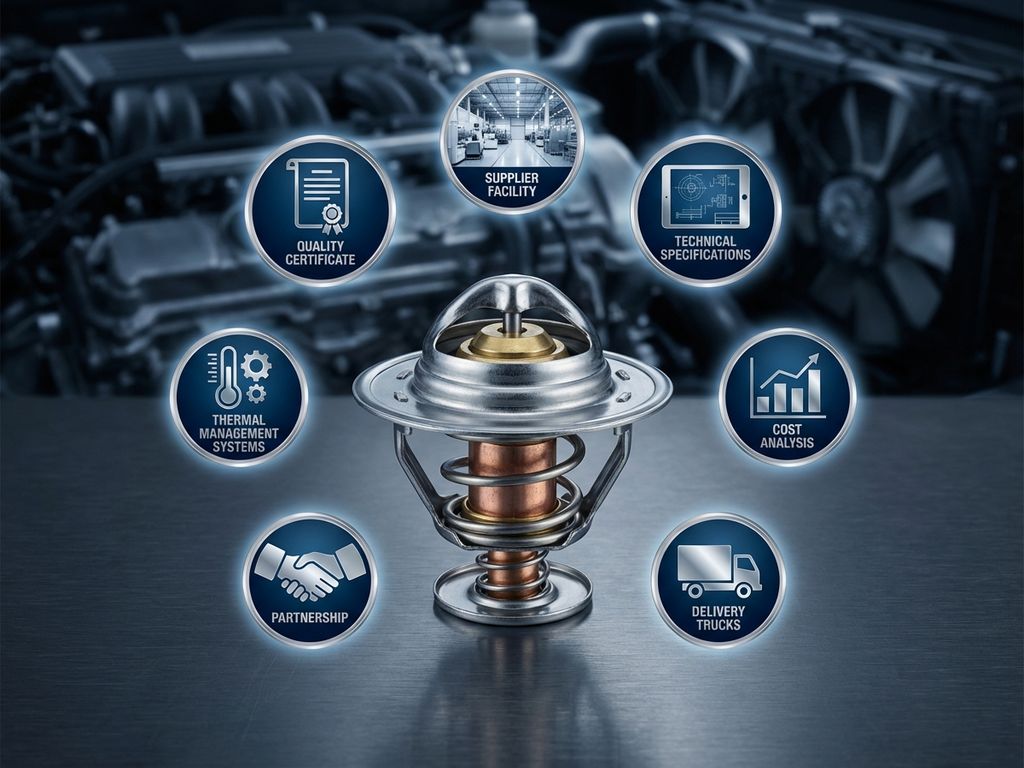
Choosing the right automotive thermostat supplier can make or break your vehicle’s performance and reliability. With modern engines operating under increasingly demanding conditions and stricter emissions regulations, the quality of thermal management components has never been more critical. A poor supplier choice doesn’t just affect immediate production costs – it impacts everything from fuel economy to warranty claims and brand reputation.
The automotive thermal management industry has evolved significantly, with thermostats now playing crucial roles in hybrid and electric vehicle systems alongside traditional combustion engines. Whether you’re an OEM or an aftermarket supplier, understanding what separates exceptional thermostat suppliers from mediocre ones will help you make informed decisions that benefit your entire operation.
Why choosing the right thermostat supplier determines vehicle performance
Your thermostat supplier selection directly influences how well vehicles manage engine temperatures, control emissions, and deliver optimal fuel economy. Modern automotive thermal management systems require precise temperature control to meet stringent performance standards while maintaining reliability over hundreds of thousands of miles.
When engines operate outside their optimal temperature ranges, fuel consumption increases, emissions rise, and component wear accelerates. A quality automotive thermostat supplier understands these relationships and designs components that respond accurately to temperature changes while withstanding the harsh conditions found in today’s engine bays.
The ripple effects of supplier choice extend beyond the thermostat itself. Poor-quality thermal management components can trigger warranty claims, damage brand reputation, and create costly recalls. Conversely, partnering with the right supplier enhances vehicle reliability and customer satisfaction.
1: Technical expertise and engineering capabilities
Evaluating a potential automotive thermostat supplier begins with examining their engineering team’s qualifications and R&D capabilities. Look for suppliers who employ thermal management specialists with a deep understanding of automotive applications and proven track records in developing innovative solutions.
The best suppliers maintain dedicated research facilities where they can develop custom solutions for specific automotive applications. They should demonstrate expertise in materials science, fluid dynamics, and thermal analysis. Ask about their experience with different engine types, including traditional combustion engines, hybrids, and electric vehicle cooling systems.
Strong suppliers also invest in simulation software and testing equipment that allow them to model thermal behaviour before physical prototyping. This capability reduces development time and ensures more reliable products reach the market.
2: Quality certifications and industry standards
Automotive thermostat suppliers must hold relevant quality certifications to ensure consistent manufacturing processes and product quality. The most important certification is IATF 16949, which specifically addresses automotive quality management systems and demonstrates a supplier’s commitment to industry best practices.
Beyond IATF 16949, look for suppliers with ISO 14001 environmental management certification and ISO 45001 occupational health and safety standards. These certifications indicate a comprehensive approach to quality that extends beyond just product manufacturing to encompass environmental responsibility and workplace safety.
Thermostat quality standards also include specific automotive testing requirements. Suppliers should demonstrate compliance with relevant OEM specifications and industry standards for durability, temperature accuracy, and materials compatibility. Ask to see certification documents and audit reports from recent assessments.
3: Manufacturing capacity and scalability
Assessing a supplier’s production capabilities involves examining their facility locations, equipment sophistication, and ability to scale production according to demand fluctuations. The geographic distribution of manufacturing facilities can significantly impact delivery times and logistics costs, particularly for global automotive manufacturers.
Modern thermostat manufacturing requires sophisticated equipment for precision assembly and quality control. Suppliers should utilize automated production lines with integrated testing systems that verify each component’s performance before shipping. This automation ensures consistency while reducing labour-related quality variations.
Scalability becomes crucial during new model launches or seasonal demand changes. Effective suppliers maintain sufficient capacity buffers and can quickly adjust production schedules without compromising quality. They should also demonstrate experience managing supply chain partnerships that support rapid scaling when needed.
4: Product testing and validation processes
Comprehensive testing and validation procedures separate professional automotive thermostat suppliers from less capable competitors. Suppliers should maintain testing facilities equipped for thermal cycling, vibration testing, corrosion resistance evaluation, and long-term durability assessment.
Thermal cycling tests simulate the repeated heating and cooling cycles that thermostats experience during normal vehicle operation. These tests reveal potential failure modes and help optimize component designs for maximum reliability. Vibration testing ensures thermostats continue functioning properly despite engine-generated vibrations and road conditions.
Quality assurance protocols should include statistical process control methods that monitor production consistency and identify potential issues before they affect delivered products. Ask suppliers to explain their testing methodologies and provide examples of validation reports from recent projects.
5: What supply chain resilience factors should you evaluate?
Supply chain stability has become increasingly important following recent global disruptions. Evaluate potential suppliers’ risk management strategies, including their approaches to backup sourcing, inventory management, and contingency planning for various disruption scenarios.
Strong suppliers maintain relationships with multiple raw material sources and component suppliers to avoid single points of failure. They should demonstrate experience managing supply chain disruptions and provide examples of how they’ve maintained delivery schedules during challenging periods.
Geographic diversification of suppliers and manufacturing facilities also contributes to supply chain resilience. Suppliers with operations across different regions can better manage localised disruptions while maintaining consistent product availability.
6: Innovation and future technology roadmap
The automotive industry’s rapid evolution toward electrification and autonomous vehicles requires suppliers who invest in new technologies and adapt to changing requirements. Evaluate suppliers’ research initiatives and their alignment with broader automotive industry trends.
Electric vehicle thermal management presents unique challenges, including battery cooling requirements and different operating temperature ranges. Suppliers should demonstrate an understanding of these applications and show evidence of developing relevant solutions.
Innovation extends beyond product development to include manufacturing processes, quality control methods, and digital integration capabilities. Forward-thinking suppliers leverage data analytics, IoT connectivity, and predictive maintenance technologies to enhance their operations and customer service.
7: Cost structure and long-term partnership value
Analysing total cost of ownership provides a more complete picture than simple unit pricing. Consider factors including delivery costs, inventory requirements, quality-related expenses, and technical support availability when evaluating different automotive OEM supplier options.
Transparent pricing structures help build trust and enable better long-term planning. Suppliers should clearly explain how they calculate costs and provide visibility into factors that might affect pricing over time, such as raw material fluctuations or volume changes.
Value-added services like technical support, training programmes, and collaborative development projects can significantly enhance partnership value. These services often distinguish exceptional suppliers from those competing primarily on price.
How BTT Solutions helps with automotive thermostat supplier selection
We bring decades of expertise in automotive thermal management to help you navigate thermostat supplier selection challenges. Our comprehensive approach combines technical excellence with proven manufacturing capabilities and global supply chain resilience.
Our capabilities include:
- Advanced R&D facilities with thermal simulation and testing equipment
- IATF 16949 certification and comprehensive quality management systems
- Global manufacturing presence with scalable production capabilities
- Extensive experience in both traditional and electric vehicle applications
- Transparent cost structures with competitive total cost of ownership
Contact our team today to discuss your specific thermostat requirements and discover how our thermal management expertise can enhance your vehicle performance and reliability.
Related Articles
- Can a faulty thermostat mechanism increase vehicle emissions?
- What is the impact of electrical contact resistance on thermostat accuracy?
- Why is thermal management considered part of emission control strategy?
- How do fleet operators measure fuel efficiency improvements?
- 5 Ways Map-Controlled Thermostats Improve Fuel Efficiency and Reduce Emissions


