
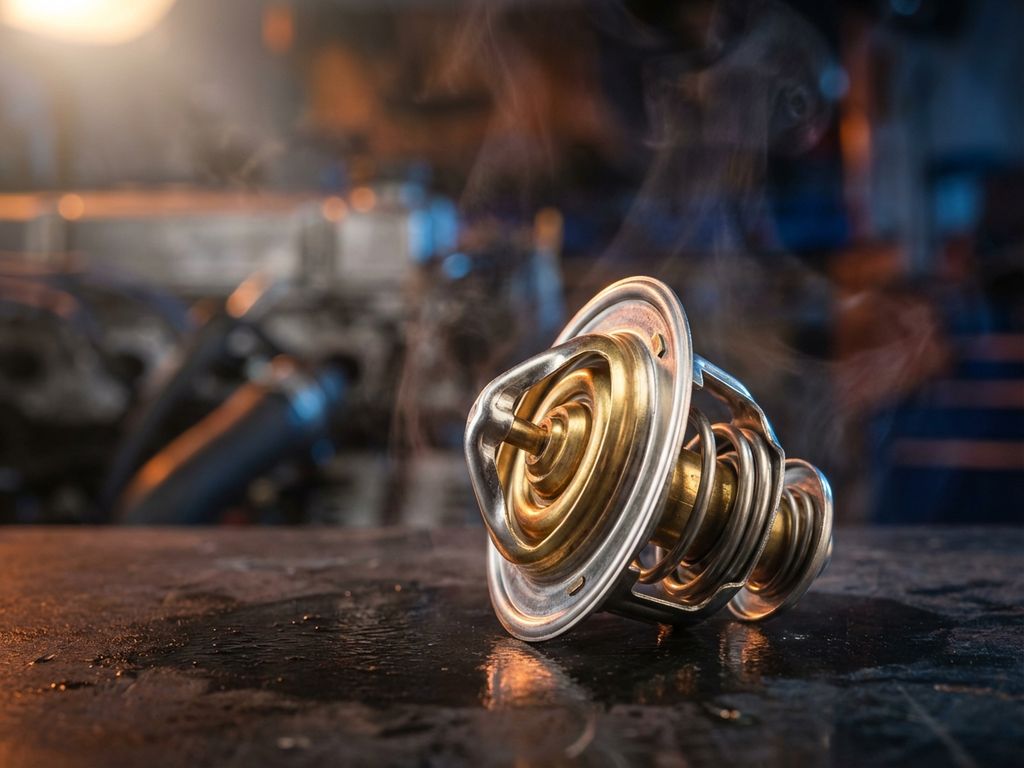
An automotive thermostat is a temperature-controlled valve that regulates coolant flow in your engine’s cooling system. It opens and closes based on engine temperature to maintain optimal operating conditions, typically around 90–100°C. This small but crucial component prevents overheating while ensuring your engine reaches its proper operating temperature efficiently for optimal performance and fuel economy.
What is an automotive thermostat and how does it work?
An automotive thermostat is a temperature-sensitive valve that controls coolant circulation between your engine and radiator. It contains a wax pellet or bimetallic spring that expands when heated, opening the valve to allow coolant flow when the engine reaches its optimal operating temperature.
When you start your cold engine, the thermostat remains closed, blocking coolant flow to the radiator. This allows the engine to warm up quickly by keeping hot coolant circulating within the engine block. Once the engine reaches approximately 90–100°C (depending on your vehicle), the thermostat’s internal element expands and opens the valve.
The opening allows coolant to flow through the radiator, where it releases heat before returning to the engine. As engine temperature drops, the thermostat partially closes to maintain a consistent operating temperature. This constant modulation ensures your engine operates within its designed temperature range regardless of driving conditions or ambient temperature.
Why is the thermostat so important for your engine?
The thermostat plays a critical role in engine performance by maintaining optimal operating temperature for combustion efficiency, emissions control, and component longevity. Without proper temperature regulation, your engine cannot perform to its designed specifications.
Proper engine temperature ensures complete fuel combustion, which maximises power output and fuel efficiency while minimising harmful emissions. Modern engines are designed to operate within narrow temperature ranges where oil viscosity, metal expansion, and combustion chamber conditions are optimised.
Temperature control also prevents engine damage from overheating, which can cause warped cylinder heads, blown head gaskets, or seized pistons. Equally important, it prevents overcooling, which leads to incomplete combustion, increased wear, poor fuel economy, and higher emissions. Your engine’s computer relies on temperature sensors to adjust fuel injection and ignition timing, making consistent temperature regulation essential for modern vehicle operation.
What are the signs that your car’s thermostat is failing?
Common symptoms of thermostat failure include engine overheating, poor heating performance, erratic temperature gauge readings, and visible coolant leaks around the thermostat housing. These warning signs typically develop gradually before complete failure occurs.
Engine overheating is the most obvious sign, often indicated by your temperature gauge reading higher than normal or warning lights on your dashboard. You might notice the engine running hot during normal driving conditions or taking longer than usual to reach operating temperature.
Poor cabin heating performance suggests the thermostat is not opening properly, preventing hot coolant from reaching the heater core. Your temperature gauge may fluctuate wildly or remain at cold readings even after extended driving. You might also observe coolant leaks around the thermostat housing, steam from the engine bay, or unusual engine noises indicating overheating damage.
How long do automotive thermostats typically last?
Automotive thermostats typically last 80,000 to 120,000 kilometres under normal operating conditions. However, their lifespan depends on coolant quality, maintenance practices, and operating environment factors such as extreme temperatures or stop-and-go driving conditions.
Regular coolant system maintenance significantly extends thermostat life. Using the correct coolant type and maintaining proper mixture ratios prevents corrosion and mineral buildup that can cause thermostat failure. Replacing coolant according to manufacturer recommendations keeps the system clean and protects internal components.
Factors that reduce thermostat lifespan include contaminated coolant, overheating episodes, and poor-quality replacement parts. Thermostats in vehicles operating in extreme climates or heavy-duty applications may require more frequent replacement. Many automotive professionals recommend replacing the thermostat when performing major cooling system repairs to prevent future failures.
What happens if you drive with a broken thermostat?
Driving with a broken thermostat can cause severe engine damage, reduced fuel economy, and safety risks from unexpected breakdowns. A stuck-closed thermostat leads to rapid overheating, while a stuck-open thermostat causes overcooling and poor performance.
A thermostat stuck in the closed position blocks coolant flow, causing engine temperatures to rise quickly. This can result in warped cylinder heads, blown head gaskets, or complete engine seizure requiring expensive repairs or replacement. You may experience loss of power, steam from the engine bay, and a potential roadside breakdown.
A thermostat stuck open allows constant coolant circulation, preventing the engine from reaching its proper operating temperature. This leads to poor fuel economy, increased emissions, sluggish performance, and inadequate cabin heating. Long-term overcooling causes increased engine wear, carbon buildup, and potential catalyst damage. Both scenarios compromise vehicle reliability and can leave you stranded unexpectedly.
How BTT Solutions helps with automotive thermostat solutions
We specialise in manufacturing high-precision automotive thermostats and comprehensive thermal management solutions for global automotive manufacturers. Our patented technologies ensure optimal engine performance, improved fuel efficiency, and reduced emissions through advanced temperature control systems.
Our automotive thermostat solutions include:
- High-precision thermostats with accurate temperature control for optimal engine performance
- Advanced temperature sensors integrated with modern engine management systems
- Patented end-to-end thermal management components for complete cooling system solutions
- Custom thermostat designs for specific automotive applications and performance requirements
- Quality assurance testing ensuring reliability across diverse operating conditions
Our expertise in thermal management technology helps automotive manufacturers achieve stringent fuel efficiency and emissions standards while maintaining engine reliability. Contact us today to discuss how our precision thermostat solutions can enhance your automotive applications and meet your specific thermal management requirements.
Related Articles
- What is the difference between mechanical efficiency and thermal efficiency?
- What is the difference between single-pole and double-pole thermostat components?
- What is the cost impact of poor thermal management on fleet fuel bills?
- How do you specify a custom thermostat for a new vehicle application?
- How to select automotive thermostat components for different applications?


