
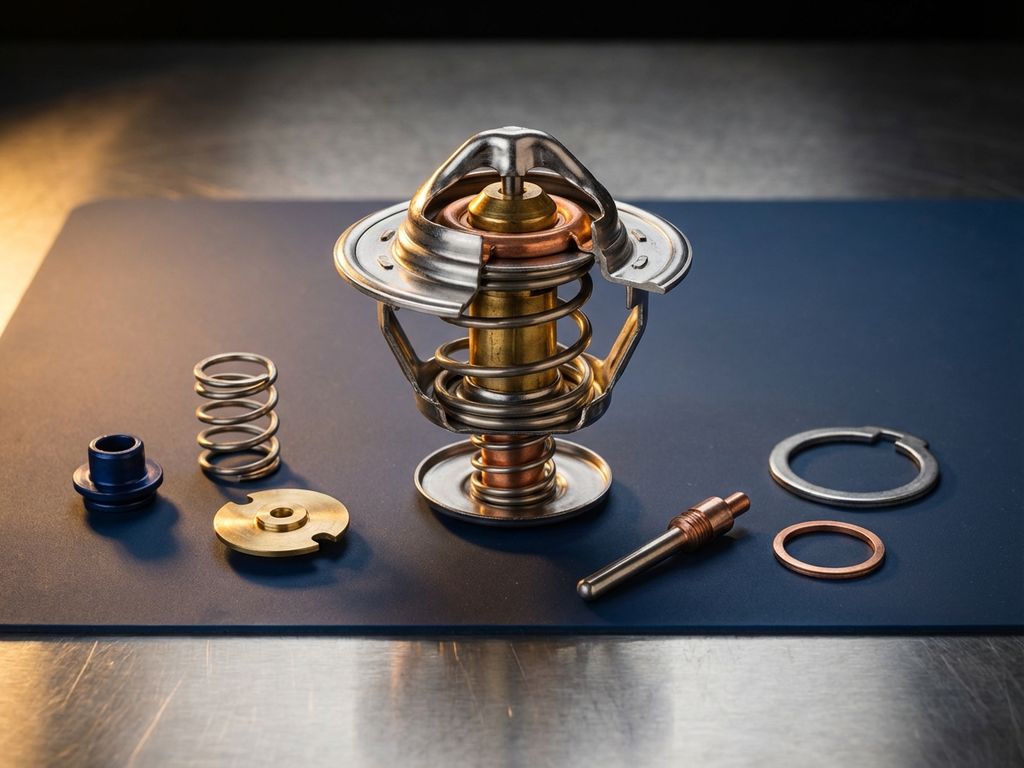
Selecting the right thermostat elements requires careful evaluation of technical specifications, environmental conditions, and application requirements. Key factors include opening temperature accuracy, material compatibility, size constraints, and response characteristics. The choice between wax and bimetal technologies, along with proper sizing and temperature calibration, determines system efficiency and reliability across automotive, industrial, and building applications.
What are the key performance specifications to evaluate in thermostat elements?
The most critical specifications include opening temperature precision, full-stroke temperature range, flow rate capacity, pressure ratings, and response time characteristics. The opening temperature determines when the element activates, typically ranging from 60°C to 105°C depending on application needs. The full-stroke temperature indicates the range needed for complete valve operation, usually 10–15°C above the opening temperature.
Flow rate capacity defines how much fluid can pass through when fully open, measured in litres per minute or gallons per minute. This specification must match your system’s circulation requirements to maintain proper thermal regulation. Pressure ratings indicate the maximum operating pressure the element can withstand, typically ranging from 1 to 16 bar for standard applications.
Response time characteristics determine how quickly the element reacts to temperature changes. Faster response times provide better temperature control but may cause system instability in some applications. Consider your system’s thermal mass and required precision when evaluating response specifications.
How do different application environments affect thermostat element selection?
Environmental factors significantly impact thermostat element performance and longevity. Operating temperature ranges vary dramatically between automotive engines (-40°C to 120°C), industrial processes (up to 200°C), and building systems (5°C to 95°C). Each environment requires elements designed for specific thermal cycling and ambient conditions.
Fluid compatibility becomes crucial when elements contact different media. Automotive thermostats handle coolant mixtures with glycol and additives, while industrial applications may involve oils, water, or specialised heat transfer fluids. Material selection must resist corrosion and chemical degradation from these fluids over extended periods.
Vibration resistance requirements differ significantly between applications. Automotive thermostats endure constant engine vibration and road shock, requiring robust construction and secure mounting. Industrial applications may involve pump vibration or process equipment movement, while building systems typically operate in stable environments with minimal vibration concerns.
What is the difference between wax element and bimetal thermostat technologies?
Wax element thermostats use the thermal expansion of specially formulated wax to operate a piston mechanism, while bimetal elements rely on differential expansion between two bonded metal strips. Wax elements provide superior temperature accuracy (±2°C) and generate higher operating forces, making them ideal for automotive thermostats and high-pressure applications.
Bimetal elements offer faster response times and simpler construction but with reduced accuracy (±5°C) and lower operating forces. They excel in applications requiring quick temperature response, such as radiator fans or building ventilation controls. Bimetal elements also handle temperature cycling better in some environments.
Durability characteristics differ between technologies. Wax elements typically last longer in consistent temperature cycling applications but may fail if overheated beyond design limits. Bimetal elements handle temperature spikes better but may experience fatigue failure after extensive cycling, particularly in high-vibration environments.
Why do thermostat element size and form factor matter for system integration?
Physical dimensions directly impact installation feasibility and system performance. Thread specifications must match existing housing connections, with common sizes including M52x1.5, M45x1.5, and various NPT threads. Incorrect threading prevents proper installation and may cause system leaks or element failure.
Insertion length affects how the element senses fluid temperature and operates within the housing. An insertion length that is too short may result in poor temperature sensing, while excessive length can interfere with flow patterns or housing components. Most applications require specific insertion depths for optimal performance.
Space constraints around the thermostat housing influence element selection, particularly in automotive applications where packaging is critical. Consider clearance requirements for element movement, maintenance access, and potential interference with surrounding components during temperature cycling and system operation.
How do you determine the right opening temperature for your specific application?
Opening temperature selection depends on system requirements, fluid properties, and efficiency goals. Automotive applications typically use 82°C, 88°C, or 95°C elements to balance warm-up time with operating efficiency. Higher temperatures improve fuel economy but may increase component stress, while lower temperatures provide better component protection with reduced efficiency.
Industrial applications require temperature selection based on process requirements and safety considerations. Heat exchangers may need lower opening temperatures to prevent overheating, while heating systems might require higher temperatures for efficiency. Consider the temperature differential needed between opening and full operation for your specific application.
Energy efficiency goals influence temperature selection significantly. Higher operating temperatures generally improve system efficiency but require components rated for increased thermal stress. Balance efficiency gains against potential reliability impacts and maintenance requirements when selecting opening temperatures for long-term operation.
How BTT Solutions helps with thermostat element selection
We provide comprehensive engineering support to help you select optimal thermostat elements for your specific applications. Our expertise spans automotive, industrial, and building system requirements, ensuring proper component matching for your thermal management needs.
Our selection support includes:
- Technical specification analysis and application matching
- Environmental condition assessment and material compatibility guidance
- Custom temperature calibration and performance optimisation
- Integration support for complex system requirements
- Quality assurance and testing validation services
Contact our engineering team today to discuss your thermostat element requirements and benefit from our decades of thermal management expertise across diverse applications and industries.


