
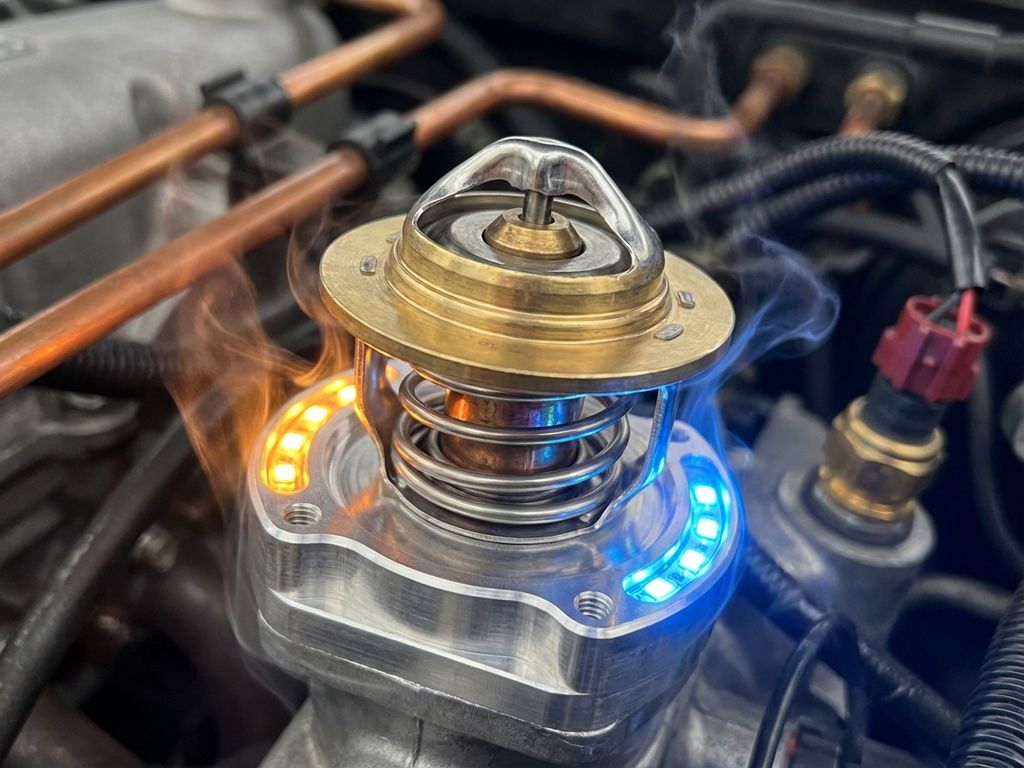
A thermostat in thermal management systems acts as an automatic temperature control valve that regulates fluid flow to maintain optimal operating temperatures. These critical components sense temperature changes and respond by opening or closing to control coolant, oil, or other fluids throughout engines, industrial equipment, and heating systems. Understanding how thermostats function helps explain their vital role in efficiency, performance, and equipment protection across automotive and industrial applications.
What exactly is a thermostat and how does it work in thermal management?
A thermostat in thermal management is a temperature-activated valve that automatically controls fluid flow to maintain consistent operating temperatures. The device contains a temperature-sensing element, typically a wax pellet or bimetallic strip, that expands or contracts based on temperature changes, mechanically opening or closing the valve to regulate coolant circulation.
The basic operating principle involves temperature sensing and fluid flow control working together. When temperatures are below the set point, the thermostat remains closed, preventing fluid circulation and allowing rapid warm-up. As temperatures reach the predetermined threshold, the sensing element activates, gradually opening the valve to allow coolant flow and heat dissipation.
Modern thermostat components include the valve body, temperature-sensitive actuator, spring mechanism, and sealing elements. These work in harmony to provide precise thermal regulation across different applications, from automotive engines to industrial heating systems. The fundamental role remains consistent: maintaining optimal system temperatures while preventing overheating or excessive cooling that could reduce efficiency or cause damage.
Why are thermostats critical for engine cooling and automotive performance?
Automotive thermostats are essential for preventing engine overheating while optimizing fuel efficiency and reducing emissions. They control coolant flow through the radiator, ensuring engines reach optimal operating temperature quickly and maintain it consistently. Without proper thermostat function, engines run too cold or overheat, leading to poor performance and potential damage.
The thermostat function in automotive cooling systems directly impacts fuel efficiency by enabling engines to reach ideal operating temperatures rapidly. Cold engines consume more fuel and produce higher emissions, while overheated engines lose power and risk catastrophic failure. The thermostat’s precise temperature control optimizes combustion efficiency and reduces harmful exhaust emissions.
When automotive thermostats fail, consequences range from poor fuel economy to complete engine failure. A stuck-closed thermostat causes overheating, potentially warping cylinder heads or cracking engine blocks. A stuck-open thermostat prevents proper warm-up, resulting in increased fuel consumption, higher emissions, and reduced cabin heating. Regular thermostat maintenance prevents these costly problems and ensures optimal engine performance.
What’s the difference between automotive and industrial thermal management thermostats?
Automotive and industrial thermal management thermostats differ significantly in design requirements, operating conditions, and performance specifications. Automotive thermostats typically operate at lower pressures and temperatures, usually opening between 80–95°C, while industrial applications may require operation at much higher temperatures and pressures depending on the specific process requirements.
Material selection varies considerably between applications. Automotive thermostats often use brass, stainless steel, and synthetic rubber components optimized for coolant compatibility and moderate operating conditions. Industrial thermostats frequently require more robust materials like high-grade stainless steel, PTFE seals, and specialized alloys to withstand aggressive chemicals, extreme temperatures, and high-pressure environments.
Performance characteristics also differ substantially. Automotive thermostats prioritize quick response times and precise temperature control for fuel efficiency and emissions compliance. Industrial thermostats may emphasize durability, chemical resistance, and the ability to handle varying flow rates and pressures. The sizing, actuation force, and response characteristics are tailored to each application’s specific thermal management requirements.
How do modern thermostats improve energy efficiency in heating and cooling systems?
Modern temperature control systems incorporate advanced thermostat technologies, including electronic controls, precision temperature regulation, and optimized fluid flow management, to significantly improve energy efficiency. These innovations provide more accurate temperature control, faster response times, and better integration with overall system management compared to traditional mechanical thermostats.
Electronic thermostats offer programmable temperature settings, allowing systems to operate at optimal efficiency levels based on demand patterns. Advanced sensing technologies provide more precise temperature measurement, reducing temperature fluctuations that waste energy. Some modern thermostats incorporate variable opening characteristics, modulating flow rates to match heating or cooling demands more accurately.
Energy savings result from optimized fluid flow management that eliminates unnecessary circulation and maintains consistent temperatures with minimal energy input. Environmental benefits include reduced fuel consumption, lower emissions, and decreased overall energy demand. These efficiency improvements contribute to sustainability goals while reducing operating costs across automotive, industrial, and residential applications.
What happens when a thermostat fails in a thermal management system?
Thermostat components can fail in several ways, most commonly by sticking in either the open or closed position. A stuck-closed thermostat prevents coolant circulation, causing rapid overheating and potential system damage. A stuck-open thermostat allows continuous coolant flow, preventing proper warm-up and significantly reducing system efficiency.
Symptoms of thermostat malfunction vary depending on the failure mode and application. In automotive systems, signs include temperature gauge fluctuations, poor cabin heating, increased fuel consumption, or engine overheating. Industrial systems may show process temperature instability, reduced heating efficiency, or equipment protection alarms indicating thermal management problems.
The impact on system performance and energy consumption can be substantial. Failed thermostats increase energy usage, reduce equipment lifespan, and may cause costly secondary damage. Regular maintenance considerations include periodic thermostat testing, coolant system inspection, and replacement based on manufacturer recommendations or performance indicators. Preventive maintenance prevents unexpected failures and maintains optimal thermal regulation efficiency.
How BTT Solutions advances thermostat technology for thermal management
We specialize in manufacturing high-precision BTT Solutions thermostats that deliver superior performance across automotive, industrial, and residential applications. Our expertise encompasses complete thermal management solutions, from component design through manufacturing and testing, ensuring optimal temperature control for diverse operating conditions.
Our advanced thermostat technologies include:
- Patented temperature-sensing elements for enhanced accuracy and response times
- Precision-engineered valve mechanisms for reliable operation under extreme conditions
- Advanced material selection for chemical resistance and extended service life
- Customized designs tailored to specific thermal management requirements
- Comprehensive testing and quality assurance throughout the manufacturing process
Our global manufacturing capabilities enable us to support thermal management projects worldwide, providing localized service while maintaining consistent quality standards. Whether you need standard automotive thermostats or specialized industrial temperature control solutions, our engineering team can develop optimized thermal management components for your specific requirements.
Contact us today to discuss how our advanced thermostat technology can improve efficiency, reduce emissions, and enhance performance in your thermal management applications.


