
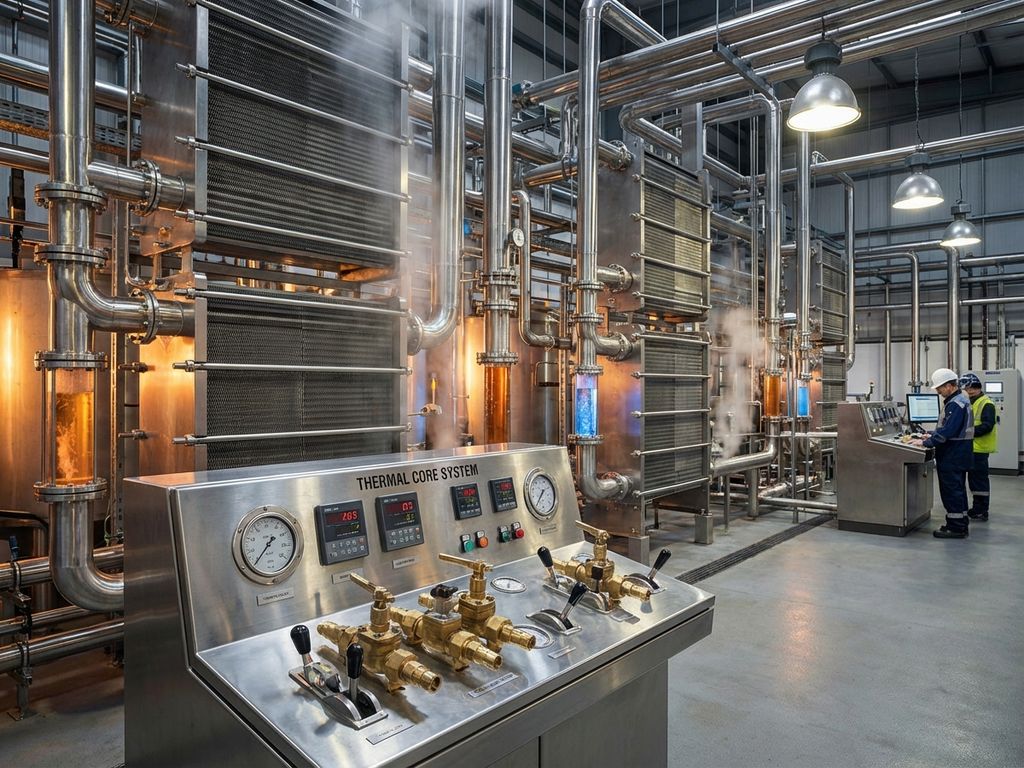
Selecting the right thermal management systems for industrial use requires evaluating your specific operating conditions, temperature requirements, and system integration needs. Industrial thermal control systems regulate temperature in manufacturing processes, equipment cooling, and facility climate control. The key is matching system capabilities with your operational demands while considering long-term efficiency and maintenance requirements.
What are thermal management systems and why are they critical for industrial operations?
Thermal management systems are engineered solutions that control temperature in industrial environments through precise regulation of heat transfer and fluid flow. These systems maintain optimal operating temperatures for equipment, processes, and facilities using components such as thermostats, temperature sensors, and thermal control units.
Industrial operations depend on consistent temperature control for several critical reasons. Manufacturing processes require specific temperature ranges to maintain product quality and consistency. Equipment operates most efficiently within designated thermal parameters, preventing overheating that leads to premature failure and costly downtime.
Temperature control solutions directly impact energy consumption and operational costs. Properly functioning thermal systems reduce energy waste by maintaining temperatures only when needed, rather than continuously heating or cooling spaces and equipment. This targeted approach can significantly lower utility expenses while improving overall system performance.
Safety considerations make thermal management essential in industrial settings. Overheated equipment poses fire risks and can create hazardous working conditions. Effective temperature regulation protects both personnel and valuable machinery from thermal-related incidents.
What factors should you consider when selecting industrial thermal management systems?
The most important selection criteria include operating temperature ranges, system capacity requirements, and compatibility with existing infrastructure. Your chosen system must handle the specific temperature extremes your operation requires while providing adequate heating or cooling capacity for your facility size and equipment load.
Environmental conditions play a crucial role in system selection. Consider factors such as ambient temperature fluctuations, humidity levels, and exposure to dust or corrosive substances. Industrial heating systems designed for harsh environments feature protective housings and robust components that withstand challenging conditions.
Fluid compatibility becomes essential when your thermal system interfaces with existing piping or process fluids. Different thermal components work with specific fluid types, and incompatibility can cause system failure or contamination issues.
Integration requirements affect both initial installation costs and long-term functionality. Evaluate how new thermal control systems will connect with current infrastructure, including electrical systems, control networks, and monitoring equipment. Planning for seamless integration prevents costly modifications later.
Maintenance accessibility and service requirements influence total ownership costs. Systems with easily replaceable components and straightforward maintenance procedures reduce downtime and service expenses over the system’s operational life.
How do different types of thermal management technologies compare for industrial use?
Thermostatic controls offer reliable, mechanical temperature regulation without requiring electrical power or complex programming. These systems respond automatically to temperature changes and work well in applications requiring consistent, basic temperature control with minimal maintenance requirements.
Electronic temperature regulation provides precise control with programmable settings and remote monitoring capabilities. These systems excel in applications requiring exact temperature maintenance and integration with automated control systems, though they require more sophisticated installation and maintenance.
Passive thermal systems rely on natural heat transfer principles without powered components. They work effectively in applications with predictable thermal loads and moderate temperature requirements. Active systems use powered components such as fans, pumps, or electronic controls to achieve more precise temperature management.
Emerging technologies include smart thermal components with IoT connectivity and predictive maintenance capabilities. These advanced systems provide real-time monitoring and data analytics but require higher initial investment and technical expertise for implementation.
The best choice depends on your specific application requirements, budget constraints, and technical capabilities. Simple applications often benefit from reliable thermostatic solutions, while complex processes may justify electronic systems with advanced features.
What are the most common mistakes when implementing thermal management systems?
Undersizing thermal systems is the most frequent and costly implementation error. Many facilities underestimate their actual thermal loads or fail to account for future expansion needs, resulting in systems that cannot maintain required temperatures during peak demand periods.
Ignoring environmental factors during system selection leads to premature failure and poor performance. Failing to consider ambient conditions, vibration, moisture, or chemical exposure can render even well-designed systems ineffective in industrial environments.
Poor integration planning causes installation delays and compatibility issues. Many implementations fail to properly assess existing infrastructure capabilities or plan for necessary modifications to electrical, plumbing, or control systems.
Inadequate maintenance planning affects long-term system reliability and efficiency. Facilities often overlook service accessibility, spare parts availability, and staff training requirements during the selection process, leading to higher operational costs and extended downtime.
Overlooking future expansion needs results in systems that become inadequate as operations grow. Consider potential capacity increases, additional equipment installations, or process changes that might affect thermal management requirements over the system’s expected lifespan.
How do you ensure optimal performance and longevity of industrial thermal systems?
Proper installation procedures form the foundation of reliable thermal system performance. Follow manufacturer specifications exactly, ensure adequate clearances for maintenance access, and verify that all connections meet industry standards. Professional installation prevents many common operational issues.
Regular maintenance schedules keep systems operating at peak efficiency. Establish routine inspection intervals for key components such as filters, sensors, and moving parts. Preventive maintenance costs significantly less than emergency repairs and extends equipment lifespan.
Performance monitoring helps identify potential issues before they cause system failures. Track key metrics such as temperature accuracy, energy consumption, and cycle times to detect gradual degradation or developing problems.
Troubleshooting approaches should include systematic diagnostic procedures and documentation of common issues. Train staff to recognise early warning signs and implement basic corrective actions before problems escalate.
Upgrade considerations become important as technology advances and operational requirements change. Plan for component updates or system enhancements that improve efficiency, add functionality, or extend service life while maintaining compatibility with existing infrastructure.
How BTT Solutions helps with industrial thermal management system selection
We provide comprehensive thermal management solutions tailored specifically for industrial applications, combining decades of expertise in precision temperature control with proven engineering capabilities. Our thermal control products and end-to-end approach ensures you receive systems perfectly matched to your operational requirements.
Our industrial thermal management services include:
- Custom system design based on your specific temperature ranges, capacity needs, and environmental conditions
- Precision thermal components engineered for reliability in demanding industrial environments
- Global technical support and maintenance services across eight worldwide locations
- Integration expertise for seamless connection with existing infrastructure and control systems
- Proven track record across automotive, industrial, and building applications, with 600 specialists worldwide
We understand that every industrial operation has unique thermal management challenges. Our team works closely with you to evaluate your requirements, recommend optimal solutions, and provide ongoing support throughout the system lifecycle. Our expertise spans decades of innovation in precision thermal control across diverse industrial applications.
Ready to optimise your industrial thermal management? Contact our engineering team today for a comprehensive consultation and discover how our precision thermal solutions can improve your operational efficiency and reduce energy costs.


