
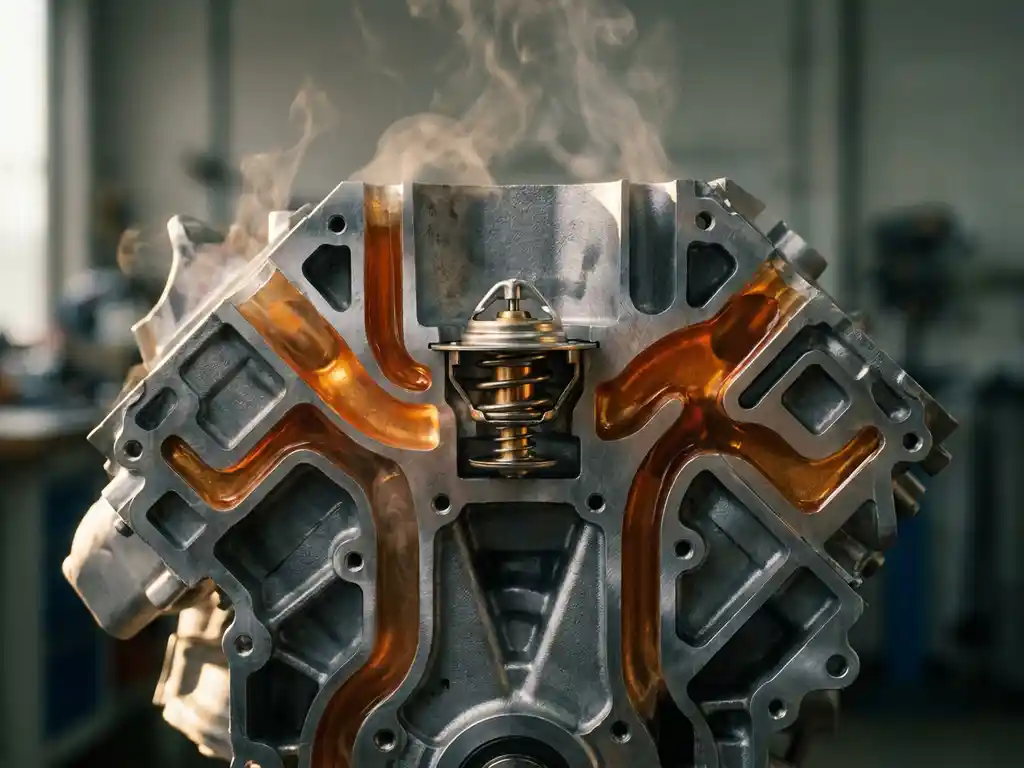
The relationship between engine temperature and combustion efficiency is one of the most important factors in modern automotive engineering. When your engine operates at the right temperature, fuel burns more completely, emissions stay lower, and performance reaches its peak. Understanding this connection helps explain why proper thermal management isn’t just about preventing overheating, but about optimizing every aspect of engine operation.
Temperature affects everything from fuel atomization to chemical reaction rates inside your engine’s cylinders. Too cold, and combustion becomes incomplete and wasteful. Too hot, and the engine risks damage while efficiency actually decreases. Finding that sweet spot requires sophisticated systems working together to maintain optimal conditions.
Why Engine Temperature Matters for Combustion
Engine temperature directly influences how completely fuel burns during the combustion process. When metal components reach their designed operating temperature, fuel vaporizes more effectively and mixes better with incoming air. This improved fuel-air mixture creates more uniform combustion, extracting maximum energy from every drop of fuel.
The combustion chamber walls, pistons, and cylinder heads all need to reach specific temperatures to promote efficient burning. Cold metal surfaces can quench the flame front, causing incomplete combustion that wastes fuel and increases harmful emissions. Proper thermal management ensures these surfaces support, rather than hinder, the combustion process.
Modern engines rely on precise temperature control to meet increasingly strict emissions standards. When combustion occurs at optimal temperatures, nitrogen oxide formation stays within acceptable limits, while carbon monoxide and hydrocarbon emissions drop significantly. This balance becomes even more important as fuel-efficiency regulations continue to tighten worldwide.
How Cold Engines Reduce Fuel Efficiency
Cold engines operate far less efficiently than their warmed-up counterparts, sometimes using 12-40% more fuel during the initial warm-up period. Thick, cold oil creates more internal friction, while fuel doesn’t atomize properly in cold intake systems. The engine management system compensates by injecting extra fuel, but much of it ends up unburned or partially burned.
Fuel atomization becomes particularly problematic when intake manifolds and fuel injectors operate below optimal temperatures. Larger fuel droplets don’t mix as thoroughly with air, leading to rich pockets that burn incompletely and lean areas that may not ignite at all. This uneven combustion reduces power output while increasing fuel consumption and emissions.
The catalytic converter also needs adequate exhaust heat to function properly. Cold engines produce cooler exhaust gases that don’t activate the catalyst effectively, allowing more pollutants to escape. Advanced thermal management systems help engines reach operating temperature faster, reducing both the duration and severity of cold-start inefficiencies.
What Happens When Engines Overheat
Overheating creates a cascade of problems that severely impact combustion efficiency and engine performance. Excessive temperatures can cause fuel to vaporize prematurely in the intake system, creating vapor-lock conditions that disrupt fuel delivery. Air density also decreases as temperatures rise, reducing the oxygen available for complete combustion.
High cylinder temperatures promote abnormal combustion patterns such as pre-ignition and knock, which force engine management systems to retard timing and reduce performance. These protective measures help prevent engine damage but significantly reduce both power output and fuel efficiency. The engine essentially derates itself to survive the thermal stress.
Component expansion from overheating affects critical clearances throughout the engine. Pistons may expand enough to increase friction dramatically, while valve clearances change in ways that affect breathing efficiency. These mechanical effects compound the chemical combustion problems, creating multiple pathways for reduced efficiency and potential damage.
Optimal Temperature Range for Maximum Efficiency
Most modern engines achieve peak combustion efficiency when coolant temperatures stabilize between 90°C and 104°C (195°F to 220°F). Within this range, fuel vaporizes readily, air density remains adequate, and combustion chamber surfaces support complete burning without promoting abnormal combustion patterns.
Oil temperature plays an equally important role, with optimal efficiency typically occurring when oil reaches 82°C to 93°C (180°F to 200°F). At these temperatures, oil viscosity drops to levels that minimize internal friction while maintaining adequate lubrication. The engine can operate with minimal parasitic losses while ensuring long-term durability.
Maintaining these optimal temperatures requires sophisticated control systems that respond quickly to changing conditions. Simple thermostats have evolved into electronically controlled units that can adjust cooling-system flow based on engine load, ambient conditions, and operational requirements. This precision helps engines spend more time in their efficiency sweet spot.
Advanced Thermal Management Solutions for Modern Engines
Today’s engines employ multiple strategies to optimize thermal management beyond traditional cooling systems. Split cooling circuits allow different engine sections to operate at their ideal temperatures simultaneously. The cylinder head might run cooler to prevent knock, while the block operates warmer to reduce friction and improve fuel vaporization.
Electronic thermostats and variable-speed cooling fans provide precise temperature control that adapts to real-time conditions. These systems can prioritize rapid warm-up during cold starts, then shift to maintaining optimal steady-state temperatures during normal operation. Some advanced systems can even precondition engine temperatures based on predicted driving patterns.
Waste-heat recovery systems capture thermal energy that would otherwise be lost, using it to accelerate warm-up or support cabin heating without additional fuel consumption. These integrated approaches recognize that effective thermal management involves managing all heat flows throughout the vehicle, not just preventing overheating.
How BTT Solutions Helps with Engine Thermal Management
We specialize in developing advanced thermostat technology that optimizes engine temperature control for maximum combustion efficiency. Our precision-engineered components help engines reach optimal operating temperatures faster while maintaining precise control under all operating conditions.
Our thermal management solutions include:
- High-precision thermostats that respond rapidly to temperature changes
- Advanced temperature sensors for accurate monitoring and control
- Integrated thermal management systems for complex multi-circuit applications
- Custom solutions designed for specific engine requirements and operating conditions
Whether you’re developing next-generation automotive powertrains or optimizing existing engine designs, our thermal management expertise can help you achieve better fuel efficiency and reduced emissions. Contact us to discuss how our proven thermal management solutions can enhance your engine’s combustion efficiency and overall performance.


