
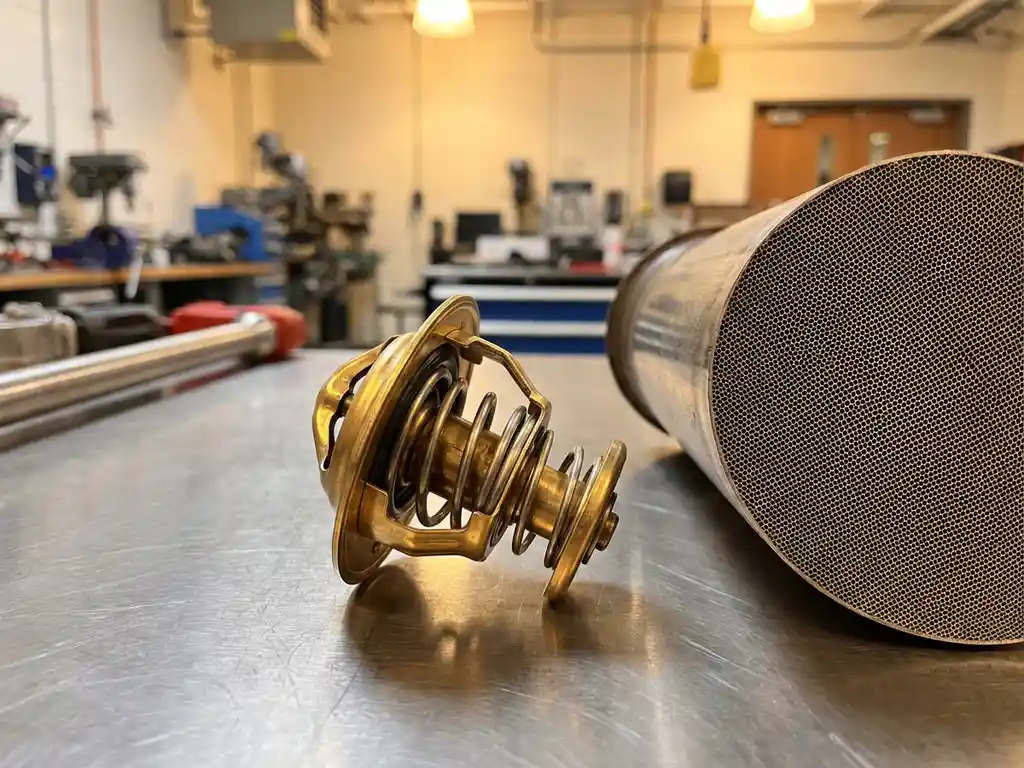
The relationship between engine temperature and catalytic converter efficiency plays a vital role in modern automotive emissions control systems. When your engine runs at the right temperature, the catalytic converter can effectively reduce harmful emissions by up to 90%. However, this delicate balance requires precise thermal management to ensure optimal performance across different driving conditions.
Understanding how engine warm-up affects emissions control helps explain why modern vehicles need sophisticated temperature regulation systems. The catalytic converter’s ability to process exhaust gases depends heavily on reaching and maintaining its optimal operating temperature, which directly correlates with engine thermal conditions.
Why Engine Temperature Matters for Emission Control
Engine temperature directly influences how effectively your vehicle controls emissions through the exhaust system. The catalytic converter requires specific thermal conditions to activate the chemical reactions that convert harmful pollutants into less toxic substances. When the engine operates below its ideal temperature range, emissions control systems struggle to perform their intended function.
Modern emissions standards demand that vehicles minimize pollutant output from the moment they start. This requirement puts significant pressure on thermal management systems to bring both the engine and catalytic converter to their optimal operating temperatures as quickly as possible. The faster these components reach their target temperatures, the sooner emissions control becomes effective.
Temperature regulation also affects fuel efficiency and overall engine performance. Engines running too cold waste fuel and produce higher emissions, while overheating can damage components and reduce the lifespan of emissions control systems. This balance makes precise thermal management essential for meeting environmental regulations and maintaining vehicle reliability.
How Catalytic Converters Work at Different Temperatures
Catalytic converters need to reach approximately 400 degrees Fahrenheit before they begin functioning effectively. Below this temperature threshold, the catalyst materials cannot facilitate the chemical reactions needed to break down nitrogen oxides, carbon monoxide, and unburned hydrocarbons. The converter reaches peak efficiency between 800 and 1,000 degrees Fahrenheit.
At low temperatures, the catalyst remains largely inactive, allowing harmful emissions to pass through untreated. As temperature increases, conversion efficiency gradually improves until it reaches optimal levels. However, excessive heat above 1,600 degrees Fahrenheit can damage the catalyst substrate and reduce long-term effectiveness.
The temperature-dependent nature of catalytic converter efficiency explains why cold-start emissions represent such a significant challenge for automotive manufacturers. During the first few minutes of operation, before the system reaches proper operating temperature, vehicles produce disproportionately high levels of pollutants compared to their warm-running performance.
Cold Start Challenges and Emission Spikes
Cold-start emissions account for a substantial portion of total vehicle pollutant output, particularly in urban driving conditions with frequent short trips. When an engine starts cold, both the engine block and exhaust system begin at ambient temperature, requiring time to reach optimal operating conditions. During this warm-up period, cold-start emissions can be several times higher than normal running levels.
The challenge becomes more pronounced in colder climates, where ambient temperatures further delay the warming process. Modern automotive thermostat systems help address this issue by controlling coolant flow to accelerate engine warm-up while protecting components from thermal shock. Faster engine warming translates directly to quicker catalytic converter activation and reduced emission spikes.
Regulatory agencies recognize the significance of cold-start emissions and have implemented increasingly stringent testing procedures that account for real-world driving patterns. These regulations drive innovation in thermal management solutions that can minimize the time required to achieve optimal operating temperature across all system components.
Thermal Management Solutions for Optimal Performance
Advanced thermal management systems use precisely calibrated components to optimize the relationship between engine temperature and emissions control efficiency. Modern automotive thermostats employ sophisticated designs that respond rapidly to temperature changes while maintaining stable operating conditions once optimal temperatures are reached.
Effective thermal management strategies include controlled coolant circulation, strategic heat retention, and rapid warm-up protocols. These approaches help engines and catalytic converters reach their optimal operating temperatures more quickly while maintaining consistent performance across varying environmental conditions. Integrating these systems requires careful engineering to balance multiple performance objectives.
Temperature sensors and electronic controls enable real-time monitoring and adjustment of thermal conditions throughout the engine and exhaust systems. This level of control allows for fine-tuning of the warm-up process and ongoing temperature regulation to maximize both emissions control effectiveness and fuel efficiency.
How BTT Solutions Helps with Engine Temperature and Emission Control
We specialize in developing high-precision thermal management components that optimize the relationship between engine temperature and catalytic converter efficiency. Our advanced automotive thermostat technology helps engines reach optimal operating temperatures faster, reducing cold-start emissions and improving overall emissions control performance.
Our thermal management solutions include:
- Precision thermostats designed for rapid response and stable temperature control
- Temperature sensors that enable real-time monitoring of thermal conditions
- Integrated thermal management systems for automotive applications
- Custom solutions tailored to specific emissions control requirements
As a leading expert in thermal management technology, we understand how precise temperature control impacts emissions performance and fuel efficiency. Our products help automotive manufacturers meet increasingly stringent emissions standards while maintaining optimal engine performance. To learn more about how our thermal management solutions can improve your emissions control systems, contact our team for a consultation.
Related Articles
- What is the difference between a thermostat valve and thermostat bellows?
- Why do heavy-duty engines require robust thermal protection?
- What is the difference between a thermostat and a temperature sensor?
- What happens when an engine thermostat opens and closes?
- How do coolant regulators differ from standard thermostats?


