
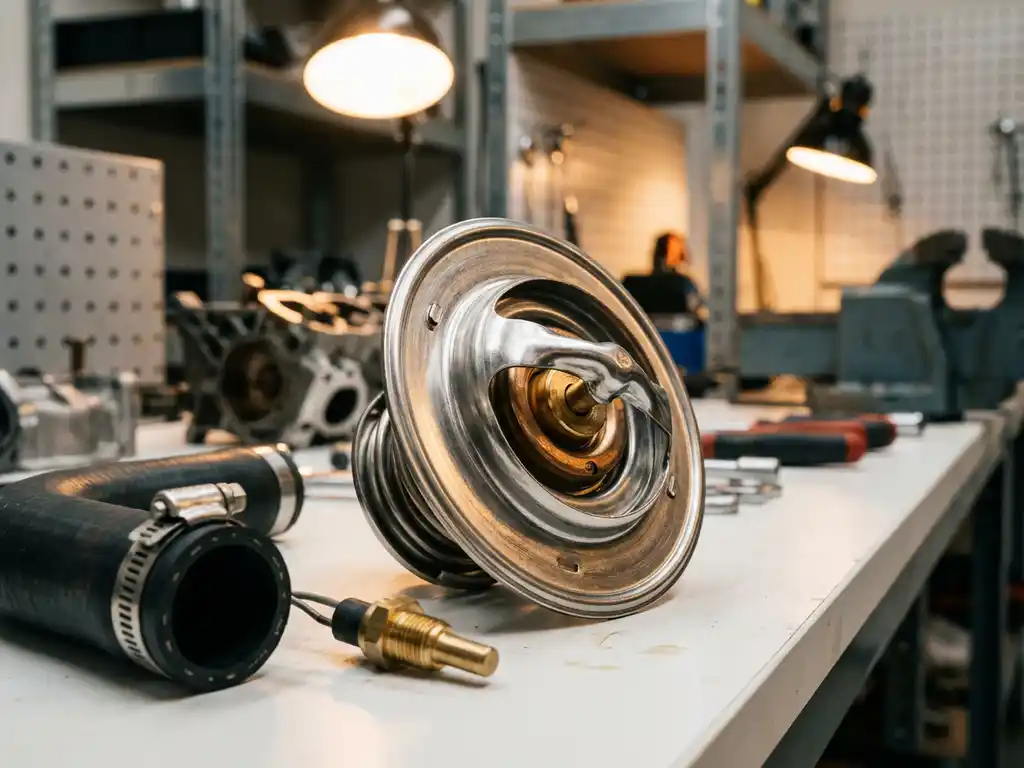
When it comes to keeping your car’s engine running at the right temperature, the thermostat plays a surprisingly important role. This small but mighty component controls when coolant flows through your engine, preventing overheating and ensuring optimal performance. With so many options available, choosing the right automotive thermostat for your vehicle can feel overwhelming.
Understanding what makes one thermostat better than another will help you make an informed decision that keeps your engine running smoothly for years to come. Let’s explore the most common questions car owners have about thermostats and what you need to know before making a purchase.
What does a car thermostat do, and why is it important?
A car thermostat regulates engine temperature by controlling coolant flow between the engine and radiator. It stays closed when the engine is cold, allowing it to warm up quickly, then opens at a specific temperature to prevent overheating.
Think of your thermostat as a temperature-sensitive valve that constantly monitors your engine’s heat levels. When you start your car on a cold morning, the thermostat remains closed, keeping coolant circulating only within the engine block. This helps your engine reach its optimal operating temperature faster, which improves fuel efficiency and reduces emissions.
Once the engine reaches the thermostat’s opening temperature (usually between 82°C and 93°C, or 180°F to 200°F), the valve opens and allows coolant to flow to the radiator for cooling. This precise temperature control prevents your engine from running too hot or too cold, both of which can cause serious damage over time. Without a properly functioning thermostat, your engine could overheat and suffer costly damage, or run too cool, waste fuel, and produce higher emissions.
How do you know when your car thermostat needs replacement?
Your car thermostat needs replacement if you notice temperature gauge fluctuations, overheating, poor heater performance, or coolant leaks near the thermostat housing. These symptoms typically indicate that the thermostat is stuck open or closed.
The most obvious sign is engine overheating, which happens when a thermostat gets stuck in the closed position. Your temperature gauge will climb into the red zone, and you might see steam coming from under the hood. On the flip side, if your thermostat is stuck open, your engine will take much longer to warm up, and your heater won’t blow hot air effectively.
You might also notice your temperature gauge behaving erratically, swinging between normal and hot readings. This usually means the thermostat is partially stuck and opening inconsistently. Another telltale sign is finding coolant puddles under your car near the front of the engine, which could indicate a failing thermostat housing gasket.
Most automotive thermostats last between 80,000 and 160,000 kilometres, but harsh driving conditions or poor maintenance can shorten their lifespan significantly.
What’s the difference between OEM and aftermarket car thermostats?
OEM thermostats are made by the original equipment manufacturer to exact factory specifications, while aftermarket thermostats are produced by third-party companies and may offer different features, materials, or price points than the original part.
Original equipment manufacturer (OEM) parts are essentially identical to what came in your car from the factory. They’re designed to meet the exact specifications your vehicle’s engineers intended, ensuring perfect compatibility and performance. The main advantages are guaranteed fit and function, but they typically cost more than aftermarket alternatives.
Aftermarket thermostats can range from budget-friendly basic replacements to high-performance upgrades. Some aftermarket options use improved materials or designs that may actually outperform the original part. However, quality can vary significantly between manufacturers, and cheaper options might not last as long or perform as reliably as OEM parts.
When choosing between OEM and aftermarket, consider your budget, how long you plan to keep the vehicle, and whether you need any special performance characteristics. For most drivers, a quality aftermarket thermostat from a reputable brand offers excellent value.
Which thermostat temperature rating is best for your car?
The best thermostat temperature rating for your car is typically the OEM specification, usually between 82°C and 93°C (180°F to 200°F). Using a thermostat with a significantly different opening temperature can affect engine performance, fuel economy, and emissions.
Your vehicle’s engineers chose the original thermostat temperature for specific reasons related to your engine’s design, emissions requirements, and fuel efficiency targets. Deviating from this specification can have unintended consequences. For example, installing a thermostat that opens at a lower temperature might improve cooling in extreme conditions, but it could also prevent your engine from reaching its optimal operating temperature.
Some performance enthusiasts prefer slightly cooler-running thermostats (around 77°C to 82°C or 170°F to 180°F) for high-stress applications like racing or heavy towing. However, running too cool can increase engine wear and fuel consumption while potentially causing emissions problems.
Before choosing a different temperature rating, consult your owner’s manual or a qualified technician. The safest approach is to stick with the manufacturer’s recommended temperature rating unless you have specific performance requirements that justify a change.
How much does it cost to replace a car thermostat?
Car thermostat replacement typically costs between €170 and €425, including parts and labour. The thermostat itself usually costs €17 to €68, while labour charges range from €127 to €340, depending on your vehicle’s complexity and local labour rates.
Several factors influence the total cost of replacement. The thermostat’s location in your engine bay makes a big difference—some are easily accessible and can be replaced in under an hour, while others require removing multiple components or even draining the cooling system completely. Luxury vehicles or those with complex engine layouts often fall on the higher end of the cost range.
You can save money by purchasing the part yourself and having an independent mechanic install it, rather than going to a dealership. However, keep in mind that thermostat replacement also involves replacing the gasket and potentially flushing the cooling system, which adds to both parts and labour costs.
While it might be tempting to tackle this as a DIY project, remember that working with hot coolant can be dangerous, and improper installation could lead to expensive engine damage. Unless you’re experienced with automotive repairs, professional installation is usually worth the extra cost.
How BTT Solutions helps with automotive thermostats
We specialise in manufacturing high-precision automotive thermostats that deliver superior performance and reliability for automotive applications. Our advanced thermostat technology provides several key benefits:
- Precise temperature control that optimises engine efficiency and reduces emissions
- Durable construction using premium materials for extended service life
- OEM-quality specifications that ensure perfect compatibility with your vehicle
- Rigorous testing standards that guarantee consistent performance in all conditions
As a global leader in thermal management components, we understand that choosing the right thermostat affects your vehicle’s performance, fuel economy, and longevity. Our engineering expertise and commitment to quality mean you get components that not only meet but often exceed original equipment standards.
Ready to learn more about our automotive thermostat solutions? Contact us today to discuss your specific requirements, or explore our complete range of thermal management products designed for automotive applications.


