
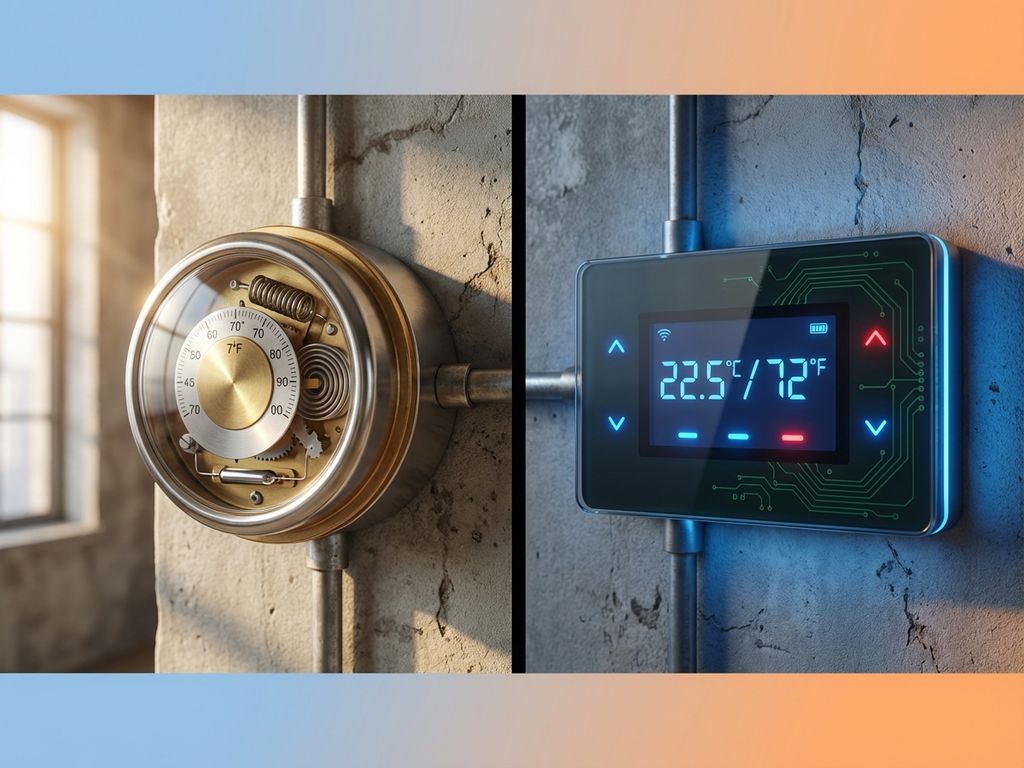
Electronic thermostats typically offer superior accuracy compared to mechanical thermostats, with temperature variances of ±0.5°F versus ±2–3°F for mechanical units. Electronic models use precise digital sensors and programmable controls, while mechanical thermostats rely on physical expansion materials that can drift over time. However, mechanical thermostats excel in reliability and work without power, making each type suitable for different applications and environmental conditions.
What exactly determines thermostat accuracy in temperature control?
Thermostat accuracy depends on three primary factors: temperature variance tolerance, response time to temperature changes, and calibration stability over time. Temperature variance measures how closely the actual room temperature matches your set point, while response time indicates how quickly the system reacts to temperature fluctuations.
Professional HVAC control systems typically require accuracy within ±1°F for optimal comfort and energy efficiency. Building automation systems often demand even tighter tolerances of ±0.5°F to maintain precise environmental conditions. The measurement standards vary significantly across applications—residential thermostats may accept ±2°F variance, while industrial thermal management systems require ±0.25°F precision.
Calibration factors include sensor drift, mechanical wear, and environmental influences such as humidity or electromagnetic interference. Regular calibration ensures your temperature control precision remains within acceptable tolerances throughout the thermostat’s operational life.
How do mechanical thermostats actually measure and control temperature?
Mechanical thermostats operate through the physical expansion and contraction of materials responding to temperature changes. The most common mechanisms include bimetallic strips that bend when heated, wax motors that expand with temperature, and liquid-filled expansion elements that move mechanical switches.
Bimetallic strips consist of two different metals bonded together with varying expansion rates. When temperature rises, one metal expands more than the other, causing the strip to curve and activate electrical contacts. This simple mechanism provides reliable operation without requiring electrical power or complex electronics.
Wax motor systems use paraffin wax sealed in a cylinder with a piston. Temperature changes cause the wax to expand or contract, moving the piston to open or close valves. These systems offer excellent durability and precise mechanical response, making them popular in automotive and industrial applications where electronic components might fail.
The inherent limitations include slower response times, temperature drift over time, and sensitivity to vibration or physical shock. However, their advantages include complete independence from electrical power, exceptional reliability, and lower manufacturing costs.
What makes electronic thermostats more or less accurate than mechanical ones?
Electronic thermostats achieve superior accuracy through digital temperature sensors such as thermistors and resistance temperature detectors (RTDs) that provide precise electrical readings. These sensors can detect temperature changes as small as 0.1°F and maintain consistent calibration over extended periods.
Digital processing allows electronic thermostats to average multiple temperature readings, compensate for sensor drift, and implement sophisticated control algorithms. Programmable features enable different temperature settings throughout the day, optimizing both comfort and energy consumption. Many models include learning capabilities that adapt to your schedule and preferences.
The primary disadvantages include dependency on electrical power, vulnerability to electrical interference, and higher complexity that can lead to component failures. Electronic circuits may malfunction during power surges or extreme temperatures, while mechanical systems continue operating normally.
Modern electronic thermostats often incorporate multiple sensors and backup systems to improve reliability. However, they require periodic battery replacement or a continuous power supply, making them less suitable for remote locations or emergency applications where power availability is uncertain.
Which type of thermostat performs better in different environmental conditions?
Environmental performance varies significantly between mechanical and electronic thermostats depending on specific conditions. Mechanical thermostats excel in harsh environments with temperature extremes, high humidity, or significant vibration where electronic components might fail or provide inaccurate readings.
High-humidity environments can affect electronic circuits through condensation and corrosion, while mechanical systems remain largely unaffected. Temperature extremes beyond electronic component specifications can cause sensor drift or complete failure, whereas mechanical expansion elements continue functioning across wider temperature ranges.
Vibration and physical shock pose greater risks to electronic thermostats with delicate sensors and circuit boards. Industrial applications with heavy machinery or transportation systems often favor mechanical designs for their robust construction and shock resistance.
Electronic thermostats perform better in stable indoor environments where their precision and programmability provide maximum benefit. They handle gradual temperature changes more accurately and offer superior control in modern building automation systems with integrated HVAC networks.
Maintenance requirements differ substantially—mechanical thermostats need occasional recalibration and cleaning, while electronic models require battery replacement, software updates, and protection from electrical interference. Long-term reliability often favors mechanical designs in challenging environments.
How BTT Solutions helps with precision thermal management
We specialize in developing advanced thermostat technologies and precision thermal management components for automotive, industrial, and residential applications. Our manufacturing expertise combines the reliability of mechanical systems with the accuracy of electronic controls to deliver optimal temperature control solutions.
Our comprehensive thermal management solutions include:
- High-precision thermostat components with tolerances as tight as ±0.1°F
- Robust mechanical designs for harsh environmental conditions
- Advanced temperature sensors and control systems for building automation
- Custom thermal management solutions for specific industrial applications
- Rigorous testing standards ensuring long-term accuracy and reliability
Whether you need mechanical reliability for challenging environments or electronic precision for sophisticated control systems, our thermal management expertise ensures optimal performance across diverse applications. Contact us today to discuss your specific temperature control requirements and discover how our advanced thermostat technologies can improve your system’s efficiency and accuracy.


