
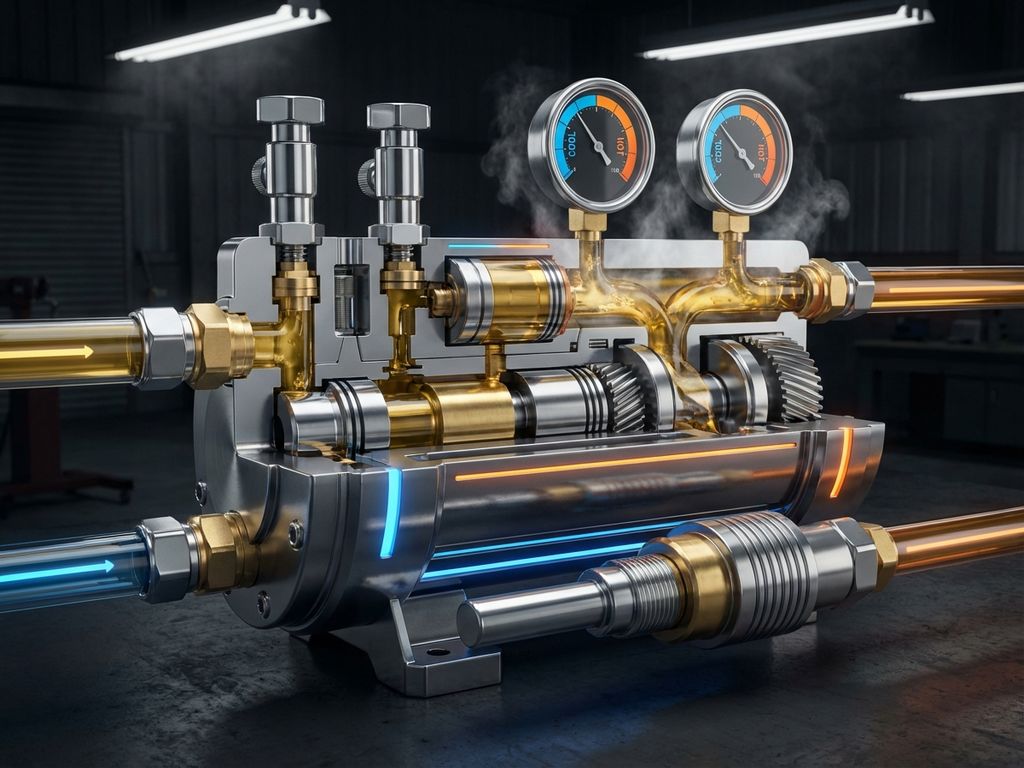
Oil temperature regulators in hydraulic systems work by automatically controlling hydraulic fluid temperature through thermostatic valves and cooling circuits. These components maintain optimal oil viscosity and system performance by directing flow between cooling and bypass circuits based on temperature readings. Proper thermal management prevents equipment damage, reduces energy consumption, and extends component life across industrial applications.
What are oil temperature regulators and why are they essential in hydraulic systems?
Oil temperature regulators are thermal management devices that automatically maintain hydraulic fluid within optimal temperature ranges during operation. These systems combine temperature sensors, thermostatic valves, and cooling circuits to prevent overheating and ensure consistent hydraulic oil viscosity under varying operational demands.
Temperature control is critical for hydraulic system performance because oil viscosity changes dramatically with temperature fluctuations. When hydraulic oil operates within its designed temperature range, typically between 40–60°C, it maintains proper flow characteristics and lubricating properties. This optimal viscosity ensures efficient power transmission, protects seals and components from premature wear, and maintains system responsiveness.
Beyond performance benefits, thermal regulation significantly impacts component longevity and operational costs. Excessive heat accelerates seal degradation, increases internal leakage, and reduces filter life. Conversely, cold oil creates excessive pressure drops, strains pumps, and reduces system efficiency. Professional hydraulic systems rely on temperature regulators to balance these thermal challenges automatically.
How do oil temperature regulators actually control hydraulic fluid temperature?
Oil temperature regulators control hydraulic fluid temperature through an automatic bypass system that responds to real-time thermal conditions. Thermostatic valves monitor oil temperature and direct flow between cooling circuits and bypass paths based on predetermined temperature thresholds, ensuring consistent thermal management without manual intervention.
The regulation process begins with temperature sensors continuously monitoring hydraulic oil as it circulates through the system. When oil temperature rises above optimal levels, the thermostatic valve gradually opens, directing more fluid through heat exchangers or cooling circuits. These cooling circuits typically use air-cooled radiators or water-cooled heat exchangers to remove excess thermal energy from the hydraulic oil.
During cooler operating conditions, the bypass system redirects oil flow around cooling circuits, allowing the fluid to warm naturally through system operation. This automatic regulation maintains oil within narrow temperature bands regardless of ambient conditions, load variations, or operational intensity. The system responds proportionally to temperature changes, providing smooth thermal transitions rather than abrupt switching between heating and cooling modes.
What happens when hydraulic oil gets too hot or too cold?
When hydraulic oil overheats, oil viscosity decreases significantly, leading to increased internal leakage, reduced system pressure, and accelerated component wear. Excessive heat also degrades seals, causes cavitation in pumps, and creates oxidation that contaminates the entire hydraulic system with harmful particles and acids.
Overheated hydraulic oil typically exhibits viscosity breakdown that compromises the fluid’s ability to maintain proper clearances between moving parts. This thin oil allows excessive leakage past seals and valve surfaces, reducing system efficiency and requiring higher pump output to maintain working pressures. The increased leakage generates additional heat, creating a destructive cycle that can lead to complete system failure.
Cold hydraulic oil presents equally problematic challenges, becoming thick and resistant to flow through system components. This increased viscosity creates excessive pressure drops across filters and valves, strains pump motors, and reduces actuator response times. Cold oil also prevents proper lubrication during startup, causing metal-to-metal contact that generates wear particles and reduces component life expectancy.
Which factors determine the right oil temperature regulator for your hydraulic system?
The right oil temperature regulator depends primarily on system flow rates, operating pressure requirements, ambient temperature conditions, and specific application demands. Larger hydraulic systems require regulators with higher cooling capacity, while mobile applications need compact, vibration-resistant designs that handle varying environmental conditions.
Flow rate calculations determine the regulator’s capacity requirements, as insufficient cooling capacity leads to temperature drift during high-demand operations. Consider peak flow conditions rather than average flows when sizing thermal management components. Pressure requirements also influence regulator selection, as high-pressure systems need components rated for operational pressures plus safety margins.
Environmental factors significantly impact regulator selection, particularly for outdoor or industrial applications. Systems operating in hot climates require greater cooling capacity, while cold-weather applications benefit from faster warm-up capabilities. Contamination levels, space constraints, and maintenance accessibility also influence the choice between air-cooled and water-cooled temperature regulation solutions.
How do you maintain oil temperature regulators for optimal hydraulic performance?
Regular maintenance of oil temperature regulators involves cleaning heat exchanger surfaces, checking thermostatic valve operation, and monitoring temperature differentials across cooling circuits. Preventive maintenance schedules should include quarterly inspections of cooling fins, annual calibration of temperature controls, and immediate attention to any temperature anomalies during operation.
Cleaning procedures focus on removing debris, dirt, and oil residue that reduce heat transfer efficiency. Air-cooled systems require regular cleaning of radiator fins and cooling fans, while water-cooled systems need periodic flushing of cooling circuits and inspection of water quality. Blocked or dirty heat exchangers can reduce cooling capacity by 30–50%, leading to thermal regulation problems.
Calibration checks ensure thermostatic valves operate at correct temperature setpoints and respond appropriately to thermal changes. Temperature monitoring equipment should be verified annually against calibrated standards, and valve operation should be tested through controlled temperature cycles. Replace thermostatic elements showing delayed response or incorrect switching temperatures to maintain precise thermal control.
How BTT solutions help with hydraulic temperature management
We specialise in precision thermal management components specifically designed for demanding hydraulic applications across industrial sectors. Our expertise in thermostatic valve technology and temperature control systems enables us to provide customised solutions that maintain optimal hydraulic oil temperatures under varying operational conditions.
Our hydraulic temperature management solutions include:
- High-precision thermostatic valves calibrated for specific hydraulic oil types and operating ranges
- Compact temperature regulators designed for mobile and stationary hydraulic equipment
- Custom thermal management systems engineered for unique application requirements
- Technical support services including system analysis and optimisation recommendations
- Maintenance guidance and component replacement services for long-term performance
Whether you’re managing industrial hydraulic systems, mobile equipment, or specialised applications requiring precise thermal control, our thermal management expertise ensures your hydraulic systems operate efficiently and reliably. Contact us to discuss how our temperature regulation solutions can improve your hydraulic system performance and reduce operational costs. Learn more about BTT and our commitment to delivering innovative hydraulic solutions.


