
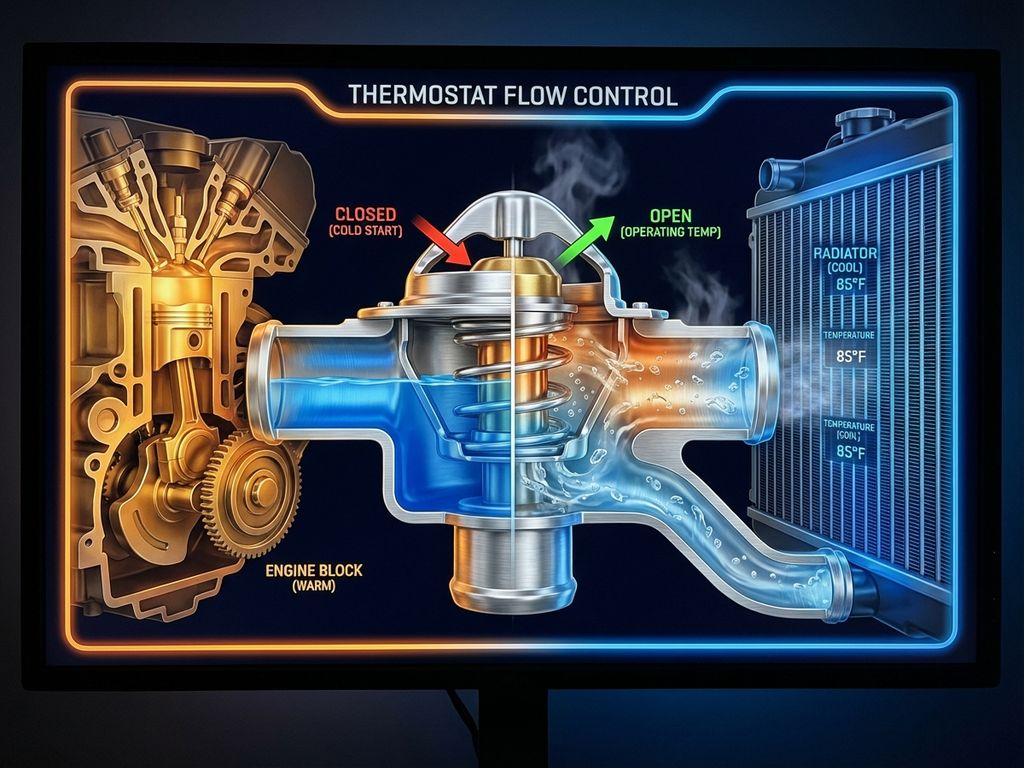
An engine thermostat reduces warm-up time by restricting coolant circulation when the engine is cold, allowing it to heat up faster. This temperature-controlled valve remains closed during start-up, keeping coolant within the engine block until the optimal operating temperature is reached. Once warmed, the thermostat gradually opens to maintain a consistent engine temperature and improve overall efficiency.
What is an engine thermostat and how does it control warm-up time?
An engine thermostat is a temperature-controlled valve that regulates coolant flow between the engine and radiator to optimise warm-up speed and maintain the correct operating temperature. This small but crucial component acts as a gatekeeper, determining when coolant should circulate through the entire cooling system based on engine temperature.
The thermostat contains a wax-filled chamber that expands and contracts with temperature changes. When the engine is cold, this wax remains solid, keeping the valve closed and preventing coolant from flowing to the radiator. This restricted circulation allows the engine to reach its optimal operating temperature more quickly by concentrating heat within the engine block.
As the engine warms up, the wax gradually melts and expands, opening the valve to allow coolant flow. This process ensures the engine reaches its proper operating temperature efficiently whilst preventing overheating once warmed up. The thermostat typically begins opening at around 82–88°C, depending on the specific engine requirements.
How does thermostat technology actually reduce engine warm-up time?
Thermostat technology reduces engine warm-up time by creating a controlled heating environment that traps heat within the engine block during cold starts. The closed thermostat prevents coolant from circulating to the radiator, where heat would be lost to ambient air, allowing the engine to warm up significantly faster.
During a cold start, the thermostat remains completely closed, creating a smaller volume of coolant that circulates only within the engine block and cylinder head. This concentrated circulation means less coolant needs to be heated, and the available heat is not dissipated through the radiator. The thermal management process works progressively, with the thermostat opening gradually as temperature increases.
Modern automotive thermostats feature precise opening temperatures and response times. The wax element responds quickly to temperature changes, ensuring optimal engine temperature control throughout the warm-up process. This controlled heating reduces the time needed to reach operating temperature from several minutes to typically 2–4 minutes, depending on ambient conditions and engine size.
What are the benefits of faster engine warm-up for fuel efficiency?
Faster engine warm-up significantly improves fuel efficiency by reducing the time engines spend in less efficient cold-running conditions. Cold engines require richer fuel mixtures and operate with higher internal friction, consuming more fuel per mile. Efficient thermostat-controlled engine warm-up minimises this inefficient period.
When engines operate below their optimal temperature, combustion becomes less complete and efficient. The engine management system compensates by injecting more fuel to ensure proper running, leading to increased consumption and emissions. Engine efficiency improves dramatically once operating temperature is reached, as fuel atomisation becomes more effective and combustion more complete.
The relationship between operating temperature and fuel economy is particularly important during short trips, where traditional engines might never reach full efficiency. Advanced thermostat benefits include:
- Reduced fuel consumption during warm-up phases
- Lower emissions output through improved combustion
- Better engine performance and responsiveness
- Reduced engine wear from cold-running conditions
Why do modern engines need advanced thermostat systems?
Modern engines require advanced thermostat systems to meet increasingly strict emissions standards and fuel efficiency requirements that traditional thermostats cannot achieve. Contemporary engine designs operate with tighter tolerances and more sophisticated engine management systems that demand precise temperature control under a wide range of operating conditions.
Today’s automotive thermostats must respond to multiple variables beyond simple temperature, including engine load, ambient conditions, and emission control requirements. Advanced systems may feature electronically controlled operation, multiple opening stages, or integration with hybrid powertrains. These sophisticated systems ensure optimal performance across diverse driving scenarios.
Stricter environmental regulations require engines to reach efficient operating temperatures more quickly whilst maintaining precise control throughout their operating range. Modern thermostat technology supports:
- Faster warm-up for reduced cold-start emissions
- Precise temperature control for optimal combustion
- Integration with advanced engine management systems
- Support for alternative fuel systems and hybrid technologies
How BTT Solutions advances engine thermostat technology
We provide high-precision thermostat components and thermal management systems that deliver superior engine temperature control for automotive and industrial applications. Our advanced thermostat technology reduces energy consumption through efficient fluid management, ensuring heat is stored and released exactly when needed for optimal performance.
Our comprehensive thermal management solutions include:
- High-precision automotive thermostats for faster warm-up and improved fuel efficiency
- Advanced temperature sensors for accurate engine monitoring
- Custom thermal management components for specific application requirements
- End-to-end solutions for vehicle and industrial temperature control systems
Whether you are developing next-generation automotive systems or require precise thermal management for industrial applications, our expertise in thermostat technology can help optimise your engine efficiency and performance. Contact us today to discuss how our thermal management solutions can enhance your specific application requirements.


