
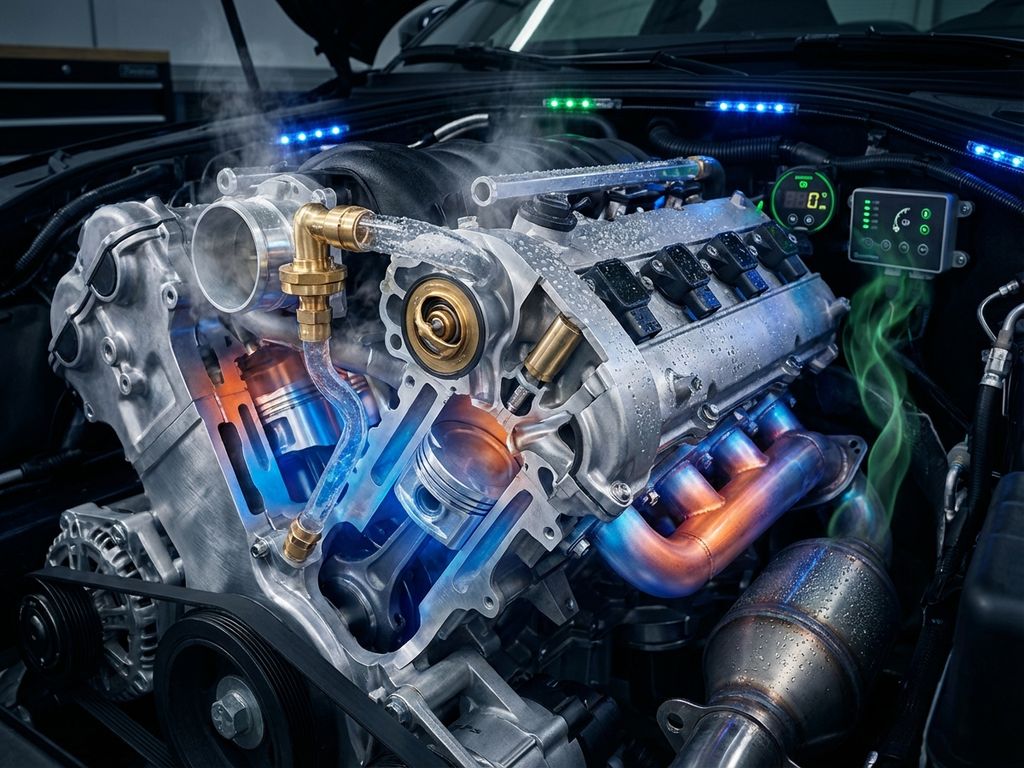
Optimising thermal management for emissions reduction involves controlling engine and system temperatures to ensure complete fuel combustion and efficient catalytic converter operation. Advanced thermostat technology, intelligent cooling circuits, and precise temperature regulation reduce harmful pollutants while improving fuel efficiency. These strategies help automotive and industrial systems meet strict environmental compliance standards.
What is thermal management and why does it matter for emissions?
Thermal management refers to the controlled regulation of temperature in automotive and industrial systems to optimise performance and reduce environmental impact. It directly affects how efficiently engines burn fuel and how effectively emission control systems operate.
The connection between temperature control and emission levels is fundamental to engine operation. When engines run at optimal temperatures, typically between 85–95°C, fuel combustion becomes more complete, reducing the formation of harmful pollutants such as carbon monoxide, hydrocarbons, and nitrogen oxides. Proper thermal regulation ensures catalytic converters reach their operating temperature quickly and maintain efficiency throughout the driving cycle.
Temperature control also influences fuel consumption patterns. Engines that warm up efficiently spend less time in cold-start conditions, where the fuel mixture runs richer and emissions are naturally higher. This thermal optimisation translates directly into better environmental compliance and improved fuel efficiency across automotive thermal systems.
How does poor thermal management actually increase emissions?
Inadequate temperature control leads to incomplete fuel combustion, inefficient catalytic converter operation, and increased fuel consumption. These conditions create higher concentrations of pollutants and reduce the effectiveness of emission control systems throughout the operating cycle.
When engines operate below optimal temperatures, the fuel–air mixture does not burn completely, creating excess carbon monoxide and unburned hydrocarbons. Cold engines require richer fuel mixtures to maintain operation, which inherently produces more emissions. The catalytic converter, which relies on high temperatures to function effectively, cannot process these pollutants efficiently when the exhaust system remains cool.
Overheating presents different challenges but equally problematic outcomes. Excessive temperatures promote nitrogen oxide formation during combustion and can damage catalytic converter materials, reducing their long-term effectiveness. Poor thermal management also forces cooling systems to work harder, increasing parasitic losses and fuel consumption, which compounds the emission problem.
What are the most effective thermal management strategies for reducing emissions?
Advanced thermostat systems, intelligent cooling circuits, waste heat recovery, and temperature optimisation protocols form the foundation of effective emission reduction strategies. These techniques maintain precise operating temperatures while maximising system efficiency.
Modern thermal optimisation begins with variable-temperature thermostats that adjust opening points based on operating conditions. These systems allow engines to warm up quickly during cold starts while preventing overheating under heavy loads. Intelligent cooling circuits direct coolant flow where it is needed most, reducing warm-up time and maintaining optimal temperatures across different engine zones.
Waste heat recovery systems capture thermal energy that would otherwise be lost, improving overall efficiency and reducing fuel consumption. Temperature optimisation protocols integrate multiple sensors to create closed-loop control systems that continuously adjust cooling based on real-time conditions. Engine cooling strategies that incorporate these elements can significantly reduce emissions while maintaining reliable operation.
How do modern thermostats help optimise engine performance for lower emissions?
Modern thermostats use variable temperature control and smart regulation systems to maintain precise operating temperatures for emission reduction. These advanced components respond dynamically to engine conditions, ensuring optimal combustion efficiency and catalytic converter performance throughout the operating cycle.
Variable-temperature thermostats adjust their opening characteristics based on engine load, ambient conditions, and operating requirements. During cold starts, they keep coolant circulation minimal to promote rapid warm-up, reducing the time engines spend in high-emission cold-running conditions. Once optimal temperatures are reached, these systems provide precise regulation to maintain efficiency.
Smart thermostat technology incorporates electronic controls that communicate with engine management systems. This integration allows for predictive temperature management, where the cooling system anticipates thermal loads based on driving patterns and environmental conditions. The result is consistently optimal operating temperatures that support complete fuel combustion and efficient emission control system operation.
What challenges do engineers face when implementing thermal management for emissions compliance?
Engineers must balance temperature precision requirements with system integration complexity while managing costs and maintaining performance standards. Environmental compliance regulations demand increasingly strict emission limits, requiring sophisticated thermal management solutions that work across diverse operating conditions.
Temperature precision presents significant technical challenges because optimal ranges are narrow, typically within 5–10°C windows. Systems must respond quickly to changing conditions while avoiding temperature overshoots that could increase emissions or damage components. Integration complexity arises when thermal management systems must coordinate with engine management, transmission control, and other vehicle systems.
Cost considerations often conflict with performance requirements, as advanced thermostat technology and precision sensors increase system complexity and expense. Engineers must also ensure solutions work reliably across extreme temperature ranges, from arctic cold starts to desert heat, while meeting durability requirements for hundreds of thousands of operating cycles. Regulatory compliance adds another layer of complexity, as emission standards continue tightening globally.
How BTT Solutions helps with thermal management for emissions reduction
We provide advanced thermostat technology and precision thermal management components that optimise engine temperatures for reduced emissions. Our solutions combine decades of engineering expertise with innovative temperature control systems designed specifically for environmental compliance and fuel efficiency.
Our thermal management products deliver measurable emission reductions through several key technologies:
- Precision thermostats that maintain optimal operating temperatures within 2°C accuracy
- Variable temperature control systems that adapt to real-time operating conditions
- Advanced temperature sensors providing instant feedback for closed-loop control
- Intelligent cooling circuit components that optimise heat distribution
- Durable designs tested for over 500,000 operating cycles
- Integration capabilities with modern engine management systems
Whether you are developing next-generation automotive thermal systems or upgrading existing industrial applications, our thermal management expertise can help you achieve emission reduction goals while maintaining reliable performance. Contact us to discuss how our precision components can optimise your system’s environmental compliance and operational efficiency.


