
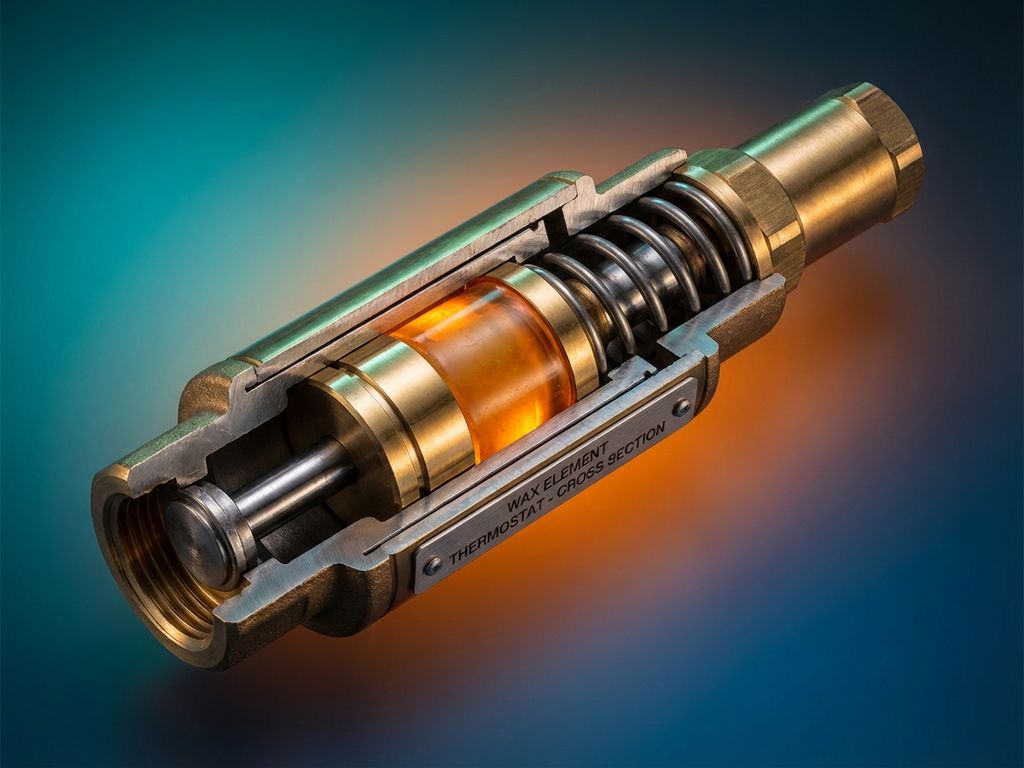
A wax element thermostat operates using the thermal expansion of paraffin wax pellets to control temperature precisely. When heated, the wax expands and pushes a piston mechanism that opens valves, allowing coolant to flow. As temperatures drop, the wax contracts and spring pressure closes the valve. This reliable mechanism provides accurate temperature control in automotive engines and industrial applications.
What is a wax element thermostat and how does it differ from other thermostats?
A wax element thermostat is a temperature control device that uses the thermal expansion of paraffin wax to operate mechanical valve systems. Unlike bimetallic thermostats that rely on metal strip expansion, or electronic thermostats that use sensors and circuits, wax element thermostats provide exceptionally precise temperature control through predictable phase changes in specially formulated wax compounds.
The key advantage of wax motor thermostat technology lies in its accuracy and reliability. While bimetallic thermostats can drift over time and electronic systems may fail due to electrical issues, wax element thermostats maintain consistent performance because the physical properties of the thermostat wax pellet remain stable. This makes them ideal for automotive thermostat applications where precise engine cooling system control is essential.
Response time varies between different thermostat types. Electronic thermostats react fastest, bimetallic versions respond moderately quickly, and wax element designs provide the most controlled, gradual response. This measured reaction prevents sudden temperature swings that could damage sensitive engine components.
How does the wax pellet actually expand and contract to control temperature?
The thermal actuator mechanism relies on the unique properties of specially formulated paraffin wax that undergoes predictable volume changes at specific temperatures. When coolant temperature rises, the thermostat wax pellet absorbs heat and begins expanding at precisely calibrated temperature thresholds, typically between 82°C and 95°C for automotive applications.
During the expansion phase, the wax changes from a solid to a semi-liquid state, increasing in volume by approximately 10–15%. This expansion creates significant pressure that pushes against a sealed piston mechanism. The piston movement directly opens valve seats, allowing coolant to flow through the engine cooling system. The entire thermostat operation occurs gradually over a temperature range of about 10–15°C rather than as an instant on-off switch.
When engine temperatures drop, the thermal expansion wax contracts as it cools and solidifies. Return spring pressure assists the closing action, ensuring the valve seats seal properly. This contraction phase happens more slowly than expansion, preventing rapid temperature fluctuations that could stress engine components.
What are the main components inside a wax element thermostat?
The essential components work together to create a reliable thermostat mechanism that responds accurately to temperature changes. The wax pellet chamber houses the specially formulated paraffin wax and connects to a precision-machined piston that translates thermal expansion into mechanical movement.
Key internal components include:
- Sealed wax pellet chamber containing a temperature-sensitive paraffin compound
- Precision piston mechanism that moves in response to wax expansion
- Return spring system providing closing force when temperatures drop
- Valve seat and disc assembly controlling coolant flow paths
- Housing components including bypass ports and mounting flanges
The housing design incorporates multiple flow paths to ensure proper coolant circulation. Primary valve openings handle main coolant flow, while bypass ports allow limited circulation during warm-up periods. This design prevents air pockets and ensures even temperature distribution throughout the engine cooling system.
Why do automotive engines specifically use wax element thermostats?
Automotive applications demand exceptional reliability under extreme conditions, making wax element thermostats the preferred choice for engine cooling systems. These thermostats operate consistently across temperature ranges from -40°C to 120°C, withstanding constant vibration, pressure changes, and chemical exposure from coolant additives.
The fail-safe operating characteristic is crucial for engine protection. When a wax element thermostat fails, it typically fails in the open position, allowing continuous coolant flow that prevents catastrophic overheating. This contrasts with electronic thermostats that may fail closed, potentially causing severe engine damage.
Cost-effectiveness makes wax element technology attractive for mass automotive production. These thermostats require no electrical connections, sensors, or complex control circuits. Manufacturing costs remain low while providing decades of reliable service. Modern engine cooling systems benefit from the precise temperature control that optimises fuel efficiency and reduces emissions through proper operating temperature maintenance.
What happens when a wax element thermostat fails or malfunctions?
Common failure modes include stuck-open, stuck-closed, or partial-operation scenarios that affect engine cooling system performance differently. A thermostat stuck open causes the engine to run too cool, reducing fuel efficiency and increasing emissions. Drivers may notice longer warm-up times, poor heater performance, and higher fuel consumption.
A stuck-closed thermostat creates dangerous overheating conditions. Warning signs include rapidly rising temperature gauge readings, steam from the engine bay, and coolant loss. This failure mode requires immediate attention to prevent serious engine damage, including warped cylinder heads, blown head gaskets, or complete engine seizure.
Partial operation occurs when the wax element gradually loses its expansion properties. Symptoms include erratic temperature readings, inconsistent heater output, and poor fuel economy. Professional diagnosis involves testing thermostat opening temperatures under controlled conditions or monitoring coolant flow patterns during engine warm-up cycles.
How BTT Solutions advances wax element thermostat technology
We specialise in manufacturing high-precision wax element thermostats for automotive, industrial, and residential applications. Our patented thermal management solutions deliver superior temperature control accuracy while reducing energy consumption through optimised coolant flow management.
Our advanced thermostat technology offers:
- Precision-engineered wax formulations for consistent thermal expansion properties
- Enhanced manufacturing processes ensuring reliable operation under extreme conditions
- Global production capabilities with stringent quality standards across eight worldwide facilities
- Customised thermal actuator solutions for specific automotive and industrial applications
Our thermal management expertise extends beyond traditional automotive applications into industrial heating systems, building climate control, and marine applications. Through continuous innovation in wax element technology, we help manufacturers achieve improved fuel efficiency and reduced emissions while maintaining optimal operating temperatures.
For comprehensive thermal management solutions tailored to your specific requirements, contact our engineering team to discuss how our advanced wax element thermostat technology can enhance your system’s performance. Learn more about our company and our commitment to delivering reliable thermal solutions worldwide.


