
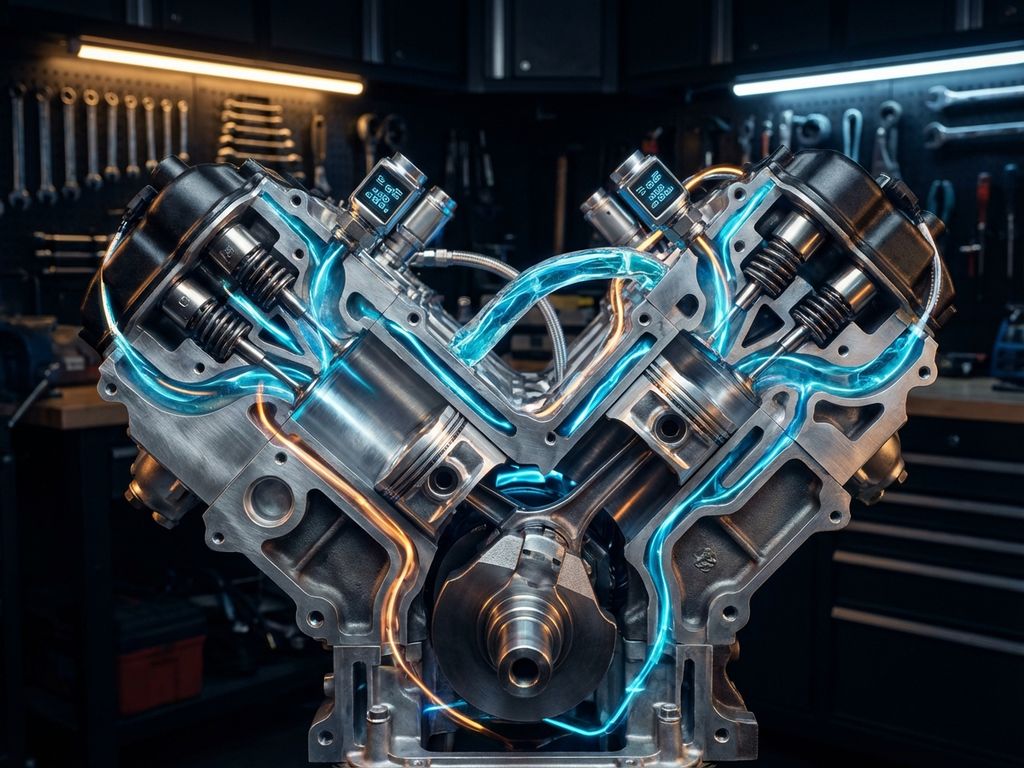
Thermal management directly impacts engine performance by controlling operating temperatures to optimise fuel efficiency, reduce emissions, and prevent component damage. Effective engine cooling systems maintain ideal temperatures through regulated coolant flow, ensuring engines run smoothly while maximising power output and longevity. Understanding thermal regulation helps improve overall automotive performance.
What is thermal management and why is it crucial for engines?
Thermal management refers to the systematic control of heat generation, distribution, and dissipation within automotive engines. Modern engines generate tremendous amounts of heat during combustion, with temperatures reaching over 2,000°C in the combustion chamber. This heat must be carefully managed to maintain optimal operating conditions.
Engine cooling systems work continuously to remove excess heat while retaining enough warmth for efficient operation. The process involves circulating coolant through engine passages and transferring heat to the radiator, where it dissipates into the atmosphere. This thermal regulation prevents overheating while ensuring the engine reaches its ideal operating temperature quickly.
Temperature control is crucial because engines are designed to operate within specific thermal ranges. Too much heat causes component expansion, reduced lubrication effectiveness, and potential catastrophic failure. Insufficient heat leads to incomplete fuel combustion, increased emissions, and poor fuel economy. Proper thermal management ensures components maintain their designed tolerances and performance characteristics.
How does poor thermal management affect engine performance?
Poor thermal management significantly reduces engine performance through multiple interconnected problems. Inadequate temperature control leads to reduced fuel efficiency, increased emissions, accelerated component wear, and potential engine damage from thermal stress.
When engines run too hot, several performance issues emerge. Metal components expand beyond design specifications, creating excessive clearances that reduce compression and power output. Oil viscosity decreases, providing inadequate lubrication protection. Engine efficiency drops as the combustion process becomes less controlled, leading to knock and reduced power delivery.
Overcooling creates equally problematic conditions. Cold engines require richer fuel mixtures that do not burn completely, increasing emissions and fuel consumption. Extended warm-up periods waste fuel and create excessive wear during cold operation. The engine management system compensates by enriching the mixture, further reducing efficiency.
Component longevity suffers under poor thermal conditions. Gaskets and seals deteriorate rapidly under excessive heat, while thermal cycling from temperature fluctuations causes metal fatigue. Cylinder head warping, blown gaskets, and bearing damage often result from inadequate thermal management.
What role do thermostats play in engine thermal management?
Thermostats serve as the primary control mechanism for engine cooling systems, regulating coolant flow to maintain optimal operating temperatures. These temperature-sensitive valves open and close based on coolant temperature, directing flow through the radiator when cooling is needed.
During engine startup, thermostats remain closed, preventing coolant circulation through the radiator. This allows the engine to reach operating temperature quickly, improving fuel economy and reducing emissions during the critical warm-up phase. Thermostat function ensures engines do not run cold longer than necessary.
Once the predetermined temperature is reached, thermostats gradually open, allowing coolant to flow through the radiator. This modulated approach maintains consistent operating temperatures regardless of external conditions or engine load. Advanced thermostats can respond to varying conditions, opening earlier under high loads or later during cold weather.
Modern automotive thermostats incorporate sophisticated designs that improve response times and temperature stability. Electronic thermostats can be controlled by the engine management system, allowing precise temperature control based on operating conditions. This optimisation reduces fuel consumption while maintaining ideal thermal conditions for performance and longevity.
How can you optimise your engine’s thermal management system?
Optimising your engine’s thermal management involves regular maintenance, proper coolant selection, and monitoring system performance. Regular coolant changes, thermostat replacement, and radiator cleaning maintain system effectiveness and prevent thermal-related problems.
Coolant selection significantly impacts cooling system optimisation. Use manufacturer-specified coolant types that provide proper corrosion protection and heat transfer properties. Modern coolants contain additives that improve thermal conductivity while protecting metal components from corrosion and electrolysis.
Regular maintenance prevents thermal management problems:
- Replace coolant according to manufacturer intervals
- Check thermostat operation during routine services
- Clean radiator fins and ensure proper airflow
- Inspect hoses and connections for leaks
- Monitor coolant levels and temperature readings
Consider upgrading components when appropriate. High-performance thermostats offer more precise temperature control, while improved radiators provide better heat dissipation. Regular monitoring through temperature gauges helps identify developing problems before they cause damage.
How BTT Solutions helps with engine thermal management
We provide advanced thermostat technology and comprehensive thermal management solutions specifically designed for optimal engine temperature control. Our precision-engineered products ensure reliable temperature regulation across automotive applications, delivering improved efficiency and reduced energy consumption.
Our thermal management solutions include:
- High-precision thermostats with superior temperature control accuracy
- Advanced temperature sensors for real-time monitoring
- Integrated thermal management systems for complete engine cooling
- Custom solutions tailored to specific automotive applications
- Components designed for enhanced fuel efficiency and emission reduction
Our patented technology reduces energy consumption through efficient coolant flow management, ensuring heat is stored and released precisely when needed. This approach optimises engine warm-up times, improves fuel efficiency, and extends component life through better thermal regulation. Learn more about BTT and our commitment to automotive innovation.
Contact our technical team to discuss how our advanced thermal management components can enhance your engine’s performance and efficiency.


