
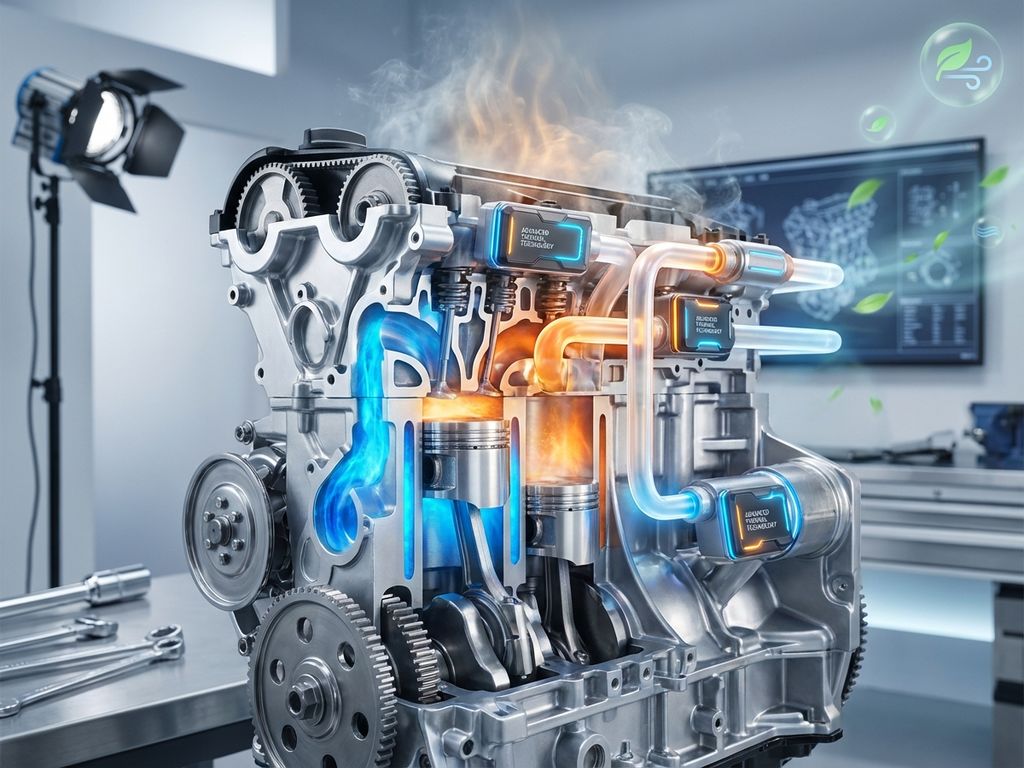
Thermal management systems control vehicle temperatures to optimise engine performance and significantly reduce harmful emissions. These systems use advanced thermostats and sensors to maintain ideal operating conditions, improving fuel combustion efficiency and reducing pollutant formation. Proper thermal control prevents energy waste while ensuring engines operate within optimal temperature ranges for minimal environmental impact.
What is thermal management and how does it impact vehicle emissions?
Thermal management encompasses the systems and technologies that regulate temperature throughout a vehicle’s powertrain and components. In automotive applications, these systems control coolant flow, monitor operating temperatures, and ensure engines maintain optimal thermal conditions for efficient operation.
The connection between temperature control and vehicle emissions is fundamental to combustion efficiency. When engines operate at precise temperatures, fuel burns more completely, producing fewer harmful byproducts. Cold engines produce significantly more emissions because incomplete combustion creates higher levels of carbon monoxide, hydrocarbons, and nitrogen oxides.
Modern automotive thermal systems use sophisticated control mechanisms to minimise the warm-up period and maintain consistent operating temperatures. This precision directly impacts how cleanly fuel burns, with properly managed engines producing substantially lower emissions compared to those with basic temperature control systems.
How do thermostats and temperature sensors reduce harmful emissions?
Advanced thermostat technology maintains optimal engine operating temperatures by precisely controlling coolant flow based on real-time conditions. Unlike traditional fixed-temperature thermostats, modern systems adjust continuously to ensure engines reach and maintain their most efficient operating range quickly.
Temperature sensors provide critical real-time monitoring that enables immediate adjustments to thermal management systems. These sensors detect temperature variations across different engine components, allowing the system to respond instantly to changing conditions and prevent temperature fluctuations that increase emissions.
The direct impact on fuel combustion efficiency occurs when engines operate within their designed temperature parameters. Properly controlled temperatures ensure complete fuel combustion, reducing unburned hydrocarbons and carbon monoxide while optimising the chemical reactions that minimise nitrogen oxide formation. This precise control can reduce harmful emissions by maintaining consistent combustion chamber temperatures throughout various driving conditions.
What’s the difference between traditional and modern thermal management systems?
Traditional thermal management systems rely on simple, mechanically operated thermostats that open at fixed temperatures, typically around 82–88°C. These systems provide basic temperature control but cannot adapt to varying driving conditions or optimise for different performance requirements.
Modern thermal management systems feature electronically controlled components that adjust continuously based on multiple inputs, including engine load, ambient temperature, and driving conditions. These systems can modify coolant flow patterns, adjust opening temperatures, and coordinate with other vehicle systems for optimal efficiency.
The improvements in precision are substantial. Advanced systems can maintain engine temperatures within 2–3°C of optimal ranges, compared to traditional systems that may vary by 10–15°C. This precision translates directly to emission reduction capabilities, as consistent optimal temperatures ensure more complete combustion and reduced pollutant formation across all operating conditions.
Why does proper engine temperature control matter for fuel efficiency?
The relationship between optimal engine temperature and fuel consumption centres on combustion efficiency and mechanical friction. Engines operating at ideal temperatures burn fuel more completely while reducing internal friction between moving components, directly improving fuel economy.
Thermal management prevents energy waste by eliminating extended warm-up periods and maintaining consistent operating conditions. When engines reach optimal temperatures quickly and stay there, less fuel is wasted during cold starts and temperature fluctuations that force the engine to work harder.
Improved fuel efficiency connects directly to lower emissions through reduced fuel consumption. Efficient thermal control can improve fuel economy by 5–10% in typical driving conditions, which proportionally reduces carbon dioxide emissions and other combustion byproducts. Additionally, better fuel efficiency means less fuel burned overall, creating a compound effect on emission reduction.
How does thermal management technology work in electric and hybrid vehicles?
Electric and hybrid vehicles require sophisticated thermal management for battery systems, electric motors, and power electronics, alongside traditional engine cooling in hybrid applications. Battery temperature control is critical for the performance, safety, and longevity of electric powertrains.
Battery thermal management maintains optimal charging and discharging temperatures, typically between 15–35°C for lithium-ion systems. This control prevents efficiency losses from temperature extremes while extending battery life and maintaining consistent vehicle performance across various weather conditions.
These systems contribute to overall vehicle efficiency by ensuring all components operate within their optimal temperature ranges. In hybrid vehicles, coordinated thermal management between the electric and combustion systems maximises the efficiency benefits of both powertrains. Integrated thermal control reduces environmental impact by optimising energy usage across all vehicle systems, whether drawing power from batteries, combustion engines, or regenerative braking systems.
How BTT Solutions helps with emission reduction through thermal management
We provide advanced thermal management solutions specifically designed to reduce vehicle emissions through precise temperature control and optimised system efficiency. Our products offer comprehensive thermal regulation that directly addresses emission reduction requirements across automotive applications.
Our thermal management systems deliver concrete benefits for emission reduction through:
- High-precision thermostats that maintain optimal combustion temperatures within 2°C accuracy
- Advanced temperature sensors providing real-time monitoring and instant system adjustments
- Integrated thermal control units that coordinate multiple vehicle systems for maximum efficiency
- Specialised components for electric and hybrid vehicle battery thermal management
- End-to-end solutions covering both automotive and industrial thermal applications
Our thermal management expertise spans traditional combustion engines, hybrid powertrains, and fully electric vehicles, ensuring optimal emission reduction across all vehicle types. Our company delivers proven solutions that help reduce your vehicle emissions while improving overall efficiency and performance. Contact us to learn how our advanced thermal management systems can benefit your specific applications.


