
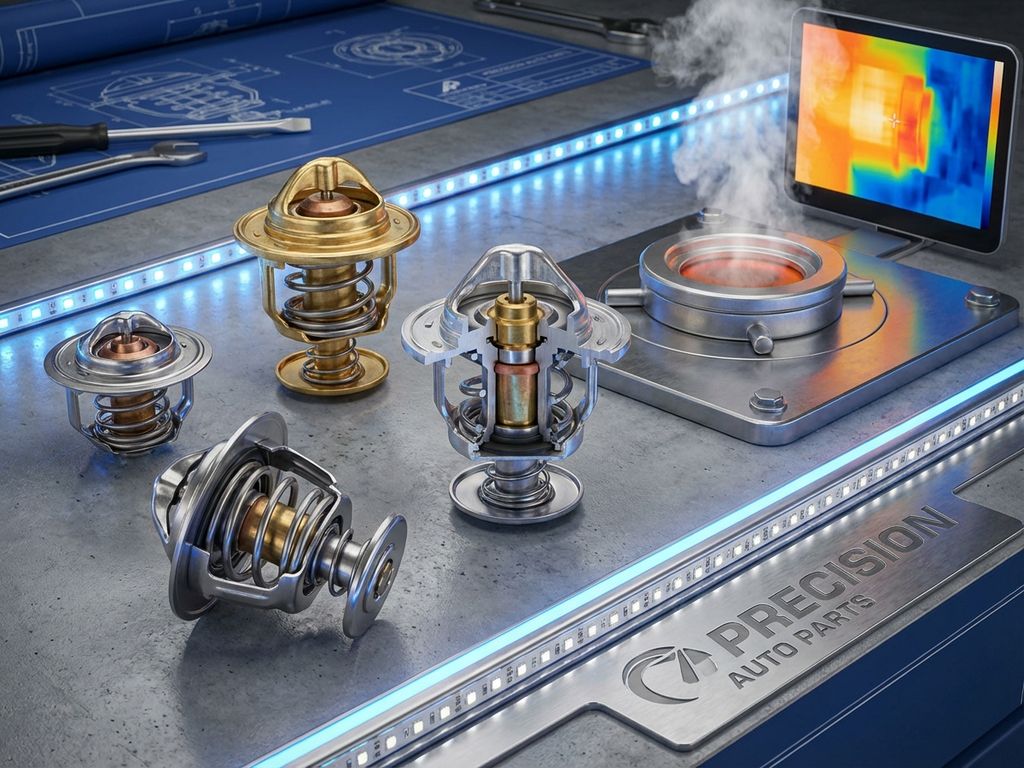
Selecting the right automotive thermostat components requires careful consideration of operating temperature ranges, flow characteristics, response times, and application-specific requirements. The choice depends on your vehicle type, engine design, and performance goals. Understanding mechanical versus electronic options, proper opening temperatures, and common selection mistakes helps ensure optimal thermal management and engine efficiency.
What are the key factors to consider when selecting automotive thermostat components?
The most critical factors include operating temperature range, flow capacity, response time, durability requirements, and compatibility with your specific engine and cooling system configuration. These elements work together to ensure proper thermal management and optimal engine performance.
Operating temperature range is the foundation of thermostat selection. Your chosen component must open and close at precise temperatures that match your engine’s thermal requirements. This temperature window directly affects fuel efficiency, emissions control, and overall engine longevity.
Flow characteristics determine how effectively coolant moves through your system when the thermostat opens. Insufficient flow capacity creates hot spots and uneven cooling, while excessive flow can prevent proper engine warm-up. The thermostat’s flow rate must match your cooling system’s capacity and pump specifications.
Response time affects how quickly the thermostat reacts to temperature changes. Modern engines require rapid response to maintain precise temperature control, especially during varying load conditions. Materials and design directly influence response characteristics.
Durability requirements vary significantly between applications. Commercial vehicles need components that withstand constant operation and extreme conditions, while performance applications demand precision under high-stress situations.
How do different automotive applications affect thermostat component requirements?
Passenger vehicles, commercial trucks, performance cars, and hybrid/electric vehicles each have distinct thermostat requirements based on their operating profiles, environmental conditions, and performance expectations. Understanding these differences ensures proper component selection for each application.
Passenger vehicles typically operate in moderate conditions with standard temperature requirements. These applications prioritise fuel efficiency and emissions compliance, requiring thermostats that maintain consistent operating temperatures during daily driving cycles. Standard mechanical thermostats often suffice for these applications.
Commercial trucks face demanding conditions including heavy loads, extended operating periods, and varied environmental conditions. These vehicles require robust thermostats with higher flow capacities and enhanced durability. Temperature control becomes critical for maintaining engine life under continuous operation.
Performance vehicles demand precise temperature control for optimal power output and engine protection. Racing applications may require multiple thermostats or electronic control systems to manage different cooling circuits. Response time and accuracy become paramount in these high-stress environments.
Hybrid and electric vehicles present unique challenges with complex thermal management needs. These systems often require electronic thermostats integrated with vehicle control systems to manage battery cooling, electric motor temperatures, and traditional engine cooling when applicable.
What’s the difference between mechanical and electronic automotive thermostats?
Mechanical thermostats use wax-element technology that expands and contracts with temperature changes, while electronic thermostats employ sensors and actuators controlled by the engine management system. Each technology offers distinct advantages depending on your application requirements.
Mechanical thermostats operate independently using a wax pellet that expands when heated, opening a valve to allow coolant flow. This simple, reliable design requires no electrical power and provides consistent operation. The wax element responds predictably to temperature changes, making these thermostats suitable for standard automotive applications.
Electronic thermostats integrate with engine control units to provide precise temperature management. These systems can adjust opening temperatures based on driving conditions, load requirements, and efficiency targets. Electronic control allows for multiple temperature setpoints and adaptive behaviour.
Cost considerations favour mechanical thermostats for basic applications, while electronic versions justify their higher cost through improved fuel efficiency and emissions control. Electronic systems also enable diagnostic capabilities and integration with vehicle telematics.
Precision differs significantly between the two technologies. Mechanical thermostats typically maintain temperatures within 3–5 degrees of their setpoint, while electronic versions can achieve accuracy within 1–2 degrees. This precision becomes important for modern engines with strict emissions requirements.
How do you determine the correct opening temperature for automotive thermostat components?
The correct opening temperature depends on your engine’s design specifications, operating conditions, fuel efficiency goals, and emissions requirements. Most automotive engines operate optimally between 85–95°C, but specific applications may require different temperature ranges.
Engine design specifications provide the starting point for temperature selection. Manufacturers specify optimal operating temperatures based on combustion chamber design, materials, and cooling system capacity. These specifications balance thermal efficiency with component protection.
Operating conditions significantly influence temperature requirements. Vehicles operating in extreme climates, under heavy loads, or in stop-and-go traffic may benefit from different temperature setpoints. Cold climates might require lower opening temperatures for faster warm-up, while hot climates may need higher temperatures for system efficiency.
Fuel efficiency goals often drive temperature selection towards higher operating ranges. Warmer engines typically achieve better fuel economy through reduced friction and improved combustion efficiency. However, this must be balanced against component durability and emissions requirements.
Emissions requirements may dictate specific temperature ranges for optimal catalyst operation and exhaust treatment systems. Modern engines often require precise temperature control to meet stringent emissions standards while maintaining performance.
What common mistakes should you avoid when selecting automotive thermostat components?
The most frequent mistakes include selecting incorrect temperature ratings, inadequate flow capacity, poor material compatibility, overlooking environmental factors, and insufficient consideration of system integration requirements. These errors can lead to engine damage, poor performance, and premature component failure.
Incorrect temperature ratings represent the most common selection error. Using thermostats with opening temperatures that are too low or too high for your application affects engine performance, fuel efficiency, and longevity. Always verify manufacturer specifications before selection.
Inadequate flow capacity causes cooling system bottlenecks that create hot spots and uneven temperature distribution. Calculate your system’s flow requirements and ensure your thermostat can handle peak demand conditions without restriction.
Material compatibility issues arise when thermostat components react poorly with coolants or system materials. Corrosion, degradation, and premature failure result from incompatible material combinations. Consider your coolant type and system materials during selection.
Environmental factors are often overlooked during selection. Extreme temperatures, vibration, chemical exposure, and contamination can significantly affect thermostat performance and longevity. Choose components rated for your operating environment.
System integration requirements become critical in modern vehicles with complex thermal management systems. Ensure your thermostat selection considers electronic interfaces, diagnostic capabilities, and integration with other vehicle systems.
How BTT Solutions helps with automotive thermostat component selection
We provide comprehensive engineering support and customised thermostat solutions for automotive, industrial, and building applications. Our expertise ensures you select the optimal components for your specific thermal management requirements.
Our selection support includes:
- Application-specific engineering analysis and component recommendations
- Custom thermostat designs tailored to unique operating requirements
- Comprehensive testing and quality assurance processes
- Technical documentation and integration support
- Ongoing technical consultation throughout your project lifecycle
Our global manufacturing capabilities and extensive experience across automotive, industrial, and building applications enable us to provide solutions that meet the most demanding thermal management challenges. We combine advanced materials, precision manufacturing, and rigorous testing to deliver components that exceed performance expectations.
Contact our engineering team to discuss your automotive thermostat requirements and discover how our customised solutions can optimise your thermal management system performance.
Related Articles
- How do thermal conductivity properties influence thermostat component design?
- 5 Ways Faster Engine Warm-Up Reduces Fleet Fuel Costs
- How do transmission oil thermostats protect automatic gearboxes?
- What is the response time of a wax element thermostat?
- What are the three main methods of heat transfer in thermostats?


