
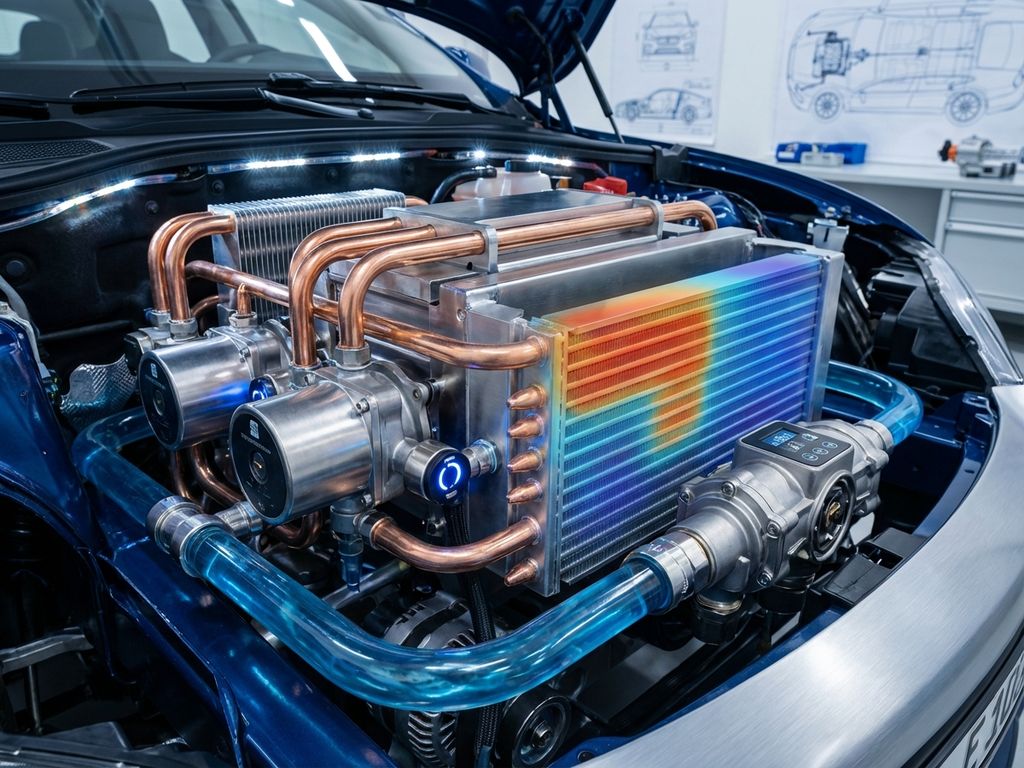
Modern vehicles rely on sophisticated thermal management technologies to control engine temperatures, optimize fuel efficiency, and reduce emissions. These systems have evolved from basic radiator cooling to intelligent, electronically controlled solutions that actively monitor and adjust temperatures. Advanced vehicle thermal systems include smart thermostats, heat recovery systems, and integrated cooling networks that work together to maintain optimal operating conditions across all driving scenarios.
What are thermal management technologies and why do modern vehicles need them?
Thermal management technologies are integrated systems that control heat distribution and temperature regulation throughout a vehicle’s engine and related components. Modern vehicles need these systems because today’s engines operate under stricter emission standards while delivering higher performance and fuel efficiency than ever before.
Traditional automotive cooling relied on simple radiator systems with basic thermostats that opened and closed at fixed temperatures. Today’s vehicle thermal systems incorporate electronic controls, variable flow rates, and predictive temperature management. These advanced systems monitor multiple temperature zones simultaneously, adjusting coolant flow to different engine areas based on real-time operating conditions.
The evolution toward sophisticated thermal management addresses several critical needs. Modern engines run hotter to improve combustion efficiency and reduce emissions. Turbocharged engines generate additional heat that requires precise control. Electric and hybrid vehicles need thermal management for both traditional engines and battery systems, creating complex heat management requirements that simple cooling systems cannot handle effectively.
How do advanced thermostats improve vehicle performance and efficiency?
Advanced thermostats use electronic controls and variable temperature settings to optimize engine operation across different driving conditions. Unlike traditional mechanical thermostats that open at fixed temperatures, modern vehicle thermostats can adjust their opening points based on engine load, ambient temperature, and driving patterns.
These sophisticated thermal management components reduce engine warm-up times by maintaining higher coolant temperatures during cold starts, then adjusting to lower temperatures under heavy loads. Electronic thermostats can also maintain different temperature zones within the engine, keeping the cylinder head cooler while allowing the engine block to run warmer for optimal efficiency.
Variable temperature control delivers measurable benefits. Engines reach optimal operating temperature faster, reducing fuel consumption during warm-up periods. Precise temperature regulation prevents overheating under demanding conditions while maintaining temperatures high enough for efficient combustion. This intelligent engine temperature control contributes to better fuel economy, reduced emissions, and improved engine longevity.
What’s the difference between traditional cooling systems and smart thermal management?
Traditional cooling systems use mechanical thermostats and fixed coolant flow patterns, while smart thermal management employs electronic controls, variable flow rates, and predictive temperature regulation. The key difference lies in the adaptability and precision of temperature control.
Conventional automotive cooling systems operate reactively. When coolant reaches a predetermined temperature, the thermostat opens, allowing flow through the radiator. The system maintains relatively stable temperatures but cannot adapt to varying conditions or optimize for different performance requirements.
Smart thermal management systems anticipate temperature needs based on driving conditions, engine load, and environmental factors. These systems can direct coolant flow to specific engine areas that need cooling while keeping other areas warmer. They integrate with vehicle electronics to coordinate with transmission cooling, air conditioning, and other heat-generating systems.
The advantages include improved fuel efficiency through optimal operating temperatures, reduced emissions via precise combustion control, and enhanced engine protection through predictive cooling. Smart systems also enable features like rapid cabin heating by directing waste heat efficiently.
Which thermal management innovations are shaping the future of automotive design?
Cooling system innovations focus on thermal energy recovery, phase-change materials, and integrated heat management for electric and hybrid vehicles. These technologies represent significant advances in efficiency and sustainability compared to traditional cooling approaches.
Thermal energy recovery systems capture waste heat from engines and exhaust systems, converting it into useful energy for cabin heating or electrical generation. Phase-change materials store and release thermal energy at specific temperatures, providing more stable temperature control with less energy input.
Advanced heat exchangers use improved materials and designs to transfer heat more efficiently while reducing weight and space requirements. Integrated thermal management for electric vehicles coordinates cooling between batteries, electric motors, power electronics, and traditional engine components in hybrid systems.
These innovations support automotive trends toward electrification, autonomous driving, and improved environmental performance. Electric vehicle batteries require precise temperature control for optimal performance and longevity. Autonomous vehicles need reliable thermal management for computing systems and sensors. All modern vehicles benefit from more efficient thermal systems that reduce energy consumption.
How do thermal management systems reduce emissions and improve fuel economy?
Optimal thermal efficiency directly reduces fuel consumption and emissions by maintaining ideal combustion temperatures and reducing energy waste. Precise temperature control ensures complete fuel burning while minimizing the formation of harmful pollutants.
When engines operate at optimal temperatures, fuel burns more completely, reducing unburned hydrocarbons and carbon monoxide emissions. Proper temperature regulation also controls nitrogen oxide formation, which occurs at excessively high combustion temperatures. Advanced thermal management maintains the narrow temperature range that minimizes all these emission types.
Improved fuel economy results from several thermal management benefits. Faster engine warm-up reduces the time spent in inefficient cold-running conditions. Precise temperature control optimizes combustion efficiency throughout the operating range. Reduced parasitic losses from cooling system components improve overall engine efficiency.
Automotive thermal solutions also support emission control systems. Catalytic converters require specific operating temperatures to function effectively. Advanced thermal management ensures these systems reach optimal temperatures quickly and maintain them consistently, maximizing their effectiveness in reducing harmful emissions.
How BTT Solutions helps with advanced vehicle thermal management
We specialize in precision thermal management components and end-to-end solutions for automotive applications. Our patented thermostat technologies and advanced temperature control systems deliver the performance modern vehicles require for optimal efficiency and emission compliance.
Our comprehensive vehicle heat management solutions include:
- High-precision electronic thermostats with variable temperature control
- Advanced temperature sensors for multi-zone monitoring
- Integrated thermal management systems for conventional and hybrid vehicles
- Custom thermal solutions designed for specific automotive applications
- Complete system integration and testing services
With expertise in thermal technology for automotive, industrial, and household applications, we understand the complex requirements of modern vehicle thermal systems. Our products reduce energy consumption through efficient heat management while ensuring optimal performance across all operating conditions.
Learn more about BTT and how our advanced thermal management solutions can improve your vehicle’s efficiency, performance, and environmental compliance. Contact us today to discuss your specific thermal management needs.


