
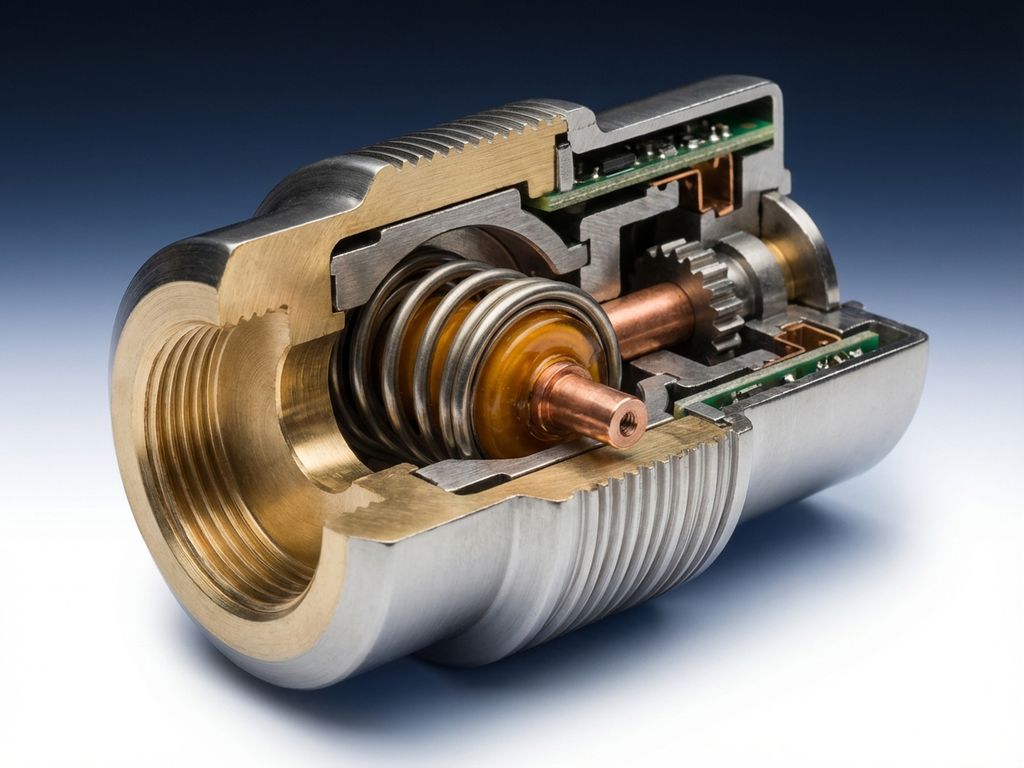
Thermostat components work together to maintain precise temperature control through a sophisticated mechanism of sensing elements, valves, and springs. The main thermostat parts include the thermostatic element, valve seat, spring mechanism, and housing assembly, each playing a crucial role in temperature regulation. Understanding these thermostat components helps explain how thermostats work across automotive, industrial, and household applications.
What is a thermostat and how does it control temperature?
A thermostat is an automatic temperature control device that maintains a predetermined temperature by opening and closing a valve based on thermal changes. It works by sensing temperature variations and responding with mechanical movement to regulate fluid flow, maintaining optimal operating conditions in engines, heating systems, and industrial processes.
The fundamental principle behind how thermostats work involves a temperature-sensitive element that expands or contracts with thermal changes. When temperatures rise above the set point, the thermostat mechanism opens to allow coolant or heating fluid to flow. When temperatures drop below the threshold, the valve closes to restrict flow and retain heat.
This temperature control system operates across various applications. In automotive systems, thermostats regulate engine coolant flow to maintain optimal operating temperatures. Industrial applications use thermostats to control process temperatures in manufacturing equipment. Household systems rely on thermostat assembly units to manage heating and cooling in radiators, underfloor heating, and HVAC systems.
What are the core mechanical components inside a thermostat?
The essential thermostat parts include the thermostatic element, valve seat, spring mechanism, and protective housing. Each component serves a specific function in the temperature sensing and control process, working together to provide reliable temperature regulation across different operating conditions.
The thermostatic element acts as the primary sensor and actuator, typically containing a wax-filled capsule or bimetallic strip that responds to temperature changes. The valve seat provides a precise sealing surface that controls fluid flow when the thermostatic element moves. The spring mechanism ensures proper valve closure and provides the return force needed for consistent operation.
The housing assembly protects internal components while providing mounting points and fluid connections. Additional thermostat components may include guide pins for proper alignment, rubber seals for leak prevention, and calibration elements that determine the exact opening temperature. These automotive thermostat parts and industrial thermostat components are manufactured to precise tolerances to ensure accurate temperature control.
How does the thermostatic element actually sense temperature changes?
The thermostatic element senses temperature through thermal expansion of specially formulated wax or movement of bimetallic strips. When temperature rises, the wax expands significantly, creating mechanical force that pushes against a piston to open the valve. This expansion is predictable and repeatable, allowing precise temperature control.
Wax-filled elements contain a specially engineered wax compound that expands at a predetermined temperature. The expansion rate is carefully calibrated during manufacturing to ensure the valve opens at the exact required temperature. The wax pushes against a rubber boot and piston assembly, converting thermal energy into mechanical movement.
Bimetallic strip elements use two different metals bonded together that expand at different rates when heated. This differential expansion causes the strip to bend or curve, creating the mechanical movement needed to operate the valve. Some advanced thermostat mechanisms combine both technologies or use shape-memory alloys that change form at specific temperatures, providing even more precise control in demanding applications.
What’s the difference between automotive and industrial thermostat components?
Automotive thermostat parts operate at lower pressures and temperatures compared to industrial thermostat components, which must withstand extreme conditions and provide longer service life. Industrial applications often require more robust materials and precise calibration for process control requirements.
Automotive thermostats typically open between 70–90°C and handle coolant pressures up to 2 bar. The thermostat assembly in vehicles focuses on quick response times and compact design to fit within engine compartments. Materials include standard metals and rubber seals suitable for automotive coolant chemistry.
Industrial thermostat components operate across much wider temperature ranges, from sub-zero to several hundred degrees Celsius. They handle higher pressures and corrosive fluids, requiring specialised materials like stainless steel, high-temperature seals, and reinforced housings. Industrial applications demand longer service intervals and more precise temperature control, often within ±1°C accuracy.
The calibration process also differs significantly. Automotive thermostats focus on engine protection and efficiency, while industrial units must maintain precise process temperatures for manufacturing quality and safety requirements.
Why do thermostat components sometimes fail and how can you tell?
Thermostat components fail due to wear of moving parts, contamination, and thermal cycling stress. Common failure modes include stuck valves, degraded seals, and worn thermostatic elements that no longer respond accurately to temperature changes, leading to poor temperature control and system inefficiency.
The thermostatic element can lose its calibration over time, causing the valve to open too early or too late. Contamination from dirty coolant or process fluids can cause the valve to stick open or closed. Spring fatigue reduces the closing force, preventing proper sealing. Rubber components deteriorate with age and temperature exposure, leading to internal and external leaks.
Signs of thermostat failure include temperature fluctuations outside normal ranges, longer warm-up times, overheating, or poor heating performance. In automotive applications, you might notice the engine taking longer to reach operating temperature or running too hot. Industrial systems may show process temperature instability or increased energy consumption.
Regular inspection can identify early warning signs such as external leaks, corrosion, or visible damage to the housing. Temperature monitoring helps detect performance degradation before complete failure occurs.
How BTT Solutions helps with thermostat component precision and reliability
We specialise in manufacturing high-precision thermostat components for automotive, industrial, and household applications, delivering advanced thermal management solutions that ensure optimal performance and reliability. Our expertise spans the complete thermostat assembly process, from individual components to integrated temperature control systems.
Our comprehensive thermostat solutions include:
- Precision-engineered thermostatic elements with exact temperature calibration
- Advanced valve seat designs for improved sealing and durability
- High-performance spring mechanisms tested for millions of cycles
- Robust housing assemblies designed for specific application requirements
- Custom temperature control components for specialised applications
We maintain rigorous quality standards throughout our manufacturing process, ensuring each thermostat mechanism meets precise specifications for opening temperature, flow characteristics, and service life. Our global manufacturing capabilities enable us to deliver consistent quality across automotive, industrial, and household markets.
For expert guidance on thermostat components and temperature control solutions tailored to your specific requirements, contact our technical team to discuss how we can optimise your thermal management applications.


