
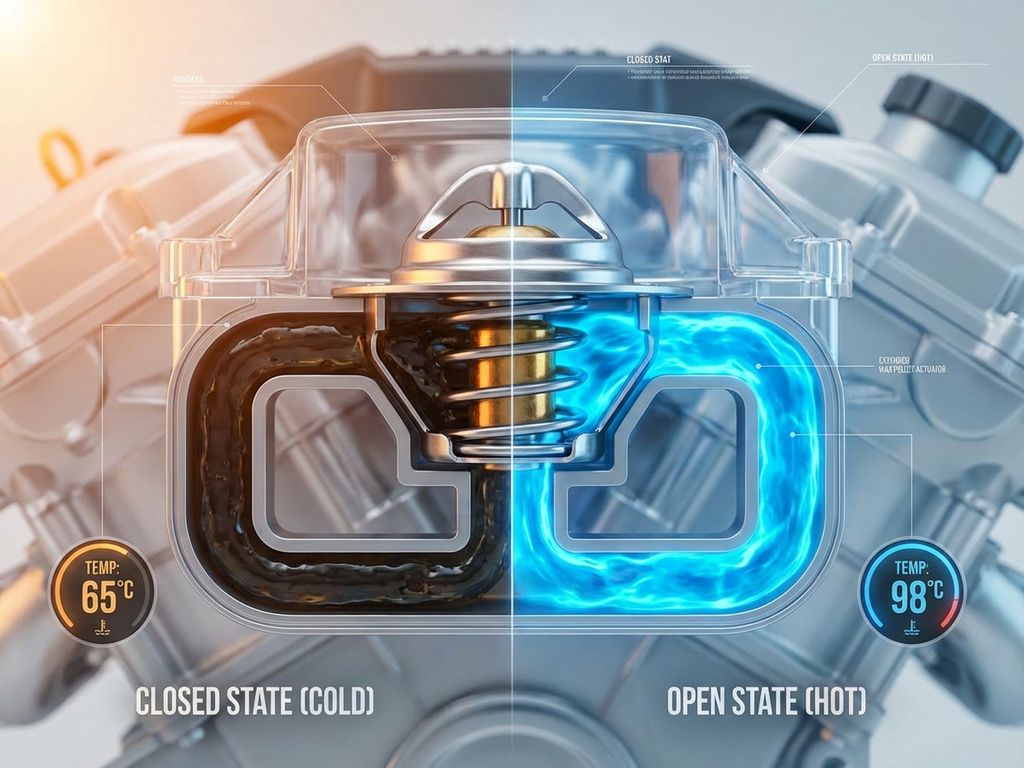
An engine thermostat opens when coolant temperature reaches approximately 180–195°F (82–90°C), allowing hot coolant to flow to the radiator for cooling. When temperatures drop, the thermostat closes to restrict coolant flow and help the engine warm up quickly. This automatic temperature control system maintains optimal engine operating conditions, prevents overheating, and improves fuel efficiency by regulating coolant circulation through the engine cooling system.
What exactly is an engine thermostat and why is it essential?
An engine thermostat is a temperature-controlled valve that acts as the gatekeeper of your vehicle’s cooling system. This small but crucial component sits between the engine and radiator, automatically opening and closing based on coolant temperature to regulate fluid flow throughout the system.
The thermostat serves as the brain of engine temperature control, ensuring your engine reaches its optimal operating temperature quickly and maintains it consistently. Without proper thermostat function, engines would either overheat during operation or take excessive time to warm up, leading to poor performance and increased wear.
Modern engines rely on precise temperature management for optimal combustion efficiency, reduced emissions, and component longevity. The thermostat enables this by creating a closed-loop system that responds automatically to temperature changes, making it indispensable for proper cooling system operation and overall engine health.
How does an engine thermostat know when to open and close?
Engine thermostats operate through a temperature-sensitive mechanism that responds automatically to coolant heat levels. Most modern thermostats contain a wax pellet that expands when heated and contracts when cooled, creating the mechanical force needed to open and close the valve.
The wax pellet sits inside a sealed chamber connected to a spring-loaded valve mechanism. As coolant temperature rises to the thermostat’s opening point (typically 180–195°F), the wax expands and pushes against a piston, which forces the thermostat valve open against spring pressure.
When coolant temperatures drop below the threshold, the wax contracts, allowing the spring to pull the valve closed again. This automatic response system requires no external power or control signals, making it remarkably reliable. Some older thermostats use bimetallic springs instead of wax pellets, but the principle remains the same: thermal expansion and contraction create the mechanical movement needed for proper valve positioning.
What happens inside your engine when the thermostat opens?
When the thermostat opens, coolant begins circulating from the engine through the radiator, creating a complete cooling loop that transfers excess heat away from critical engine components. This process prevents overheating while maintaining optimal operating temperatures for efficient combustion.
Hot coolant flows from the engine block and cylinder head into the upper radiator hose, then through the radiator where airflow and cooling fans remove heat. The cooled fluid returns through the lower radiator hose back to the engine, completing the circulation cycle.
This continuous flow pattern ensures even temperature distribution throughout the engine while preventing hot spots that could cause damage. The radiator’s heat exchange process effectively removes excess thermal energy, allowing the engine to maintain consistent operating temperatures even under heavy loads or high ambient temperatures.
The thermostat valve opening also enables the full cooling system capacity, including radiator fans when needed, creating a comprehensive heat management system that protects engine components from thermal stress.
Why does the thermostat close and what occurs during this phase?
The thermostat closes during cold engine starts and low-temperature conditions to block coolant flow to the radiator, forcing hot coolant to circulate only within the engine block. This accelerates warm-up time and improves fuel efficiency by helping the engine reach optimal operating temperature quickly.
During the closed phase, coolant circulates through a bypass circuit within the engine, allowing heat to build up rapidly without losing thermal energy to the radiator. This process is crucial for proper engine operation, as cold engines run inefficiently and produce higher emissions.
Quick warm-up provides several benefits, including improved fuel economy, reduced engine wear, and faster cabin heating. Modern engines are designed to operate within specific temperature ranges for optimal combustion, and the closed thermostat phase ensures these conditions are reached as quickly as possible.
The thermostat remains closed until coolant reaches the predetermined opening temperature, at which point it gradually opens to begin normal cooling system operation. This automatic transition ensures smooth temperature management without driver intervention.
What problems arise when thermostats fail to open or close properly?
Thermostat failures typically occur in three ways: stuck closed, stuck open, or partial operation. Each failure mode creates distinct problems that can lead to poor engine performance, increased fuel consumption, or serious engine damage if not addressed promptly.
A stuck-closed thermostat prevents coolant flow to the radiator, causing rapid overheating that can warp cylinder heads, blow head gaskets, or crack engine blocks. Warning signs include rising temperature gauge readings, steam from the engine bay, and coolant boiling in the reservoir.
Conversely, a stuck-open thermostat allows constant coolant flow, preventing the engine from reaching proper operating temperature. This results in poor fuel economy, increased emissions, sluggish performance, and inadequate cabin heating during cold weather.
Partial thermostat operation creates inconsistent temperature control, leading to temperature fluctuations that stress engine components and reduce efficiency. These failures often develop gradually, making them harder to detect until performance issues become noticeable.
How BTT Solutions helps with engine thermostat performance
BTT Solutions provides advanced thermostat technology and precision-engineered components that deliver superior engine temperature control for automotive, industrial, and marine applications. Our innovative designs ensure reliable operation across demanding conditions while maximizing efficiency and performance.
Our comprehensive thermostat solutions include:
- High-precision wax pellet mechanisms for accurate temperature response
- Enhanced valve designs that improve coolant flow characteristics
- Durable materials engineered for extended service life
- Custom temperature calibrations for specific application requirements
- Advanced testing protocols ensuring consistent quality and performance
Whether you need standard replacement thermostats or specialized components for unique applications, our engineering expertise and manufacturing capabilities deliver solutions that optimize cooling system operation. Contact us today to discover how our thermostat technology can improve your engine’s temperature management and overall performance.


