
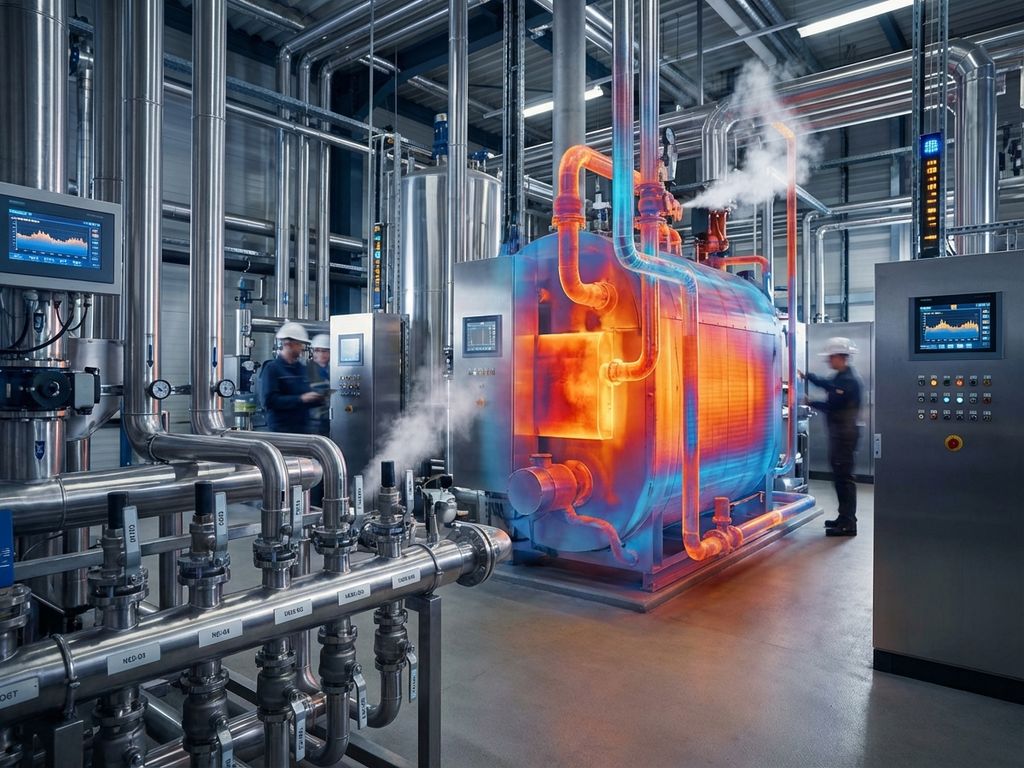
Thermal management in industrial applications involves controlling temperature, heat dissipation, and thermal energy flow within manufacturing processes, equipment, and facilities. It ensures optimal performance, safety, and energy efficiency while preventing equipment failure and maintaining consistent production quality. Effective temperature control systems are essential for protecting valuable machinery and maintaining operational reliability across diverse industrial environments.
What is thermal management and why is it critical for industrial operations?
Thermal management encompasses the systematic control of heat generation, distribution, and removal in industrial settings to maintain equipment within safe operating temperatures. This discipline combines engineering principles with practical solutions to manage thermal energy flow throughout manufacturing processes and facility operations.
Industrial operations generate substantial heat through machinery friction, electrical components, chemical processes, and mechanical work. Without proper temperature control, this heat accumulates and creates dangerous conditions that threaten both equipment integrity and worker safety. Manufacturing equipment operates within specific temperature ranges for optimal efficiency, and exceeding these limits leads to reduced performance and accelerated wear.
The criticality becomes apparent when considering the interconnected nature of industrial systems. A single overheated component can trigger cascading failures throughout production lines, resulting in costly downtime and potential safety hazards. Effective thermal management prevents these scenarios while optimising energy efficiency and extending equipment lifespan.
What are the main types of thermal management systems used in industry?
Industrial thermal management systems fall into several categories, each designed for specific applications and heat load requirements. Active cooling systems use mechanical components like fans, pumps, and compressors to actively remove heat, while passive systems rely on natural heat dissipation through conduction, convection, and radiation.
Liquid cooling systems circulate coolants through heat exchangers and cooling loops to manage high heat loads efficiently. These systems excel in applications requiring precise temperature control and can handle substantial thermal loads. Air cooling systems use fans and airflow management to dissipate heat, making them suitable for moderate heat loads and environments where liquid cooling is not practical.
Heat exchangers transfer thermal energy between different media, allowing heat recovery and efficient temperature regulation. Thermal interface materials improve heat transfer between components and cooling systems, while industrial heating systems provide controlled temperature increases for processes requiring elevated temperatures. Each system type offers distinct advantages depending on space constraints, heat load characteristics, and operational requirements.
How does poor thermal management impact industrial equipment and processes?
Inadequate thermal management creates a cascade of operational problems that significantly impact industrial productivity and profitability. Equipment operating above design temperatures experiences accelerated component degradation, leading to frequent breakdowns and premature replacement needs.
Manufacturing processes become inconsistent when temperatures fluctuate beyond acceptable ranges. Metalworking operations lose precision, chemical processes produce inferior results, and electronic systems malfunction or fail completely. These temperature-related issues directly translate into quality control problems and increased waste production.
Energy efficiency suffers dramatically when thermal control systems operate improperly. Overheated equipment consumes more power while delivering reduced output, creating a double impact on operational costs. Safety hazards emerge as temperatures rise, potentially causing fires, explosions, or dangerous working conditions for personnel.
Production downtime becomes inevitable when thermal issues force emergency shutdowns. The ripple effects extend beyond immediate production losses, affecting delivery schedules, customer relationships, and overall business reputation. Maintenance costs escalate as technicians spend more time addressing heat-related failures rather than performing preventive maintenance.
What factors should you consider when designing industrial thermal management solutions?
Successful thermal management system design begins with accurate heat load calculations that account for all thermal sources within the industrial environment. These calculations must consider peak operating conditions, ambient temperature variations, and future expansion requirements to ensure adequate cooling capacity.
Environmental conditions significantly influence system selection and design parameters. Ambient temperatures, humidity levels, dust exposure, and chemical environments all affect thermal control systems performance and longevity. Space constraints often dictate whether liquid or air cooling systems are feasible, while access requirements influence maintenance scheduling and system layout.
Energy efficiency requirements have become increasingly important as operational costs and environmental regulations tighten. Modern thermal management solutions must balance cooling performance with power consumption, often incorporating heat recovery systems to maximise energy utilisation.
Regulatory compliance ensures systems meet safety standards and environmental requirements specific to each industry. Maintenance accessibility, component availability, and total cost of ownership considerations round out the design criteria that determine long-term system success and operational sustainability.
How do modern thermal management technologies improve industrial efficiency?
Advanced thermal management technologies leverage smart sensors, automated controls, and precision components to optimise industrial cooling performance while reducing energy consumption. These systems continuously monitor temperature conditions and adjust cooling capacity in real time, eliminating energy waste from overcooling.
Smart temperature sensors provide detailed thermal mapping throughout industrial facilities, identifying hot spots before they become problematic. This predictive capability enables proactive maintenance scheduling and prevents unexpected equipment failures that disrupt production schedules.
Energy recovery systems capture waste heat from industrial processes and redirect it for useful purposes, such as space heating or preheating incoming materials. This approach significantly improves overall thermal optimisation while reducing facility energy costs.
Automated control systems integrate with facility management platforms to coordinate thermal management with production schedules. These systems can pre-cool equipment before high-demand periods and reduce cooling during downtime, maximising efficiency without compromising performance or reliability.
How BTT Solutions helps with industrial thermal management
We specialise in precision thermal management components and systems designed specifically for demanding industrial applications. Our comprehensive approach addresses the complete thermal control spectrum, from individual component temperature regulation to facility-wide process temperature control solutions.
Our industrial thermal management expertise includes:
- High-precision thermostat components engineered for industrial temperature ranges and harsh operating conditions
- Custom temperature control systems designed to meet specific process requirements and space constraints
- Advanced thermal sensors and monitoring equipment for real-time temperature management
- Energy-efficient heat management solutions that reduce operational costs while improving performance
- Complete system integration services ensuring seamless operation with existing industrial infrastructure
Our end-to-end solutions approach means we handle everything from initial thermal analysis through system design, installation, and ongoing support. This comprehensive service ensures optimal thermal performance while minimising downtime and maximising return on investment. To learn more about our company and our commitment to industrial excellence, we invite you to explore our comprehensive capabilities.
We offer a complete range of thermal management products specifically engineered for industrial applications, ensuring you have access to the most advanced solutions available. Contact our industrial thermal management specialists today to discuss how our precision components and custom solutions can improve your facility’s temperature control, reduce energy costs, and enhance operational reliability.


