
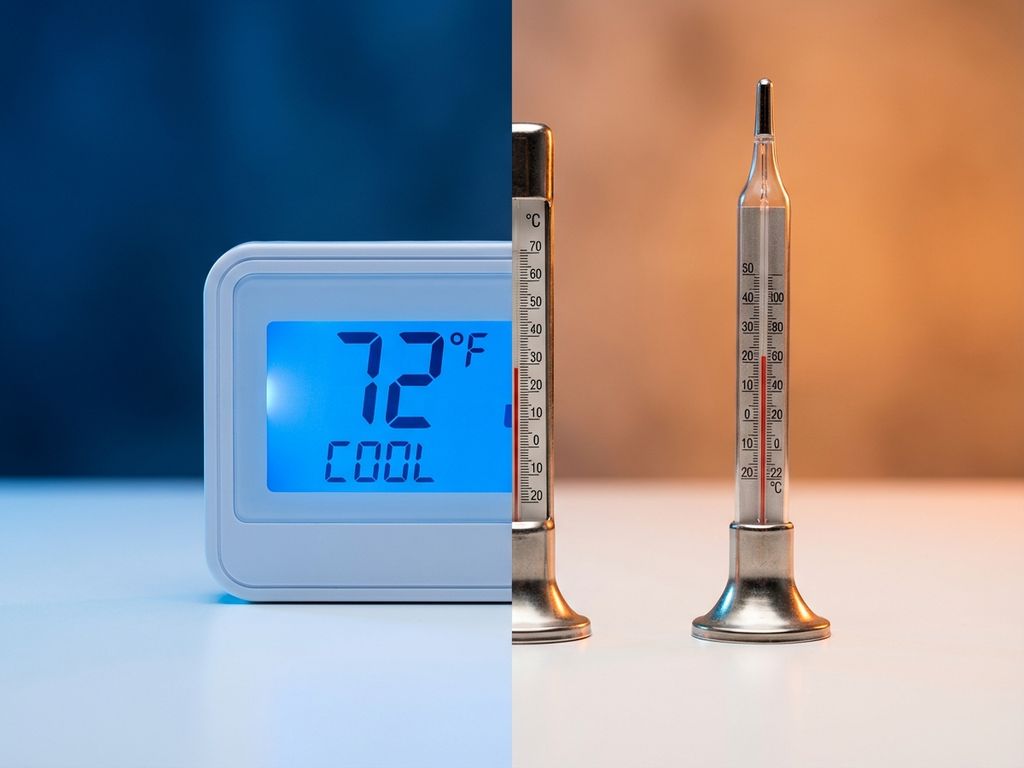
The difference between a thermostat and a thermometer lies in their fundamental purpose: a thermometer measures temperature, while a thermostat controls it. Thermometers are measurement devices that display current temperature readings, whereas thermostats are control devices that automatically maintain desired temperatures by switching heating or cooling systems on and off. Understanding when you need temperature measurement versus temperature control helps you choose the right device for your application.
What exactly is the difference between a thermostat and a thermometer?
A thermostat is a temperature control device that automatically regulates heating and cooling systems, while a thermometer is purely a measurement instrument that displays temperature readings. This fundamental distinction determines how each device functions in thermal management systems.
Thermostats contain sensing elements that detect temperature changes and switching mechanisms that activate or deactivate connected equipment. When room temperature drops below your set point, the thermostat signals your heating system to start. Once the desired temperature is reached, it switches the system off. This creates an automated control loop that maintains consistent temperatures without manual intervention.
Thermometers, by contrast, provide temperature information without any control capability. They use various sensing technologies to measure ambient or surface temperatures and display the results on digital screens, analogue dials, or liquid-filled tubes. Whether you’re checking indoor air temperature or monitoring industrial processes, thermometers give you data but don’t take action based on that information.
The key difference becomes apparent in their applications. You’d use a thermostat to maintain your home at 21°C automatically, but you’d use a thermometer to check whether your refrigerator is running at the correct 4°C.
How does a thermostat actually control temperature?
Thermostats control temperature through a three-step process: sensing the current temperature, comparing it to your desired setting, and switching connected equipment on or off accordingly. This automated cycle maintains consistent temperatures within your specified range.
Mechanical thermostats use bimetallic strips or gas-filled bellows that expand and contract with temperature changes. As these components move, they physically open or close electrical contacts that control your heating or cooling system. These reliable devices have been used for decades in residential and commercial applications.
Electronic thermostats employ digital sensors like thermistors or resistance temperature detectors (RTDs) to measure temperature precisely. Microprocessors compare sensor readings to your programmed settings and send electrical signals to control equipment. This digital approach enables more accurate temperature control and additional features such as programmable schedules.
The switching function is crucial for effective thermostatic control. Rather than running continuously, your heating or cooling system cycles on and off to maintain the set temperature. This prevents energy waste and equipment wear while providing comfortable, consistent conditions. Modern thermostats include features such as anticipation circuits that help minimise temperature swings by accounting for system response times.
What are the main types of thermostats and when should you use each?
The four main thermostat types are mechanical, electronic, programmable, and smart thermostats, each suited to different applications and user needs. Your choice depends on desired features, budget, and system compatibility requirements.
Mechanical thermostats offer simple, reliable temperature control using bimetallic elements or gas-filled sensors. They’re ideal for basic applications where you need consistent temperatures without advanced features. These units work well in rental properties, workshops, or anywhere you want straightforward operation without programming complexity.
Electronic thermostats provide more precise temperature control through digital sensors and displays. They’re perfect when accuracy matters, such as in laboratories, medical facilities, or precision manufacturing environments. The digital interface makes temperature adjustments easier to read and set compared with mechanical dial controls.
Programmable thermostats automatically adjust temperatures based on daily and weekly schedules you create. They’re excellent for homes and offices where occupancy patterns are predictable. You can programme different temperatures for morning, daytime, evening, and night periods, reducing energy consumption when spaces are unoccupied.
Smart thermostats connect to your Wi‑Fi network, enabling remote control through smartphone apps and learning your preferences over time. These advanced temperature control devices suit tech‑savvy users who want maximum convenience and energy optimisation. They’re particularly valuable in modern homes with variable schedules or for property managers overseeing multiple buildings.
How do thermometers measure temperature accurately?
Thermometers measure temperature by detecting thermal energy through various sensing technologies that convert heat into readable measurements. Accuracy depends on the sensing method, calibration quality, and proper placement in the measurement environment.
Digital thermometers use electronic sensors such as thermistors, which change electrical resistance as temperature varies. These sensors connect to circuits that convert resistance changes into temperature readings displayed on LCD screens. Digital units typically provide accuracy within ±0.1°C and respond quickly to temperature changes.
Analogue thermometers rely on physical expansion of materials like mercury or alcohol in glass tubes, or bimetallic strips in dial gauges. As temperature rises, the sensing material expands proportionally, moving up the scale or rotating the pointer. While less precise than digital versions, they’re reliable and don’t require batteries or frequent calibration.
Infrared thermometers measure thermal radiation emitted by surfaces without direct contact. They’re invaluable for measuring hot surfaces, moving objects, or hazardous materials where contact measurement isn’t practical. However, they require an understanding of emissivity values and surface conditions for accurate readings.
Specialised temperature measurement devices include thermocouples for extreme temperatures, resistance temperature detectors (RTDs) for precision applications, and thermal imaging cameras for area temperature mapping. Each technology has specific advantages depending on your measurement requirements, environmental conditions, and accuracy needs.
When do you need a thermostat versus just a thermometer?
Choose a thermostat when you need automatic temperature control to maintain consistent conditions, and select a thermometer when you only need to monitor temperatures without automated responses. The decision depends on whether you want measurement data or active temperature management.
Thermostats are essential for comfort control systems such as home heating, air conditioning, and industrial process control where maintaining specific temperatures is critical. You need thermostatic control in situations where temperature fluctuations could damage equipment, affect product quality, or compromise comfort. Examples include residential HVAC systems, laboratory incubators, and manufacturing processes requiring precise thermal conditions.
Thermometers are sufficient when you need temperature information for monitoring, verification, or manual decision‑making. They’re ideal for checking food temperatures, monitoring outdoor conditions, verifying equipment performance, or conducting quality control inspections. You’d use thermometers in kitchens, weather stations, medical applications, and maintenance procedures.
Consider your response requirements when choosing between devices. If temperature readings will trigger manual actions, a thermometer provides the necessary information. However, if you want automatic responses to temperature changes, a thermostat eliminates the need for constant monitoring and manual adjustments.
Many applications benefit from both devices working together. For instance, thermal management systems might use thermostats for primary control while employing additional thermometers for monitoring and verification purposes.
How BTT Solutions helps with advanced thermal management systems
We specialise in precision thermostat technology and comprehensive thermal management components for automotive, industrial, and residential applications. Our advanced thermostatic solutions optimise energy efficiency while maintaining exact temperature control across diverse operating conditions.
Our product range addresses critical thermal management challenges through:
- High‑precision thermostats that reduce energy consumption through efficient fluid control in automotive and industrial systems
- Advanced temperature sensors providing accurate feedback for optimal system performance and emissions reduction
- Integrated control units that combine sensing and switching functions for seamless thermal management
- Specialised components for building systems including floor heating, radiators, and wall heating applications
- Custom solutions tailored to specific automotive, marine, and industrial thermal control requirements
Our patented end‑to‑end thermal management solutions ensure optimal performance, fuel efficiency, and reduced emissions across multiple industries. Whether you need precise temperature control for automotive applications or efficient thermal management for industrial processes, our components deliver reliable, long‑term performance.
Contact us today to discuss how our advanced thermostat technology can improve the efficiency and performance of your thermal management system.


