
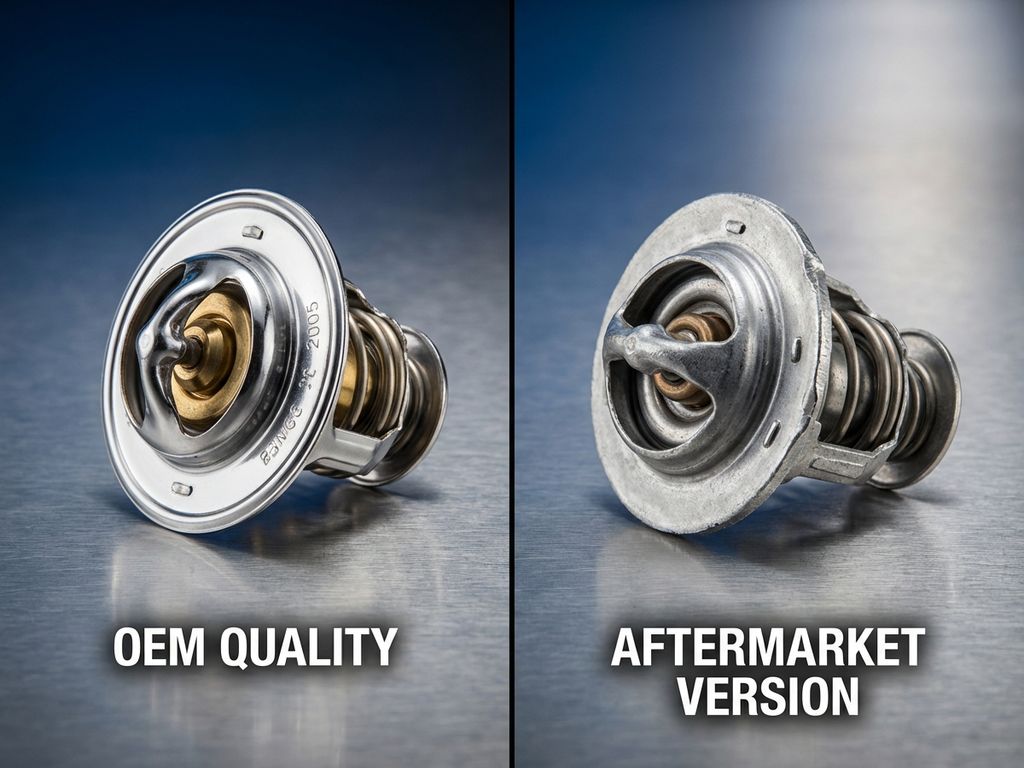
OEM thermostats are original equipment components manufactured by the same company that produced your vehicle’s initial thermostat, while aftermarket thermostats are third-party alternatives made by different manufacturers. The main differences lie in quality standards, pricing, and performance characteristics. Understanding these distinctions helps you make informed decisions about thermostat replacement for optimal engine cooling system performance.
What exactly are OEM and aftermarket thermostats?
OEM thermostats are Original Equipment Manufacturer components that meet the exact specifications your vehicle manufacturer designed for your engine cooling system. These thermostats are produced either by the car manufacturer itself or by its approved suppliers using identical materials, tolerances, and quality standards to the original part installed during vehicle assembly.
The manufacturing process for OEM automotive thermostats follows strict quality control protocols established by the vehicle manufacturer. These components undergo extensive testing to ensure they operate within precise temperature ranges and maintain consistent performance throughout their expected lifespan. OEM parts typically feature the vehicle manufacturer’s part numbers and branding.
Aftermarket thermostats, by contrast, are manufactured by independent companies that specialize in replacement automotive parts. These third-party manufacturers design their thermostats to fit and function in your vehicle, though they may use different materials, manufacturing processes, or design approaches compared with the original specification.
Many aftermarket thermal management components are engineered to meet or exceed OEM specifications, while others focus on providing budget-friendly alternatives. The quality and performance of aftermarket options can vary significantly depending on the manufacturer’s standards and target market.
How do OEM and aftermarket thermostats differ in quality and performance?
Build quality differences between OEM and aftermarket thermostats primarily stem from manufacturing standards and material selection. OEM thermostats must meet the vehicle manufacturer’s exact specifications for materials, tolerances, and durability testing, ensuring consistent performance across temperature ranges and operating conditions.
The precision engineering in OEM thermostats reflects years of development and testing specific to your vehicle’s engine cooling requirements. These components are designed to work seamlessly with other engine management systems, maintaining optimal coolant flow and temperature regulation throughout the engine’s operational life.
Aftermarket thermostat quality varies considerably depending on the manufacturer. Premium aftermarket brands often match or exceed OEM specifications, using advanced materials and manufacturing techniques. However, budget aftermarket options may compromise on material quality or precision to achieve lower price points.
Performance characteristics can differ in opening temperatures, response times, and long-term reliability. OEM thermostats are calibrated precisely for your specific engine, while aftermarket alternatives may have slightly different operating parameters that could affect fuel efficiency or emissions performance in some vehicles.
What’s the cost difference between OEM and aftermarket thermostats?
OEM thermostats typically cost 20–50% more than aftermarket alternatives, with prices varying based on vehicle make, model, and the complexity of the thermal management system. The higher initial cost reflects the research, development, and quality assurance investments made by the original manufacturer.
Aftermarket thermostat pricing spans a wide range, from budget options costing significantly less than OEM parts to premium alternatives that may approach OEM pricing. The cost difference often reflects the quality of materials, manufacturing precision, and testing standards employed by different aftermarket manufacturers.
Long-term value considerations extend beyond the initial purchase price. OEM thermostats often provide predictable performance and longevity, potentially reducing the likelihood of premature failure or related cooling system problems. Quality aftermarket options can offer similar value, while budget alternatives may require more frequent replacement.
Vehicle maintenance costs should factor in potential warranty implications. Using non-OEM parts might affect warranty coverage on newer vehicles, though quality aftermarket components typically do not void warranties when properly installed and maintained according to manufacturer specifications.
Which type of thermostat should you choose for your vehicle?
Vehicle age and usage patterns significantly influence the best thermostat choice for your specific situation. Newer vehicles under warranty often benefit from OEM thermostats to maintain warranty coverage and ensure compatibility with advanced engine management systems.
For older vehicles or those with high mileage, quality aftermarket thermostats can provide excellent performance at reduced cost. Consider your vehicle’s expected remaining service life and your budget for vehicle maintenance when making this decision.
Budget considerations should include both immediate costs and long-term value. If you’re planning to keep your vehicle for many years, investing in OEM or premium aftermarket thermostats may provide better overall value through improved reliability and performance consistency.
Specific scenarios where OEM thermostats are preferable include:
- Vehicles under manufacturer warranty
- High-performance or luxury vehicles with complex cooling systems
- Fleet vehicles requiring consistent maintenance standards
- Situations where maximum reliability is essential
Quality aftermarket thermostats work well for cost-conscious repairs, older vehicles, or when seeking specific performance characteristics not available in OEM options.
How BTT Solutions helps with premium thermostat solutions
We provide high-precision thermal management components that meet the demanding requirements of automotive, industrial, and household applications. Our expertise in thermostat technology spans decades of innovation in temperature control and fluid management systems. Learn more about BTT and our commitment to quality engineering solutions.
Our comprehensive thermostat solutions include:
- Precision-engineered automotive thermostats for optimal engine cooling performance
- Advanced temperature sensors for accurate system monitoring
- Custom thermal management components for specialized applications
- Industrial-grade thermostats for heating and cooling systems
- Technical support and application guidance for proper component selection
Whether you need OEM-quality replacement thermostats or custom solutions for unique applications, we combine advanced engineering with proven manufacturing expertise. Our global presence ensures reliable supply and technical support for automotive professionals, industrial customers, and system integrators worldwide.
Contact our technical team today to discuss your specific thermal management requirements and discover how our precision components can enhance your cooling system’s performance and reliability.


