
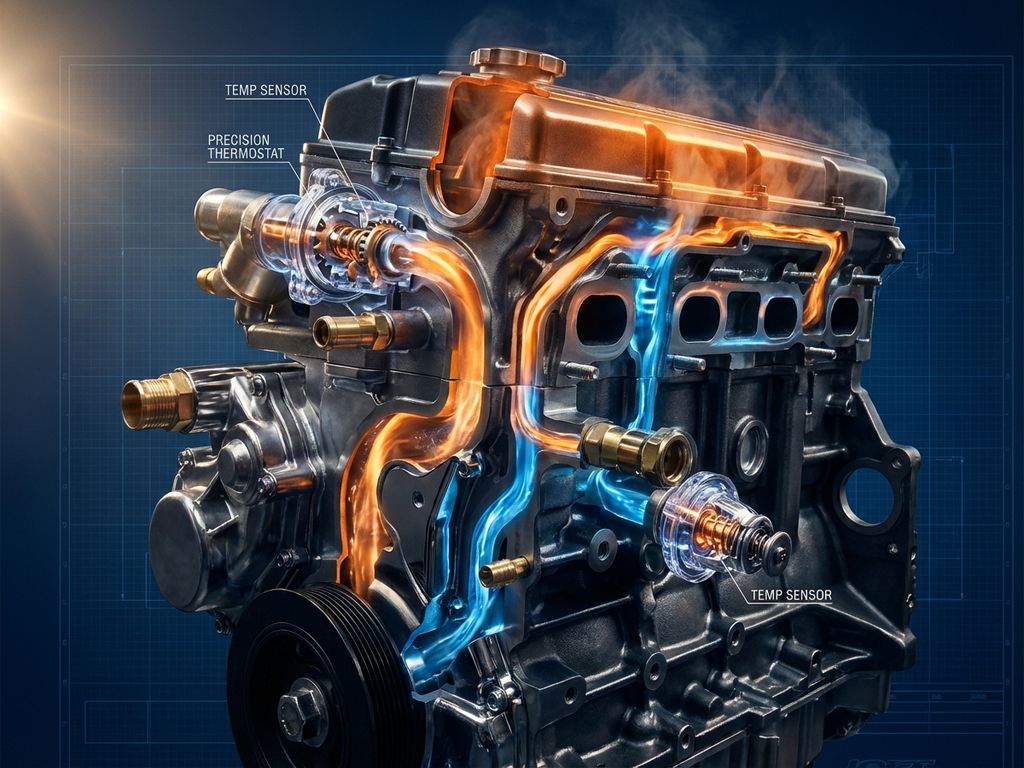
Thermal management is the process of controlling temperature in systems and devices to maintain optimal performance and prevent overheating. It is essential across industries, from automotive to electronics, where proper temperature control directly impacts efficiency, safety, and equipment lifespan. Understanding thermal management principles helps you select the right solutions for your specific applications.
What is thermal management and why is it essential?
Thermal management refers to the systematic control of temperature in mechanical, electronic, and industrial systems to maintain optimal operating conditions. It involves monitoring, regulating, and dissipating heat to prevent equipment damage and ensure consistent performance.
The importance of thermal management extends far beyond simple temperature control. In automotive applications, proper heat management prevents engine overheating while optimising fuel efficiency and reducing harmful emissions. Electronic devices rely on thermal solutions to maintain processing speeds and prevent component failure that could result from excessive heat build-up.
Industrial equipment faces similar challenges, where temperature control systems protect valuable machinery and maintain production quality. Without effective thermal management, equipment experiences reduced performance, shortened lifespan, and potential safety hazards. The technology ensures that heating systems operate efficiently during cold periods, while cooling systems prevent overheating during intensive operations.
Modern thermal management has become increasingly sophisticated, incorporating smart sensors and automated controls that respond to changing conditions. This evolution reflects the growing complexity of systems and the need for precise temperature regulation across diverse applications.
How do thermal management systems actually work?
Thermal management systems operate through three fundamental heat transfer methods: conduction, convection, and radiation. These systems use temperature sensors to monitor conditions and control mechanisms to maintain optimal temperatures automatically.
Conduction transfers heat through direct contact between materials, while convection moves heat through fluid circulation such as air or coolant. Radiation disperses heat through electromagnetic waves without requiring physical contact. Effective thermal solutions often combine these methods for maximum efficiency.
Key components work together to create comprehensive temperature control. Thermostats act as the system’s brain, comparing actual temperatures to desired settings and triggering appropriate responses. Temperature sensors provide real-time data, while heat exchangers facilitate efficient thermal transfer between different system areas.
Control mechanisms include pumps for liquid circulation, fans for air movement, and valves for flow regulation. These components respond to thermostat signals, increasing or decreasing heat transfer as needed. Advanced systems incorporate multiple sensors and control points, allowing for precise temperature management across different zones or operating conditions.
What are the main types of thermal management solutions?
Thermal management solutions fall into two primary categories: active systems that require external power and passive systems that rely on natural heat transfer. Each approach offers distinct advantages depending on application requirements and environmental conditions.
Active systems include liquid cooling and forced air circulation, which provide precise control and rapid temperature adjustment. Liquid cooling systems circulate coolant through heat-generating components, offering superior heat capacity and targeted cooling. Air cooling systems use fans and heat sinks to move heat away from critical areas.
Passive solutions rely on natural convection, radiation, and conduction without external power. These include heat sinks, thermal pads, and phase-change materials that absorb and release heat based on temperature fluctuations. Passive systems offer reliability and energy efficiency but provide less precise control.
Application-specific solutions address unique requirements across different industries. Automotive thermal management combines engine cooling, cabin climate control, and battery thermal regulation. Electronic devices often use miniaturised heat sinks and thermal interface materials, while industrial equipment may require large-scale heat exchangers and cooling towers.
Why is thermal management crucial for automotive applications?
Automotive thermal management directly impacts engine performance, fuel efficiency, and vehicle safety. Modern vehicles require sophisticated temperature control for engines, transmissions, batteries, and cabin comfort systems to operate effectively across varying conditions.
Engine temperature control prevents overheating while ensuring optimal combustion efficiency. Proper thermal regulation helps engines reach operating temperature quickly, reducing emissions during cold starts and maintaining consistent performance. Cooling systems prevent engine damage, while heating systems provide cabin comfort and defrost capabilities.
Electric vehicle batteries require precise thermal management to maintain performance and safety. Battery temperature affects charging speed, driving range, and cell longevity. Too much heat can cause dangerous thermal runaway, while excessive cold reduces battery capacity and performance.
Effective automotive thermal management improves fuel efficiency by maintaining optimal operating temperatures across all vehicle systems. It reduces wear on engine components, extends battery life in electric vehicles, and ensures consistent performance regardless of external weather conditions. This comprehensive approach to temperature control supports both vehicle reliability and environmental responsibility.
What challenges do modern thermal management systems face?
Modern thermal management faces increasing complexity from higher power densities, stricter regulations, and demands for energy efficiency. Electronic devices generate more heat in smaller spaces, while environmental regulations require reduced energy consumption and emissions.
Miniaturisation creates significant challenges as components become smaller while generating similar or greater heat levels. Traditional cooling methods may not fit in compact designs, requiring innovative approaches such as micro-channel cooling and advanced thermal interface materials. Industrial temperature control must balance performance with space constraints.
Energy efficiency requirements push thermal management systems to operate more effectively while consuming less power. This means developing smarter controls, more efficient heat transfer methods, and systems that adapt to changing conditions automatically. Regulatory pressure for reduced emissions affects both automotive and industrial applications.
Smart, adaptive thermal management represents the future direction for addressing these challenges. Systems must respond intelligently to varying loads, environmental conditions, and efficiency requirements. This includes predictive controls that anticipate thermal needs and adjust accordingly, reducing energy consumption while maintaining optimal performance.
How BTT solutions help with thermal management
We specialise in high-precision thermal management components and systems that optimise performance while reducing energy consumption. Our patented end-to-end solutions address the complex thermal challenges facing automotive, industrial, and household applications.
Our comprehensive thermal management products include:
- Advanced thermostat technology that provides precise temperature control and rapid response to changing conditions
- High-accuracy temperature sensors for real-time monitoring and system optimisation
- Thermal control units that integrate seamlessly with existing systems
- Customised solutions for specific automotive, industrial, and residential applications
- Energy-efficient designs that reduce operational costs while maintaining optimal performance
Our thermal solutions help reduce energy consumption through efficient fluid management and smart temperature control. Whether you need automotive engine thermal management, industrial process temperature control, or residential heating system components, we provide the expertise and technology to optimise your thermal management requirements. Learn more about our company and our commitment to innovative thermal solutions.
Contact us today to discuss how our thermal management expertise can improve your system’s efficiency, reliability, and performance across any application.


