
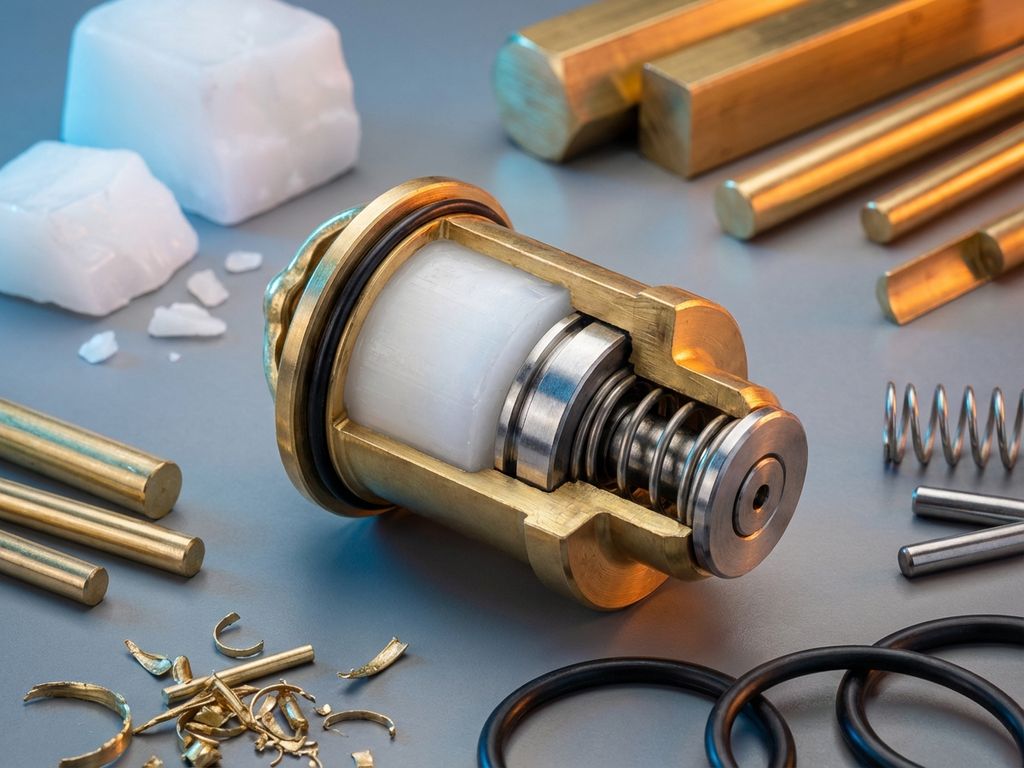
Wax element thermostats rely on carefully selected materials to ensure precise temperature control and long-lasting performance. The core components include specialised thermal wax pellets, durable housing materials such as brass and stainless steel, and precision valve components. Each material plays a crucial role in the thermostat’s ability to respond accurately to temperature changes whilst withstanding harsh operating conditions in automotive, industrial, and residential applications.
What exactly is a wax element in a thermostat and how does it work?
A wax element serves as the core actuating component that converts thermal energy into mechanical motion within thermostat technology. The thermal wax pellet expands when heated and contracts when cooled, creating precise linear movement that opens and closes valves to regulate fluid flow.
The physics behind wax motor functionality centres on the predictable expansion characteristics of specially formulated wax compounds. When coolant temperature rises, the wax element expands by approximately 10–15% of its volume, pushing against a piston or valve mechanism. This expansion force overcomes spring tension to open the thermostat valve, allowing coolant circulation. As temperatures drop, the wax contracts, spring pressure closes the valve, and circulation reduces.
Modern wax actuator components operate with remarkable precision, typically responding to temperature changes within 1–2 degrees Celsius. This accuracy makes them ideal for automotive thermostats, where engine temperature control directly impacts fuel efficiency and emissions. The sealed wax chamber design ensures consistent performance across thousands of heating and cooling cycles.
What type of wax is used in thermostat wax elements?
Thermostat wax elements primarily use paraffin-based compounds and synthetic wax blends engineered for specific melting points and expansion characteristics. Automotive thermostats typically employ wax formulations that activate between 82–95°C, whilst industrial applications may require different temperature ranges.
Paraffin wax compositions form the foundation for most thermostat construction due to their reliable expansion properties and chemical stability. These natural hydrocarbon waxes provide consistent thermal response and resist degradation from coolant chemicals. Manufacturers often blend different paraffin grades to achieve precise activation temperatures and expansion rates.
Synthetic wax blends offer enhanced performance for demanding applications. These formulations may include polymer additives that improve thermal cycling durability and reduce hysteresis (the difference between opening and closing temperatures). Specialised thermal wax pellets for high-performance automotive thermostats often incorporate copper particles to improve heat transfer and response time.
The melting point selection depends entirely on the intended application. Standard automotive coolant thermostats activate at around 88°C, whilst transmission fluid applications might require 85°C activation. Industrial heating systems may need wax elements calibrated for 60–70°C operation.
What materials are used for the thermostat housing and valve components?
Thermostat housing materials typically include brass, stainless steel, and aluminium alloys, chosen for their corrosion resistance and thermal conductivity. Valve seats often utilise rubber compounds or metal sealing surfaces, whilst spring components employ high-carbon steel for consistent tension over time.
Brass housings remain popular for automotive thermostats because they resist coolant corrosion whilst providing excellent thermal transfer. The material machines easily during manufacturing and maintains dimensional stability across temperature cycles. Many wax motor thermostats feature brass valve bodies with precision-machined seating surfaces.
Stainless steel components offer superior durability in harsh environments. Marine applications and industrial systems often specify stainless steel housings to resist saltwater corrosion or aggressive chemicals. The material’s strength allows thinner wall sections whilst maintaining structural integrity.
Sealing elements require careful material selection to ensure leak-free operation. Synthetic rubber compounds such as EPDM resist coolant degradation and maintain flexibility across temperature ranges. Metal-to-metal sealing surfaces provide longer service life but require precise manufacturing tolerances.
How do different materials affect thermostat performance and longevity?
Material choices directly impact the response time, accuracy, and service life of wax element thermostats. Thermal conductivity affects how quickly the wax element responds to temperature changes, whilst corrosion resistance determines longevity in various operating environments.
Housing materials with high thermal conductivity enable faster thermostat response. Brass and aluminium transfer heat more efficiently than stainless steel, allowing the wax element to react quickly to coolant temperature changes. This responsiveness improves temperature regulation accuracy and engine efficiency in automotive applications.
Corrosion resistance becomes critical in applications involving aggressive fluids or extended service intervals. Stainless steel components resist pitting and degradation from acidic coolants or marine environments. However, the material’s lower thermal conductivity may slightly reduce response speed compared with brass alternatives.
Spring materials affect long-term calibration stability. High-quality spring steel maintains consistent tension over thousands of cycles, ensuring the thermostat closes at the correct temperature. Inferior spring materials may lose tension, causing the thermostat to remain partially open and compromising temperature control.
Wax formulation durability influences replacement intervals. Premium synthetic blends resist thermal degradation and maintain expansion characteristics longer than basic paraffin compounds. This translates to extended service life and more consistent performance throughout the component’s lifespan.
What are the key material considerations when selecting wax element thermostats?
Material selection should prioritise fluid compatibility, operating temperature range, and environmental conditions specific to each application. Matching thermostat materials to coolant types, pressure requirements, and service intervals ensures optimal performance and longevity.
Fluid compatibility represents the primary consideration for thermostat materials. Engine coolants contain various additives that may react with certain metals or sealing compounds. Ethylene glycol-based coolants generally work well with brass and rubber components, whilst some extended-life coolants require specific material combinations to prevent degradation.
Operating temperature ranges influence both wax formulation and housing material selection. High-temperature applications may require synthetic wax blends and stainless steel construction to maintain performance. Low-temperature environments need wax compounds that remain responsive without becoming overly viscous.
Pressure ratings affect housing wall thickness and material strength requirements. High-pressure cooling systems demand robust construction materials and secure sealing methods. The thermostat housing must withstand system pressure without deformation whilst maintaining precise valve operation.
Environmental factors such as vibration, corrosive atmospheres, and maintenance intervals guide material choices. Marine applications require enhanced corrosion protection, whilst automotive applications prioritise cost-effectiveness and reliable performance over typical service intervals.
How BTT Solutions helps with advanced wax element thermostat materials
We specialise in high-precision thermostat manufacturing using advanced material selection processes and rigorous quality control standards. Our expertise ensures optimal thermal management performance across automotive, industrial, and residential applications through carefully engineered component materials.
Our comprehensive approach to thermostat materials includes:
- Advanced wax formulation development for specific temperature ranges and response characteristics
- Precision housing manufacturing using corrosion-resistant alloys and thermally conductive materials
- Quality testing protocols that validate material performance across thousands of thermal cycles
- Custom material selection guidance based on application requirements and operating conditions
- End-to-end manufacturing control ensuring consistent material quality and component reliability
Our global manufacturing capabilities and materials expertise enable us to deliver thermostat solutions that meet the most demanding performance requirements. Whether you need automotive thermostats for fuel efficiency improvements or industrial components for process control, our materials science knowledge ensures optimal component selection and long-term reliability. Contact us to discuss how our advanced thermostat materials can enhance your thermal management applications.


