
Modern engines are marvels of engineering, but their performance hinges on one often overlooked factor: maintaining consistent operating temperatures. When your engine consistently runs at the right temperature, it burns fuel more efficiently, reduces emissions, and delivers better overall performance. Understanding why engine temperature consistency matters for fuel economy can help you make smarter decisions about vehicle maintenance and thermal management systems.
The relationship between temperature control and fuel efficiency isn’t just theoretical. Every degree of variation from the optimal operating temperature affects how completely fuel burns in the combustion chamber, directly impacting your bottom line and environmental footprint.
How Engine Temperature Affects Fuel Consumption
Engine temperature directly influences fuel combustion efficiency through several interconnected mechanisms. When an engine operates within its designed temperature range, typically between 90°C and 104°C (195°F to 220°F), fuel atomization reaches optimal levels, allowing for complete combustion and maximum energy extraction from each drop of fuel.
Cold engines present the biggest challenge for fuel economy. During cold starts, engines can consume up to 40% more fuel than when fully warmed up because fuel doesn’t vaporize properly in cold combustion chambers. The engine management system compensates by injecting extra fuel, creating a rich mixture that ensures ignition but wastes precious fuel. Additionally, cold engine oil flows poorly, increasing internal friction and requiring more energy to overcome resistance.
Conversely, engines that run too hot face different but equally problematic issues. Excessive heat can cause fuel to pre-ignite or knock, forcing the engine control unit to retard timing and reduce efficiency. Hot engines also suffer from reduced air density in the intake, meaning less oxygen enters the combustion chamber for each fuel molecule, leading to incomplete combustion and wasted fuel.
What Happens When Engine Temperature Fluctuates
Temperature fluctuations create a cascade of efficiency problems that extend far beyond simple fuel waste. When engine temperature varies unpredictably, the engine control unit constantly adjusts fuel injection timing, ignition timing, and air-fuel ratios to compensate. These constant adjustments prevent the engine from settling into its most efficient operating parameters.
Thermal cycling also affects component performance throughout the engine system. Metal components expand and contract with temperature changes, altering clearances between moving parts. These changing clearances affect compression ratios, valve timing, and overall mechanical efficiency. Over time, repeated thermal cycling accelerates wear on gaskets, seals, and other temperature-sensitive components.
The cooling system itself suffers when temperatures fluctuate wildly. Coolant expands and contracts, creating pressure variations that can lead to air pockets, reduced heat-transfer efficiency, and potential overheating in localized areas. This creates hot spots that further disrupt optimal combustion conditions and fuel economy.
Why Precise Thermal Management Systems Matter
Precise thermal control systems represent the difference between an engine that struggles to maintain efficiency and one that consistently delivers optimal performance. Advanced thermal management components use sophisticated materials and designs to respond quickly and accurately to temperature changes, maintaining steady operating conditions regardless of external factors.
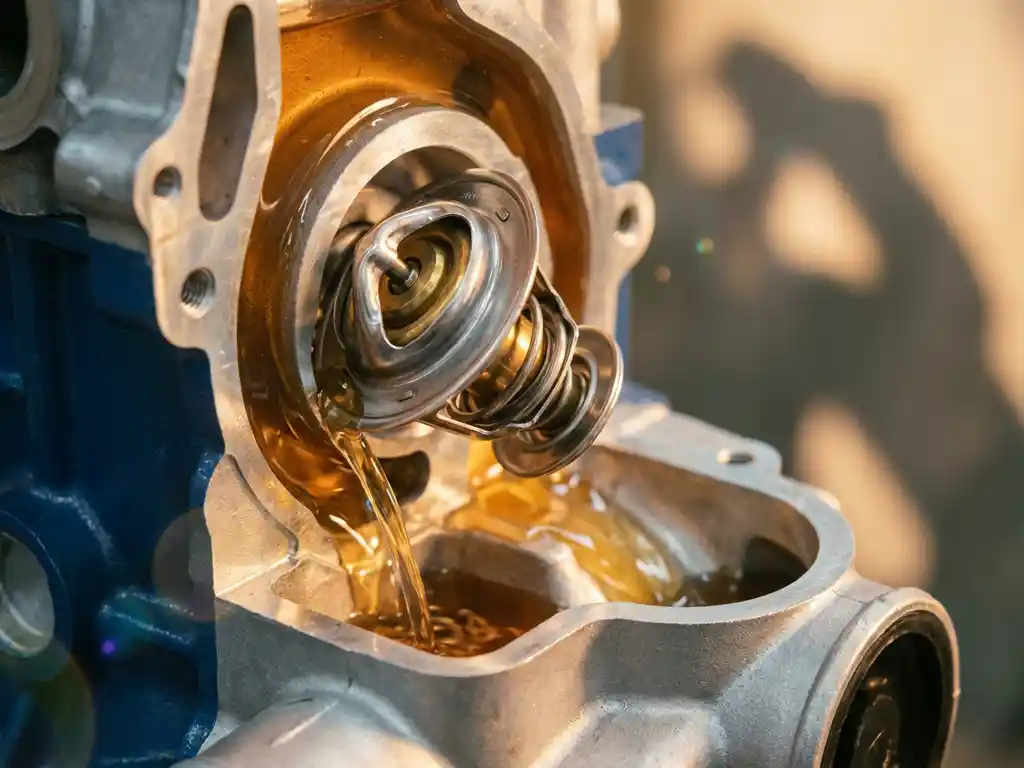
Modern thermostats incorporate wax-filled elements that expand and contract at precisely calibrated temperatures, opening and closing coolant passages with remarkable accuracy. This precision allows engines to reach optimal operating temperature quickly while preventing overheating under high-load conditions. The result is consistent combustion chamber temperatures that maximize fuel efficiency across all driving conditions.
Electronic thermal management takes precision even further by integrating temperature sensors throughout the engine and using real-time data to actively control coolant flow. These systems can maintain engine temperatures within narrow bands, typically within 1°C (2°F), ensuring optimal fuel combustion efficiency regardless of ambient conditions or driving demands.
Real-World Benefits of Temperature Consistency
The practical benefits of consistent engine temperature extend well beyond theoretical efficiency gains. Fleet operators who prioritise thermal management report fuel economy improvements of 3-8% compared to vehicles with basic cooling systems. Over thousands of kilometres and across multiple vehicles, these improvements translate into significant cost savings and reduced environmental impact.
Temperature consistency also extends engine life by reducing thermal stress on components. Engines that maintain steady operating temperatures experience less wear on pistons, rings, valves, and bearings. This translates into longer service intervals, reduced maintenance costs, and better long-term fuel economy as engine components maintain their designed clearances and efficiency.
Emissions benefits accompany fuel economy improvements when engines operate at consistent temperatures. Catalytic converters work most effectively within specific temperature ranges, and consistent engine temperatures help maintain optimal exhaust temperatures for emissions control. This dual benefit of improved fuel economy and reduced emissions makes temperature consistency increasingly important as environmental regulations tighten.
How BTT Solutions Helps with Engine Temperature Consistency
We specialise in developing high-precision thermal management components that maintain optimal engine temperatures across all operating conditions. Our patented thermostat technology and temperature sensors deliver the accuracy needed for maximum fuel efficiency and reduced emissions. Here’s how our solutions make a difference:
- Advanced wax-filled thermostats that respond within seconds to temperature changes
- Precision-engineered temperature sensors for real-time thermal monitoring
- Custom thermal management solutions designed for specific engine applications
- Comprehensive testing and validation to ensure consistent performance across diverse conditions
Our expertise in thermal management spans automotive, industrial, and building applications, giving us unique insights into temperature control challenges across multiple industries. Ready to improve your engine’s fuel economy through better temperature consistency? Contact our thermal management experts to discuss how our precision components can optimise your specific application.
Related Articles
- How do thermal conductivity properties influence thermostat component design?
- How does thermal management contribute to extended service intervals?
- What affects engine efficiency?
- What factors should you consider when selecting thermostat elements?
- Why is thermal management critical for battery performance?


