
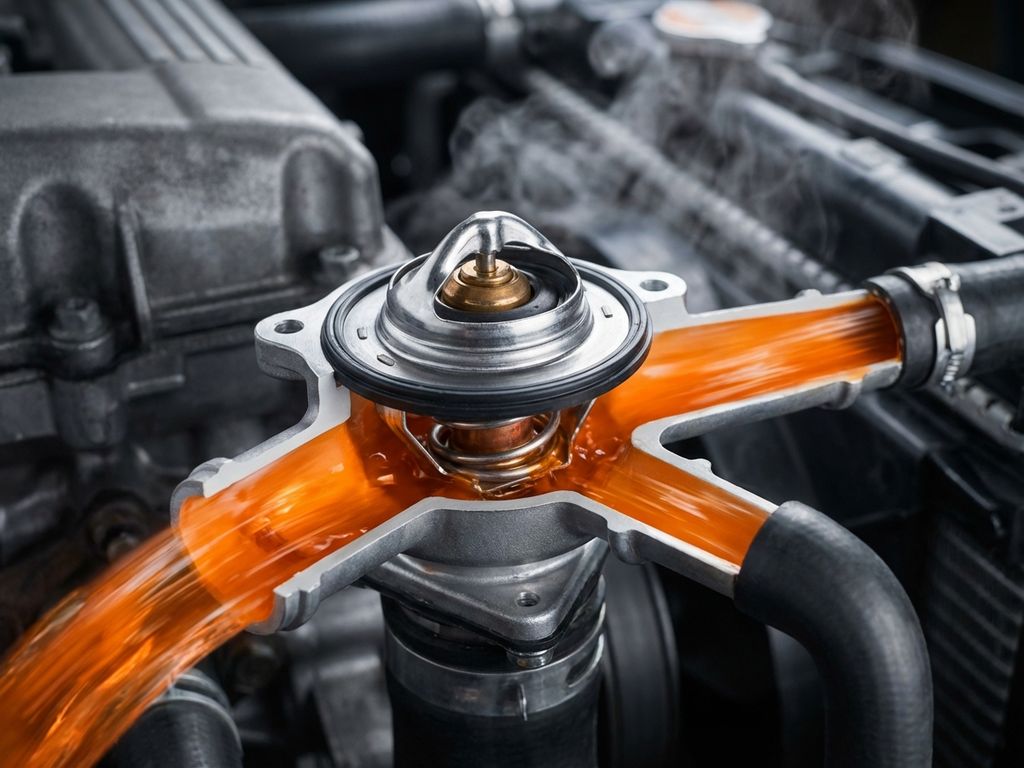
An engine thermostat stuck open means the cooling system valve remains permanently open, allowing coolant to flow continuously through the radiator regardless of engine temperature. This prevents the engine from reaching its optimal operating temperature, typically causing prolonged warm-up times, poor fuel economy, and reduced heating performance. Understanding the causes, symptoms, and solutions helps maintain proper engine temperature regulation and performance.
What does it mean when an engine thermostat is stuck open?
A stuck-open thermostat fails to close properly, allowing coolant to flow continuously through the radiator even when the engine is cold. Unlike normal operation, where the thermostat opens and closes to maintain optimal engine temperature, a malfunctioning unit remains in the open position permanently.
During normal operation, your engine’s cooling system relies on precise temperature regulation to maintain efficiency. The thermostat acts as a gatekeeper, blocking coolant flow when the engine is cold to help it reach operating temperature quickly. When it is stuck open, this crucial component can no longer perform its primary function.
This malfunction immediately affects engine performance by preventing proper warm-up. Your engine may struggle to reach its ideal operating temperature of around 90–105°C, leading to incomplete fuel combustion and reduced efficiency. The heating system also suffers, since it depends on hot coolant flowing through the heater core.
What are the main causes of a thermostat getting stuck in the open position?
Thermostats typically stick open due to mechanical wear, corrosion buildup, debris contamination, or age-related deterioration of internal components. The wax pellet or spring mechanism that controls opening and closing can fail, leaving the valve permanently open.
Corrosion is one of the most common culprits behind thermostat problems. When coolant becomes contaminated or old, it can cause internal components to corrode and lose their ability to function properly. This often occurs when coolant changes are neglected or when incompatible coolant types are mixed.
Debris and sediment buildup can also interfere with the thermostat’s operation. Small particles from a deteriorating cooling system can lodge in the thermostat housing, preventing proper closure. Manufacturing defects, though less common, can cause premature failure in new components.
Age-related wear affects the sensitive wax element inside most thermostats. Over time, this component can lose its ability to expand and contract effectively, resulting in a thermostat that fails to respond appropriately to temperature changes.
How can you tell if your car’s thermostat is stuck open?
The most obvious sign of a stuck-open thermostat is an engine temperature gauge that remains below the normal operating range, even after extended driving. Your heater may also blow lukewarm air instead of hot air, and you might notice increased fuel consumption.
Temperature gauge readings provide the clearest indication of a thermostat malfunction. A properly functioning engine should reach normal operating temperature within 5–10 minutes of driving. If your temperature gauge stays in the cold range or takes significantly longer to warm up, this suggests the thermostat is not closing properly.
Heating system performance offers another diagnostic clue. When the thermostat sticks open, hot coolant does not circulate effectively through the heater core, resulting in poor cabin heating. This becomes particularly noticeable during cold weather, when you expect strong heat output.
Changes in fuel consumption can also indicate cooling system problems. Engines running below optimal temperature burn fuel less efficiently, leading to increased consumption. If you notice your fuel economy declining without other obvious causes, a stuck-open thermostat could be responsible.
What happens to your engine when the thermostat stays open?
A continuously open thermostat forces your engine to operate below its optimal temperature, reducing fuel efficiency, increasing emissions, and potentially causing long-term damage. The engine management system struggles to maintain proper air-fuel ratios, leading to incomplete combustion and increased wear.
Fuel economy suffers significantly when engines run too cool. Modern engines are designed to operate within specific temperature ranges for maximum efficiency. When the engine cooling system cannot maintain proper temperatures, fuel consumption can increase by 10–15% or more.
Emissions output typically increases with a stuck-open thermostat. Cold engines produce higher levels of harmful pollutants because fuel does not burn completely. This can cause your vehicle to fail emissions tests and contribute to environmental pollution.
Long-term engine health may be compromised by prolonged operation at suboptimal temperatures. Oil does not flow as effectively when cold, leading to increased wear on moving parts. Carbon deposits can also build up more readily in engines that do not reach proper operating temperatures regularly.
How do you fix a thermostat that’s stuck in the open position?
The most effective solution for a stuck-open thermostat is complete replacement, as attempting repairs rarely provides reliable long-term results. Professional installation ensures proper coolant system bleeding and prevents air pockets that could cause overheating issues.
Thermostat replacement involves draining the cooling system, removing the housing, and installing a new unit with fresh gaskets. This process requires specific tools and knowledge of proper torque specifications to prevent leaks. Most automotive professionals recommend replacing the thermostat approximately every 100,000 kilometres as preventive maintenance.
Preventive strategies help avoid future thermostat failures. Regular coolant changes according to manufacturer specifications prevent corrosion buildup. Using the correct coolant type and concentration maintains system integrity and protects internal components.
Professional service becomes essential when dealing with cooling system repairs. Improper installation or inadequate system bleeding can lead to overheating, which causes far more expensive damage than the original thermostat problem. Qualified technicians have the expertise and equipment to ensure reliable repairs.
How BTT Solutions helps with thermostat reliability and performance
We provide advanced thermostat technology designed to prevent common failure modes through precision engineering and high-quality materials. Our thermostats feature enhanced corrosion resistance and improved durability for extended service life across automotive, industrial, and residential applications.
Our comprehensive thermostat solutions include:
- Precision-engineered wax elements that maintain accurate temperature control throughout the component’s lifespan
- Corrosion-resistant materials that withstand harsh coolant environments and extended service intervals
- Quality manufacturing processes that ensure consistent performance and reliability across all temperature ranges
- Comprehensive testing protocols that verify proper operation before components leave our facilities
Whether you need thermostats for automotive engines, industrial cooling systems, or residential heating applications, our proven technology delivers reliable temperature regulation that prevents the costly problems associated with stuck-open failures. Contact us today to learn how our advanced thermostat solutions can improve your system’s reliability and performance.


