
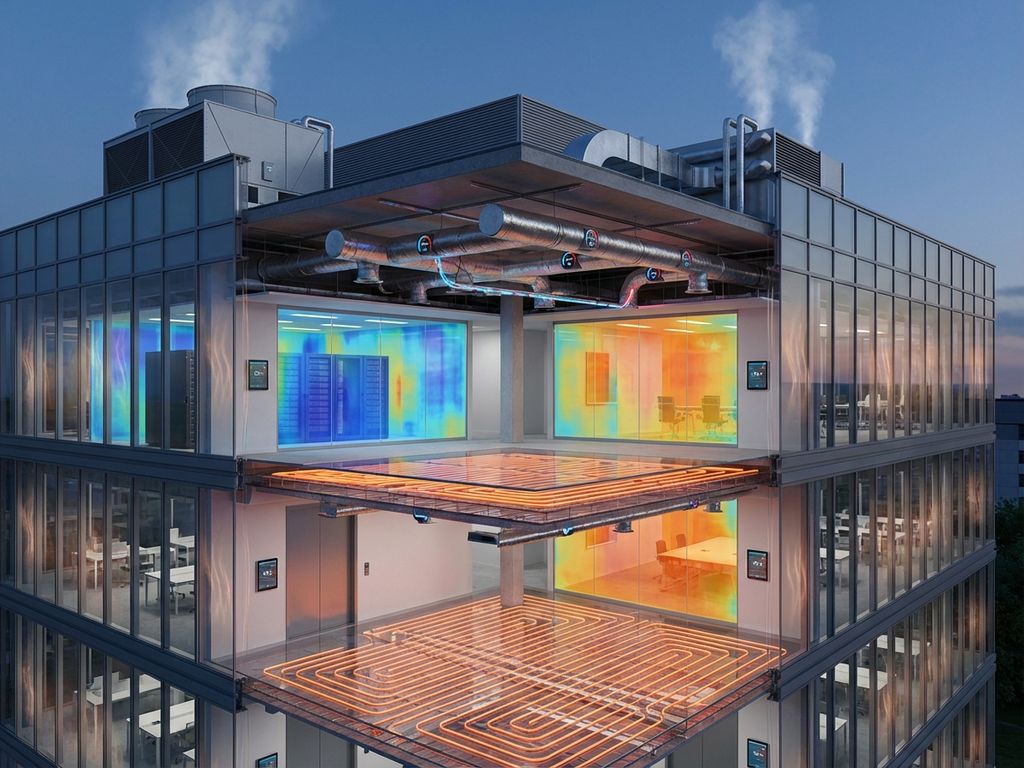
Thermal management solutions in building technology encompass systems that control temperature and energy flow throughout residential and commercial structures. These include smart thermostats, advanced heating systems, temperature sensors, and automated controls that optimize energy efficiency while maintaining occupant comfort. Modern buildings rely on integrated thermal regulation to reduce energy consumption and operational costs.
What are thermal management solutions and why do buildings need them?
Thermal management solutions are integrated systems that regulate temperature, control energy flow, and optimize heating and cooling throughout buildings. They combine hardware such as thermostats and sensors with software algorithms to maintain comfortable environments while minimizing energy waste.
Buildings need these solutions because traditional heating and cooling systems often operate inefficiently, leading to energy waste and uncomfortable conditions. Modern thermal management technology addresses these challenges by providing precise temperature control that adapts to occupancy patterns, weather conditions, and energy costs.
The core benefits include significant energy savings, improved occupant comfort, and reduced environmental impact. These systems learn from usage patterns and adjust automatically, ensuring rooms are heated or cooled only when needed. This intelligent approach to temperature control can reduce energy consumption substantially while maintaining optimal comfort levels.
Smart building technology also enables remote monitoring and control, allowing facility managers to identify issues before they become costly problems. This proactive approach extends equipment lifespan and reduces maintenance expenses.
How do smart thermostats improve building energy efficiency?
Smart thermostats improve energy efficiency by learning occupancy patterns, adjusting temperatures automatically, and providing remote control capabilities. They use algorithms to optimize heating and cooling cycles based on actual usage rather than fixed schedules, significantly reducing energy waste.
These devices feature programmable schedules that can be customized for different zones within a building. Advanced models incorporate machine learning to understand when spaces are typically occupied and adjust temperatures accordingly. This means heating systems are not running at full capacity when buildings are empty.
Remote control capabilities allow users to adjust settings from anywhere, preventing energy waste when plans change. Many smart thermostats also provide detailed energy usage reports, helping building owners identify further opportunities for energy efficiency improvements.
Integration with other building systems creates additional savings. Smart thermostats can communicate with lighting systems, occupancy sensors, and even weather forecasting services to make informed decisions about when to heat or cool different areas.
What types of heating systems use advanced thermal management technology?
Advanced thermal management technology is integrated into radiant floor heating, wall heating systems, traditional radiator networks, and modern HVAC systems. These systems use intelligent controls, variable flow rates, and zone-based temperature regulation to optimize performance and energy consumption.
Radiant floor heating systems benefit significantly from thermal management technology through precise temperature sensors and flow controls. These systems distribute heat evenly across floor surfaces while using lower water temperatures than traditional radiators, improving overall system efficiency.
Wall heating systems incorporate similar technology, using embedded sensors to monitor surface temperatures and adjust heat output accordingly. This approach provides comfortable warmth while reducing energy consumption compared to forced-air systems.
Traditional radiator systems have been enhanced with smart building technology, including thermostatic radiator valves and zone controls. These additions allow individual room temperature control while maintaining system efficiency.
Modern HVAC systems integrate comprehensive thermal management through variable air volume controls, smart dampers, and integrated building automation. This creates responsive heating systems that adapt to changing conditions throughout the day.
How do temperature sensors enhance building automation systems?
Temperature sensors enhance building automation by providing real-time data for precise climate control, enabling predictive maintenance, and optimizing energy usage across different zones. They collect continuous temperature data that automation systems use to make intelligent heating and cooling decisions.
Strategic sensor placement throughout buildings creates detailed temperature maps that reveal hot spots, cold areas, and usage patterns. This information allows building automation systems to adjust heating and cooling in specific zones rather than treating entire buildings as single units.
Data collection from multiple sensors enables predictive thermal management. Systems can anticipate temperature changes based on occupancy patterns, weather forecasts, and historical data. This proactive approach maintains comfort while minimizing energy consumption.
Advanced sensors also monitor humidity levels, air quality, and equipment performance. This comprehensive monitoring enables building systems to respond to multiple environmental factors simultaneously, creating optimal conditions for occupants while protecting building infrastructure.
System responsiveness improves dramatically with high-quality sensor networks. Modern sensors communicate wirelessly with central control systems, providing instant feedback that enables rapid adjustments to changing conditions.
What are the cost benefits of implementing thermal management in commercial buildings?
Implementing thermal management in commercial buildings typically reduces energy costs substantially through optimized heating and cooling operations. Additional benefits include lower maintenance expenses, extended equipment lifespan, and improved tenant satisfaction leading to better occupancy rates.
Reduced energy consumption represents the primary cost benefit. Intelligent thermal regulation systems eliminate energy waste by heating and cooling spaces only when needed. This targeted approach can significantly reduce monthly utility bills, with savings accumulating over time.
Lower maintenance costs result from systems operating more efficiently and experiencing less wear. Thermal management technology helps identify potential issues before they require emergency repairs, reducing both downtime and repair expenses.
Equipment longevity improves when heating and cooling systems operate within optimal parameters. This extends replacement cycles and reduces capital expenditure requirements over time.
Return-on-investment calculations typically show payback periods of two to four years for comprehensive thermal management systems. The combination of energy savings, reduced maintenance, and improved equipment lifespan creates compelling financial benefits for commercial property owners.
How BTT Solutions helps with building technology thermal management
We provide comprehensive thermal management components specifically designed for building applications, including advanced thermostat technology and precision temperature sensors. Our thermal management solutions integrate seamlessly with existing heating systems and building automation networks to optimize energy efficiency and occupant comfort.
Our building technology solutions include:
- Precision thermostats for radiant floor heating, wall heating systems, and traditional radiator networks
- Advanced temperature sensors for building automation and zone control applications
- Integrated thermal management systems that work with HVAC and smart building platforms
- Energy-efficient components that reduce operational costs while improving system performance
Our thermal management technology helps building owners and facility managers achieve significant energy savings through intelligent temperature control and automated system optimization. Whether you are upgrading existing heating systems or implementing new building automation solutions, our components provide the reliability and precision needed for effective thermal regulation. Learn more about our expertise in building technology solutions.
Contact us today to discuss how our thermal management solutions can improve your building’s energy efficiency and reduce operational costs while enhancing occupant comfort.
Related Articles
- Can thermostat component design affect response time?
- What role does temperature stability play in engine protection?
- What are the latest thermostat technologies for automotive in 2026?
- What are the cost benefits of advanced thermal management systems?
- Why is thermal management critical for battery performance?


