
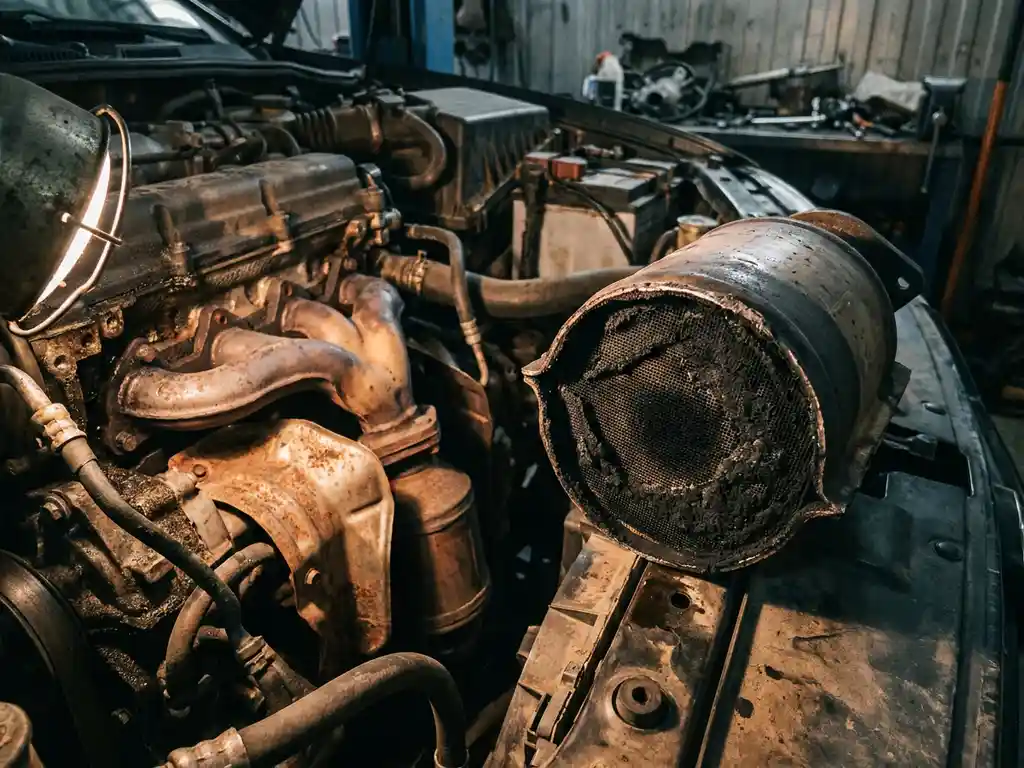
Yes, a clogged catalytic converter can absolutely hurt engine efficiency. When the converter becomes restricted, it creates excessive backpressure in the exhaust system, forcing the engine to work harder to expel exhaust gases. This directly reduces power output, increases fuel consumption, and in serious cases can cause overheating and long-term engine damage.
The impact ranges from a mild drop in performance to a complete inability to drive, depending on how severely the converter is blocked. Modern engines rely on a free-flowing exhaust system to breathe properly, so any significant restriction quickly shows up as reduced efficiency across the board.
Below, we walk through the most common questions about catalytic converter clogs, from what causes them to whether cleaning or replacement is the right call.
How does a clogged catalytic converter affect engine performance?
A clogged catalytic converter restricts exhaust flow, which creates backpressure that works against the engine’s ability to expel combustion gases. This forces the engine to use more energy just to push exhaust out, leaving less power available for actually moving the vehicle. The result is sluggish acceleration, reduced throttle response, and an engine that feels noticeably underpowered.
In more severe cases, the restriction can cause the engine to run rich (too much fuel relative to air) because exhaust gases back up into the combustion chamber. This disrupts the air-fuel mixture, which the engine management system struggles to compensate for. You may notice rough idling, misfires, or the engine stalling at low speeds.
The catalytic converter’s impact on engine performance is not always sudden. It often develops gradually as the blockage worsens, which is why many drivers initially dismiss the early warning signs as something minor.
What causes a catalytic converter to clog in the first place?
Catalytic converters typically clog because the engine is burning something it should not be. The most common cause is oil or coolant entering the combustion chamber due to worn piston rings, valve seals, or a failing head gasket. These contaminants coat the converter’s internal honeycomb structure, gradually blocking the passages that exhaust gases need to flow through.
Other common causes include:
- Unburned fuel: Engine misfires send raw fuel into the exhaust, which ignites inside the converter and can melt or fuse the internal substrate
- Silicone contamination: Using the wrong type of sealant near the intake can introduce silicone particles into the combustion process
- Short trips and low engine temperatures: Frequent short journeys that never fully warm the engine can lead to carbon and moisture buildup inside the converter over time
- Fuel additives or poor fuel quality: Certain additives and low-quality fuels leave deposits that accumulate on the converter’s substrate
It is worth noting that a clogged catalytic converter is often a symptom of an underlying engine issue rather than a problem that develops on its own. Addressing only the converter without fixing the root cause will likely lead to the same problem recurring.
What are the warning signs of a clogged catalytic converter?
The most recognizable catalytic converter symptoms include a noticeable loss of engine power, poor acceleration, and a sulfur or rotten egg smell from the exhaust. Many drivers also experience a significant drop in fuel economy before other symptoms become obvious. A check engine light, particularly with codes related to oxygen sensor readings or catalytic converter efficiency, is another strong indicator.
Here are the key warning signs to watch for:
- Sluggish acceleration: The engine feels hesitant or struggles to build speed, especially under load
- Rough idling or stalling: Backpressure disrupts combustion stability at low RPMs
- Check engine light: Codes such as P0420 or P0430 directly flag catalytic converter efficiency problems
- Sulfur smell: Unprocessed exhaust gases carry a distinctive rotten egg odor
- Rattling noise: A broken internal substrate can rattle inside the converter housing, particularly on startup
- Failed emissions test: A blocked converter cannot process pollutants effectively, leading to elevated emissions readings
If several of these symptoms appear together, it is a strong signal that the converter is significantly restricted and needs attention promptly.
Does a clogged catalytic converter hurt fuel economy?
Yes, catalytic converter backpressure directly reduces fuel economy. When the exhaust cannot flow freely, the engine has to work harder during every combustion cycle, which means burning more fuel to produce the same amount of usable power. Drivers often notice they are filling up more frequently before other performance symptoms become obvious.
The fuel economy impact tends to worsen progressively. A partially clogged converter might reduce efficiency by a small but noticeable margin, while a severely blocked one can cause dramatic fuel consumption increases. The engine management system will also attempt to compensate for the disrupted exhaust flow by adjusting fuel trim, which can further skew the air-fuel ratio and compound the inefficiency.
Interestingly, the relationship between thermal management components and fuel economy is well established in automotive engineering. Efficient temperature regulation throughout the drivetrain, from the coolant circuit to the exhaust system, plays a central role in keeping fuel consumption as low as possible. A compromised converter undermines that balance significantly.
Can a clogged catalytic converter damage the engine over time?
A severely clogged catalytic converter can cause real engine damage if left unaddressed. The most serious risk is overheating. When exhaust gases cannot escape efficiently, heat builds up inside the exhaust system and can radiate back toward engine components. In extreme cases, the converter itself can overheat to the point where its internal substrate melts, creating an even more complete blockage.
Prolonged backpressure also puts additional strain on engine seals and gaskets. The elevated exhaust system pressure can accelerate wear on components that are not designed to handle it continuously. Over time, this can contribute to oil leaks or coolant leaks, which then feed back into the cycle of contaminating the converter further.
There is also the risk of oxygen sensor damage. Sensors positioned near a failing converter are exposed to abnormal exhaust conditions, which can shorten their service life and lead to additional diagnostic codes and repair costs.
The longer a clogged converter is ignored, the more likely it is that what started as an exhaust component problem becomes a broader and more expensive engine issue.
Should you clean or replace a clogged catalytic converter?
Whether to clean or replace a clogged catalytic converter depends on the severity of the blockage and what caused it. For mild carbon buildup, a dedicated catalytic converter cleaner added to the fuel tank can sometimes restore partial function. However, if the internal substrate is physically damaged, melted, or heavily coated with oil or coolant residue, cleaning will not provide a lasting fix, and replacement is the right choice.
A few practical considerations when making this decision:
- Diagnose the root cause first: Replacing the converter without fixing an oil leak, coolant leak, or misfiring cylinder will result in the new converter failing prematurely
- Check for physical damage: A rattling sound from the converter housing usually means the substrate has broken apart, which cannot be cleaned
- Consider vehicle age and value: On older vehicles, the cost of a new converter may need to be weighed against the overall condition of the car
- Professional diagnosis is worth it: A mechanic can perform a backpressure test to confirm whether the converter is genuinely the source of the restriction before committing to a repair
Cleaning is a reasonable first step for mild cases, but it is not a cure-all. If symptoms persist after a cleaning treatment, replacement is almost certainly the more cost-effective path in the long run.
How BTT Solutions supports engine efficiency through thermal management
While catalytic converter issues sit within the exhaust system, they are deeply connected to how well the entire engine manages heat and temperature. Inefficient thermal regulation throughout the engine, whether in the coolant circuit, oil temperature management, or combustion chamber conditions, creates the exact conditions that accelerate catalytic converter wear and blockage.
At BTT Solutions, we specialize in high-precision thermostat components and thermal management solutions designed to keep engines operating within their optimal temperature range. Our products support:
- Precise coolant temperature control to prevent overheating conditions that stress the exhaust system
- Wax elements and thermostat inserts engineered for reliability and accuracy across demanding automotive applications
- End-to-end thermal management components that help reduce fuel consumption and emissions by keeping the engine at its most efficient operating temperature
- Custom component consultation for automotive manufacturers and suppliers who need tailored solutions for specific thermal management challenges
Good thermal management is one of the most effective ways to protect long-term engine health and reduce the conditions that lead to catalytic converter damage in the first place. If you are looking for precision thermostat components for your application, or want to explore how our solutions can support your engineering requirements, we would love to hear from you. Get in touch with our team and let us find the right solution together.


