
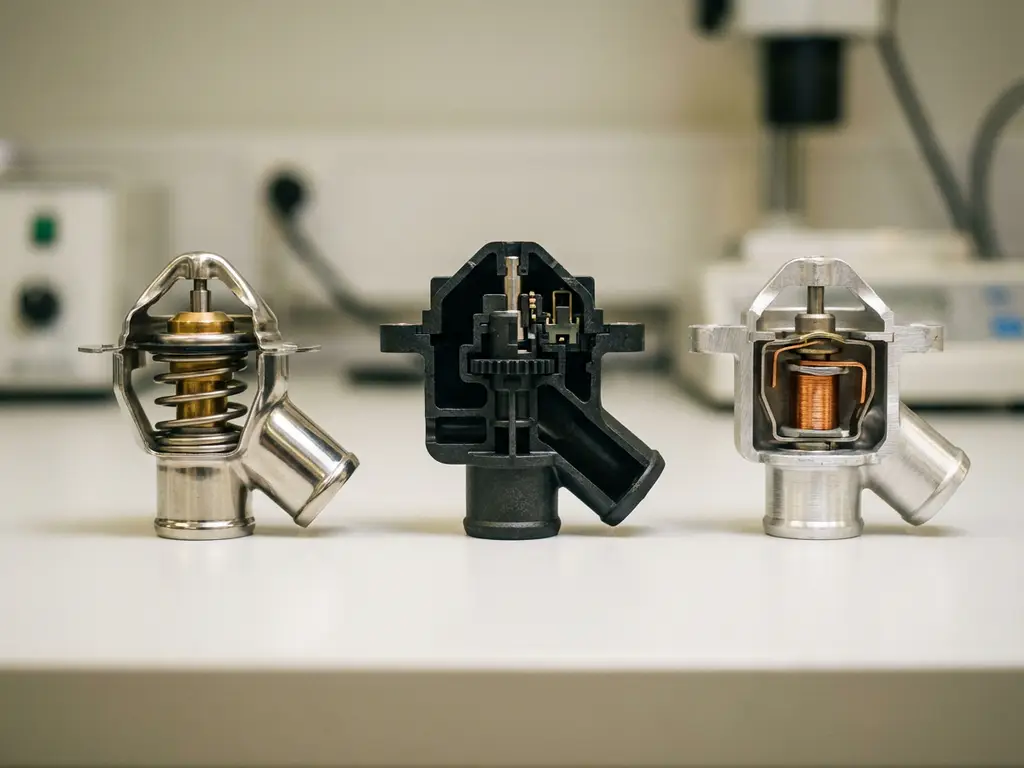
When it comes to thermostat housings, the choice of material can make or break your entire thermal management system. Whether you’re dealing with automotive applications that face extreme temperature swings or industrial systems that need to run reliably for years, selecting the right housing material is more important than you might think.
The durability of thermostat housings depends heavily on the materials used in their construction. Different materials offer varying levels of resistance to heat, corrosion, and mechanical stress. Understanding these differences helps you make informed decisions that can save both money and headaches down the road.
What materials are commonly used for thermostat housings?
Thermostat housings are typically made from aluminum alloys, brass, stainless steel, or engineered plastics. Each material offers specific advantages in terms of thermal conductivity, corrosion resistance, and manufacturing cost.
Aluminum alloys remain the most popular choice for automotive thermostat housings due to their excellent heat-transfer properties and lightweight nature. These alloys can handle the rapid temperature changes that engines experience while providing good resistance to coolant chemicals. The material also allows for precise machining, which is important for maintaining proper sealing surfaces.
Brass housings offer superior corrosion resistance, particularly in marine applications or systems with aggressive coolants. While heavier than aluminum, brass provides excellent durability and can withstand higher pressures. You’ll often find brass housings in industrial applications where longevity outweighs weight considerations.
Stainless steel housings deliver the highest strength and corrosion resistance but come at a premium price. These are typically reserved for specialized applications where extreme conditions demand maximum durability.
Which thermostat housing material offers the best durability?
Stainless steel provides the best overall durability for thermostat housings, offering superior resistance to corrosion, high temperatures, and mechanical stress. However, aluminum alloys often provide the best balance of durability and practicality for most applications.
The definition of “best durability” depends on your specific operating conditions. Stainless steel excels in harsh environments with aggressive chemicals or extreme temperatures, but it’s overkill for many standard applications. The material’s strength allows it to maintain structural integrity even under high-pressure conditions that might deform other materials.
Aluminum alloys, particularly those with proper surface treatments, offer excellent durability for the majority of thermal management applications. Modern aluminum alloys resist corrosion well when properly treated and can handle the thermal cycling that destroys lesser materials. They also provide good fatigue resistance, which is important in applications with frequent temperature changes.
In specific environments, brass might actually be more durable than stainless steel. In marine applications or systems with high chloride content, brass’s natural corrosion resistance can outlast even treated aluminum or steel.
How do temperature extremes affect thermostat housing materials?
Temperature extremes cause thermal expansion and contraction in housing materials, leading to stress cycling that can eventually cause fatigue failures. Different materials respond differently to these thermal stresses based on their expansion coefficients and strength properties.
Aluminum has a relatively high thermal expansion coefficient, meaning it expands and contracts more than other metals when heated and cooled. While this might seem problematic, aluminum’s ductility allows it to accommodate these changes without cracking. The key is ensuring that mating components have compatible expansion rates to prevent binding or seal failures.
Stainless steel expands less than aluminum but more than brass. Its higher strength helps it resist deformation under thermal stress, but this rigidity can sometimes work against it. If thermal expansion is constrained, the resulting stresses can be quite high.
Brass offers a middle ground with moderate expansion and good ductility. It handles thermal cycling well, which explains its popularity in applications with frequent temperature changes. The material’s ability to yield slightly under stress helps prevent catastrophic failures.
Engineered plastics can accommodate thermal expansion through design flexibility, but they’re limited in maximum operating temperature. They work well in applications where temperatures stay below 150°C (302°F) but aren’t suitable for high-temperature industrial applications.
What causes thermostat housing materials to fail over time?
Thermostat housing materials fail primarily due to corrosion, thermal fatigue from repeated heating and cooling cycles, and chemical degradation from exposure to coolants and other fluids. These failure modes often work together to accelerate material breakdown.
Corrosion is often the biggest enemy of thermostat housings. Even materials that seem corrosion-resistant can fail when exposed to specific chemical combinations or when protective coatings break down. Galvanic corrosion becomes a particular problem when dissimilar metals are used in the same system, creating electrical potential differences that drive corrosion.
Thermal fatigue occurs when materials repeatedly expand and contract through temperature cycles. Each cycle creates microscopic stress that gradually weakens the material structure. Over thousands of cycles, these small stresses can lead to crack formation and eventual failure.
Chemical attack from coolants, particularly those with high pH or aggressive additives, can gradually break down housing materials. Some coolant formulations that work well with one material can be destructive to another. This is why understanding your coolant chemistry is important when selecting housing materials.
Mechanical wear from vibration or pressure cycling can also contribute to housing failure. Components that seem robust under static conditions might fail prematurely when subjected to constant vibration or pressure fluctuations.
How do you select the right housing material for specific applications?
Select thermostat housing materials based on operating temperature range, coolant chemistry, pressure requirements, and environmental conditions. Match the material’s properties to your specific application demands rather than choosing based on cost alone.
Start by defining your operating parameters. What’s the maximum and minimum temperature your system will see? How aggressive is your coolant chemistry? What pressure levels must the housing withstand? These basic parameters will eliminate many material options immediately.
Consider the thermal cycling frequency. Applications with frequent temperature changes need materials that handle thermal fatigue well. Automotive thermostat housings might see thousands of cycles per year, while some industrial applications have much more stable operating conditions.
Environmental factors play a huge role in material selection. Marine environments demand different materials than dry industrial settings. Exposure to salt spray, humidity, or chemical vapors can dramatically affect material performance over time.
Don’t forget about manufacturing and maintenance considerations. Some materials are easier to machine or weld, which can affect initial costs and future serviceability. The availability of replacement parts and the skill level required for maintenance should factor into your decision.
How BTT Solutions Helps with Thermostat Housing Materials
We understand that selecting the right thermostat housing material can make the difference between a system that runs reliably for years and one that fails prematurely. At BTT Solutions, we bring decades of expertise in thermal management to help you make the right material choices for your specific application.
Our approach to housing material selection includes:
- Comprehensive analysis of your operating conditions and requirements
- Material testing and validation for your specific coolant chemistry
- Custom housing designs optimized for your chosen material
- Long-term performance monitoring and optimization recommendations
Whether you’re dealing with automotive applications that demand lightweight aluminum solutions or industrial systems that need the ultimate durability of stainless steel, we have the experience to guide your material selection. Our global manufacturing capabilities mean we can work with the full range of housing materials and provide the testing data you need to make confident decisions.
Ready to ensure your thermostat housings deliver the durability your application demands? Contact our engineering team to discuss your specific material requirements and learn how our expertise can help optimize your thermal management system’s performance.


