
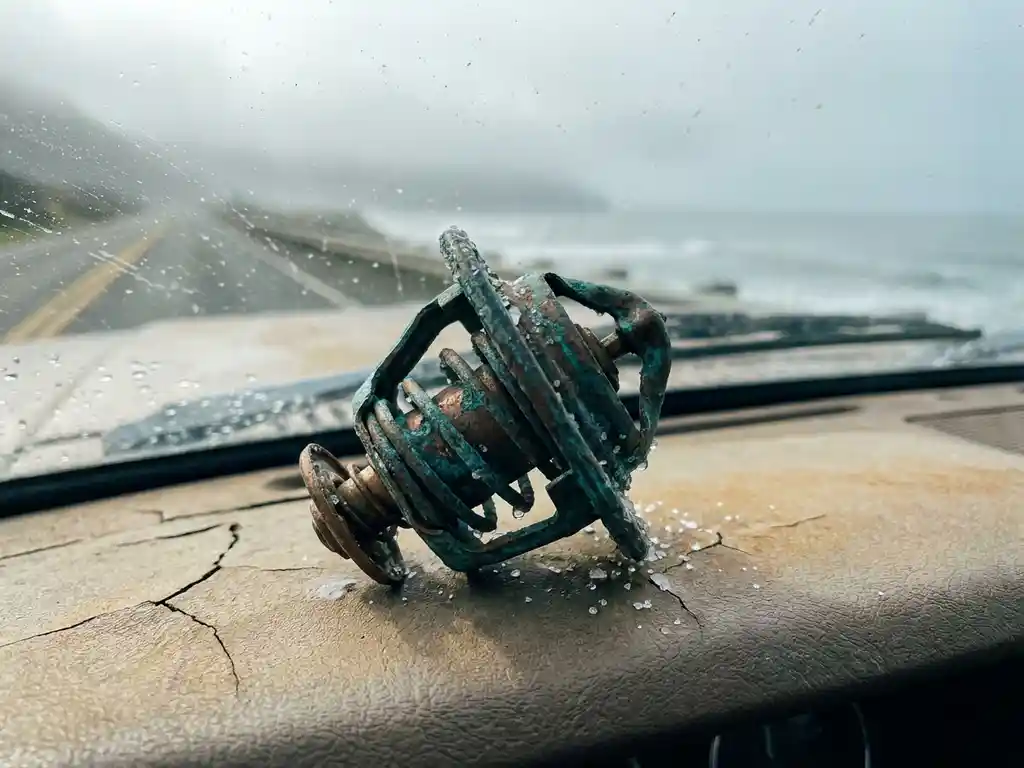
Living near the coast brings many perks, from beautiful ocean views to refreshing sea breezes. However, if you drive regularly in coastal areas, you’ve probably noticed that your car faces unique challenges that inland vehicles rarely encounter. The salty marine environment can be particularly harsh on your vehicle’s components, and automotive thermostats are especially vulnerable to this coastal assault.
Understanding how salt air affects your thermostat can help you protect your investment and avoid unexpected breakdowns. Let’s explore what happens when coastal conditions meet your car’s cooling system—and what you can do about it.
What is thermostat corrosion, and why does it happen near the coast?
Thermostat corrosion is the gradual deterioration of metal components within your car’s thermostat due to chemical reactions with environmental elements. Near the coast, this process accelerates dramatically because salt particles from ocean spray create an aggressive corrosive environment that attacks metal surfaces much faster than normal atmospheric conditions.
The science behind coastal corrosion is straightforward but relentless. When salt water evaporates, it leaves behind sodium chloride crystals that act like tiny magnets for moisture. These salt deposits create an electrolytic solution on metal surfaces, which speeds up oxidation and causes rust to form at an alarming rate. Your thermostat, with its intricate metal components and moving parts, becomes a prime target for this destructive process.
Temperature fluctuations common in coastal areas make the situation worse. Constant heating and cooling cycles cause metal components to expand and contract, creating microscopic cracks where salt and moisture can penetrate. Once inside these tiny crevices, the corrosive process begins working from the inside out, compromising the structural integrity of your thermostat’s delicate mechanisms.
How does salt air specifically damage automotive thermostats?
Salt air damages automotive thermostats by triggering electrochemical reactions that accelerate metal oxidation, causing the thermostat’s spring mechanism, housing, and valve components to corrode and eventually fail. The chloride ions in salt act as catalysts, speeding up the rusting process by up to ten times compared to normal atmospheric conditions.
The thermostat’s wax element, which controls the opening and closing mechanism, is particularly susceptible to salt-related damage. When salt particles settle on the thermostat housing, they create conductive pathways that allow electrical currents to flow between different metals. This galvanic corrosion process causes pitting and weakening of the metal components that surround and protect the wax element.
Salt air also affects the thermostat’s sealing surfaces. As corrosion builds up on the valve seat and housing, it can prevent proper sealing when the thermostat closes. This leads to coolant leaks and improper temperature regulation, which can cause your engine to run too hot or too cold. The spring mechanism that controls valve movement can become stiff or brittle due to corrosion, leading to delayed or incomplete opening and closing cycles.
What are the warning signs of thermostat corrosion in coastal vehicles?
The most common warning signs of thermostat corrosion include engine overheating, temperature gauge fluctuations, coolant leaks around the thermostat housing, and unusual engine warm-up times. You might also notice white or green, crusty deposits around the thermostat area, which can indicate advanced corrosion damage.
Pay attention to your engine’s temperature behaviour during daily driving. A corroded thermostat often causes erratic temperature readings: the gauge might swing between normal and hot, or the engine might take much longer than usual to reach operating temperature. Some drivers notice their heater doesn’t work as effectively because the thermostat isn’t maintaining proper coolant circulation.
Visual inspection can reveal telltale signs of coastal corrosion damage. Look for rust-coloured stains or white, chalky deposits around the thermostat housing and nearby components. These deposits often have a crusty texture and may flake off when touched. If you notice sweet-smelling coolant odours or see puddles of coolant under your car after parking, your thermostat’s sealing surfaces may have been compromised by corrosion.
Listen for unusual sounds from your cooling system. A corroded thermostat might create gurgling or bubbling noises as it struggles to open and close properly. These sounds often become more noticeable when the engine is warming up or cooling down.
How can you prevent thermostat corrosion when driving in coastal areas?
You can help prevent thermostat corrosion in coastal areas by regularly rinsing your engine bay with fresh water, applying corrosion-resistant coatings to exposed metal components, and replacing your coolant more frequently with high-quality antifreeze that contains corrosion inhibitors. Regular maintenance and protective measures can extend your thermostat’s life significantly.
Establish a routine washing schedule that goes beyond your car’s exterior. Rinse your engine bay with fresh water every two to three weeks, paying special attention to areas where salt spray might accumulate. Use a gentle spray setting to avoid forcing water into electrical components, and let everything dry thoroughly afterward.
Consider upgrading to marine-grade or corrosion-resistant components when replacement time comes. Many manufacturers now offer thermostats with improved coatings and materials designed specifically for harsh environments. While these components cost slightly more upfront, they often last much longer in coastal conditions.
Monitor your coolant condition more closely than inland drivers typically need to. Salt contamination can reduce your coolant’s protective properties, so consider changing it every 50,000 kilometres instead of the standard 100,000-kilometre interval. Always use coolant that meets your vehicle manufacturer’s specifications and contains robust corrosion inhibitors.
How BTT Solutions helps with coastal thermostat protection
We understand the unique challenges that coastal driving presents to automotive thermostats. Our advanced thermostat technology incorporates corrosion-resistant materials and protective coatings specifically designed to withstand harsh marine environments. Here’s how we help protect your investment:
- Premium corrosion-resistant coatings on all metal components
- Enhanced sealing technology that helps prevent salt infiltration
- Robust spring mechanisms designed for extended coastal service life
- Comprehensive testing in simulated marine environments
- Expert technical support for coastal application requirements
Our thermostat solutions are engineered to maintain precise temperature control even in the most challenging coastal conditions. Whether you’re dealing with daily salt spray exposure or occasional coastal trips, we have the expertise to help you choose the right components for your specific needs. Contact our technical team today to discuss how our coastal-ready thermostat technology can protect your vehicle’s cooling system.


