
Mechanical efficiency and thermal efficiency measure two distinct aspects of how well a system converts energy into useful work. Mechanical efficiency describes how much of the power generated internally is actually delivered at the output shaft, after accounting for friction and parasitic losses. Thermal efficiency, on the other hand, measures how much of the fuel’s heat energy is converted into any form of work at all. Both matter enormously in engine design, and understanding the difference helps engineers make smarter decisions about where to focus optimization efforts.
How does mechanical efficiency differ from thermal efficiency in practice?
Mechanical efficiency compares the power available at the output shaft to the power generated inside the engine’s cylinders. Thermal efficiency compares the total work output to the total heat energy released by combustion. In practice, an engine can have high thermal efficiency but still waste significant power through internal friction, meaning mechanical efficiency tells you what happens after heat is converted, while thermal efficiency tells you how well the conversion happens in the first place.
Think of them as two separate stages in the energy journey. Fuel burns and releases heat. Thermal efficiency governs how much of that heat becomes mechanical work inside the cylinder. Then mechanical efficiency governs how much of that work actually reaches the drivetrain or output shaft without being eaten up by friction, pumping losses, or accessories. A complete picture of engine efficiency always requires looking at both numbers together, not one in isolation.
What causes losses in mechanical efficiency?
Mechanical efficiency losses occur whenever internal components consume power that was meant for the output shaft. The primary culprits are friction between moving parts, the energy required to drive auxiliary systems, and pumping losses as the engine moves gases in and out of the cylinders. These losses are unavoidable to some degree, but they can be significantly reduced through good engineering.
Common sources of mechanical loss include:
- Bearing and piston friction as metal surfaces slide against each other under load
- Valve train friction from camshafts, followers, and springs
- Accessory loads such as oil pumps, water pumps, and alternators drawing power from the crankshaft
- Pumping losses caused by the resistance of moving intake and exhaust gases through the engine
- Windage losses as rotating components churn through oil mist inside the crankcase
Modern lubrication systems, low-viscosity oils, and precision surface finishing have all helped reduce mechanical losses over the decades. Even so, real-world engines typically lose somewhere between 10 and 20 percent of indicated power to mechanical friction and auxiliary loads before it ever reaches the wheels.
What causes losses in thermal efficiency?
Thermal efficiency losses happen when heat energy from combustion escapes the system without doing useful work. The biggest single cause is heat rejection through the cooling system and exhaust gases. Other contributors include incomplete combustion, heat lost through cylinder walls, and the thermodynamic limits imposed by the laws of physics themselves.
No heat engine can convert 100 percent of its fuel energy into work. This is not a design flaw but a fundamental principle of thermodynamics. The maximum theoretical efficiency of any heat engine depends on the temperature difference between the hot combustion gases and the cold sink, which in a vehicle is ultimately the surrounding air. In practical terms, a large share of fuel energy exits through the exhaust pipe as hot gas, and another portion is carried away by the engine coolant.
Factors that reduce thermal efficiency include:
- Excessive heat loss to coolant when the engine runs below its optimal temperature
- Incomplete combustion leaving unburned fuel in the exhaust
- Knock and pre-ignition forcing lower compression ratios than the fuel could otherwise support
- Heat transfer through cylinder walls before combustion pressure can do its full work
- Throttling losses in gasoline engines at part load
How are mechanical and thermal efficiency measured?
Mechanical efficiency is measured by comparing brake power, the power delivered at the output shaft, to indicated power, the theoretical power calculated from cylinder pressure measurements. The ratio of brake power to indicated power gives you the mechanical efficiency figure as a percentage. Thermal efficiency is measured by comparing the actual work output to the total heat content of the fuel consumed during the same period.
In an engine testing environment, indicated power is typically calculated using an indicator diagram, which plots cylinder pressure against piston position throughout the combustion cycle. Brake power is measured directly on a dynamometer. The gap between the two values represents all the mechanical losses combined.
Thermal efficiency measurement requires accurate fuel flow metering alongside power output data. Engineers calculate the lower heating value of the fuel and compare it to the measured work output. Modern engine management systems can track these values continuously, giving real-time insight into how efficiently the engine is operating under different load and temperature conditions.
Which type of efficiency matters more for engine performance?
Neither type of efficiency is more important in absolute terms because they address different parts of the energy conversion chain. However, thermal efficiency tends to have the larger impact on fuel consumption and emissions, since it governs how much of the fuel’s energy is captured at all. Mechanical efficiency becomes especially critical in high-performance applications where every fraction of a percent of power loss is significant.
For automotive engineers focused on meeting emissions targets and fuel economy regulations, improving thermal efficiency typically delivers bigger gains. Strategies like higher compression ratios, direct injection, variable valve timing, and cylinder deactivation all target thermal efficiency. Mechanical efficiency improvements, such as reduced friction coatings and more efficient oil pumps, tend to offer smaller but still meaningful gains that stack up over time.
In industrial and marine applications, where engines run at steady loads for long periods, mechanical efficiency losses accumulate into substantial energy costs. In those contexts, both types of efficiency deserve equal attention from design engineers.
How does temperature control affect both types of efficiency?
Temperature control has a direct and measurable influence on both mechanical and thermal efficiency. Running an engine at the correct operating temperature reduces viscous friction in lubricants, which improves mechanical efficiency. It also keeps combustion conditions stable and consistent, which supports better thermal efficiency. Poor temperature management in either direction, too cold or too hot, degrades both figures simultaneously.
When an engine runs too cold, oil viscosity stays high, increasing internal friction and reducing mechanical efficiency. At the same time, cold cylinder walls absorb more heat from the combustion gases before that energy can produce useful work, directly reducing thermal efficiency. This is why engines are most efficient once they reach their designed operating temperature, and why warm-up periods represent a real efficiency penalty in short-trip driving.
Overheating creates a different set of problems. Excessive temperatures can cause thermal deformation of components, increase knock risk, and force protective fuel enrichment strategies that deliberately reduce thermal efficiency to protect the engine. Maintaining temperature within a precise operating window is therefore not just a reliability concern but a genuine performance and efficiency requirement.
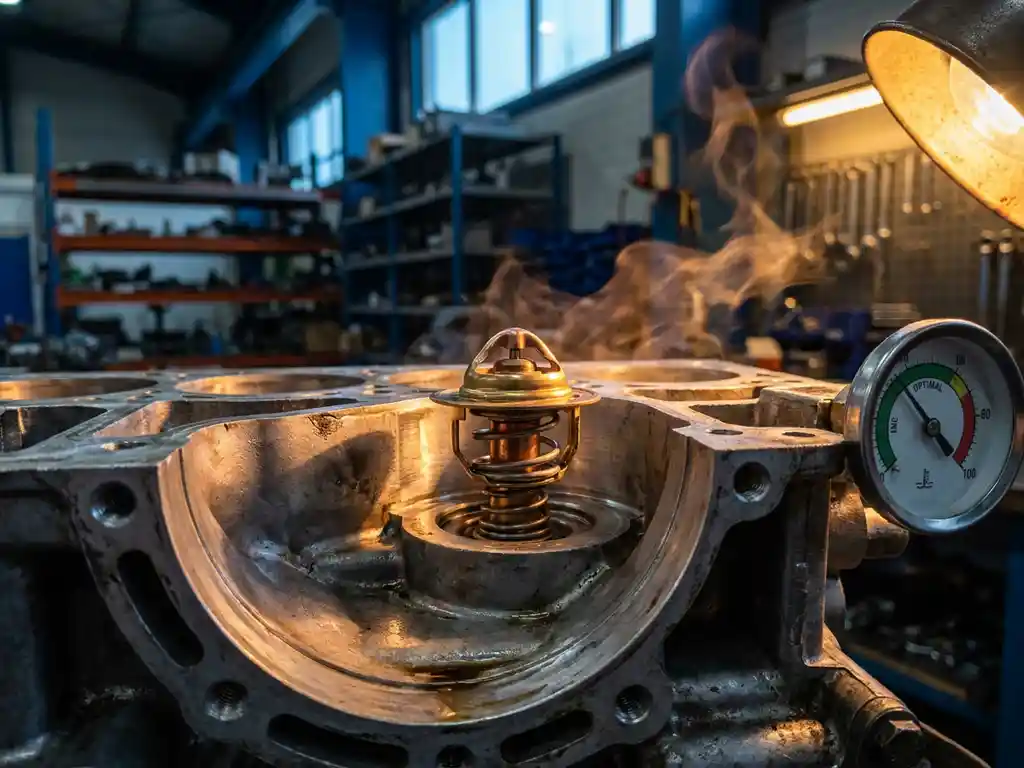
Precise thermostat components play a central role here. A thermostat that opens too early keeps the engine cooler than ideal, sacrificing efficiency. One that opens too late risks overheating. Modern thermomanagement systems use electronically controlled thermostats to hold the engine at its exact efficiency sweet spot across a wide range of operating conditions, rather than relying on a fixed opening temperature.
How BTT Solutions supports your thermomanagement efficiency goals
At BTT Solutions, we work directly with engineers and procurement teams in the automotive, industrial, and building technology sectors to specify and supply the thermostat components that keep systems running at peak efficiency. Our product advisory service helps you select the right component for your exact application, whether that means a wax element, a thermostat insert, or an engineered housing designed for your specific thermal requirements.
Here is what working with us looks like in practice:
- Application-specific component selection based on your operating temperature range, flow requirements, and installation constraints
- High-precision wax elements and thermostat inserts manufactured to tight tolerances for consistent, repeatable performance
- End-to-end support from initial specification through to serial supply, with the responsiveness of a focused mid-sized organization
- Cross-industry expertise covering automotive engines, industrial cooling circuits, marine systems, and building heating applications
If you are looking to improve the thermal management performance of your product and want a partner who will give your project genuine, undivided attention, we would be glad to talk through your requirements. Get in touch with our team to start the conversation.


