
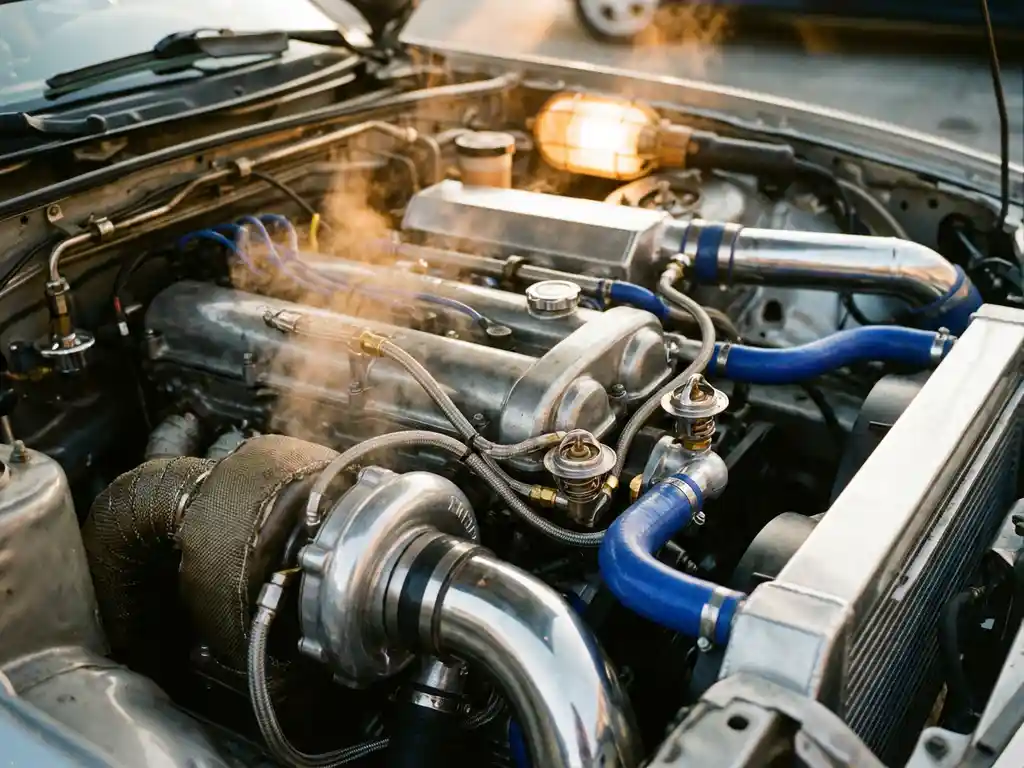
Modern turbocharged engines pack incredible power into compact spaces, but this efficiency comes with a serious challenge: managing extreme heat that can quickly damage critical components. While naturally aspirated engines operate within predictable temperature ranges, turbocharged systems create complex thermal environments that push traditional cooling methods to their limits.
Understanding why preventing overheating has become so complex in these high-performance engines requires examining both the unique heat sources they create and the sophisticated thermal management solutions needed to keep them running safely. The stakes are higher than ever, as even brief overheating episodes can cause costly damage or complete engine failure.
What Makes Turbocharged Engines Generate More Heat
Turbocharged engines generate significantly more heat than their naturally aspirated counterparts due to the intense compression process that defines their operation. The turbocharger itself operates at extreme temperatures, with exhaust gases entering the turbine housing at temperatures that often exceed 900°C, while the compressor side heats incoming air to levels that can reduce engine efficiency if not properly managed.
This compressed-air effect creates a cascade of thermal challenges throughout the engine system. When air is compressed, its temperature rises dramatically according to basic thermodynamic principles. Without proper intercooling, this hot, dense air enters the combustion chamber and leads to higher peak temperatures during combustion, generating more heat that the cooling system must handle.
The turbocharger’s location also complicates heat management, as it sits directly in the exhaust stream while being mounted close to other engine components. This positioning means the turbo acts as a heat source that radiates thermal energy into the engine bay, affecting nearby components and creating hot spots that traditional cooling systems weren’t designed to address effectively.
Why Traditional Cooling Systems Fall Short
Conventional cooling systems struggle with turbocharged engines because they were designed for steady-state heat loads rather than the rapid thermal fluctuations these engines produce. Traditional thermostats open and close based on coolant temperature, but turbocharged engines experience sudden heat spikes during acceleration that can overwhelm this relatively slow-response system.
Differences in thermal mass create another significant challenge. Turbochargers heat up and cool down much faster than the main engine block, creating temperature gradients that standard cooling circuits can’t balance effectively. When you accelerate hard, the turbo generates intense heat almost instantly, but the main cooling system takes time to recognize and respond to this increased thermal load.
Heat soak presents an additional problem that traditional systems handle poorly. After shutdown, turbocharged engines continue to generate heat from the turbocharger, which can’t be managed by the main cooling system because the engine isn’t running. This residual heat can damage oil, degrade seals, and create thermal stress in components that weren’t designed for these extreme conditions.
How Advanced Thermal Management Prevents Engine Damage
Modern thermal management systems prevent engine damage by using multiple temperature sensors and electronically controlled components that respond rapidly to changing conditions. These systems monitor temperatures at various points throughout the engine, including the turbocharger housing, intercooler, and multiple coolant-circuit locations, allowing for precise control of heat distribution.
Electronic thermostats represent a major advancement over traditional wax-element designs, as they can open and close based on multiple inputs rather than just local coolant temperature. This capability allows the cooling system to anticipate thermal loads during acceleration and adjust flow patterns before temperatures reach dangerous levels, preventing the lag that causes overheating in traditional systems.
Separate cooling circuits for different engine zones have become important for managing the complex thermal environment of turbocharged engines. By isolating turbocharger cooling from the main engine cooling circuit, engineers can optimize each system for its specific thermal requirements, ensuring that rapid turbo heat spikes don’t interfere with stable engine-block temperature control.
Modern Solutions for Turbocharged Engine Cooling
Today’s most effective cooling solutions integrate multiple technologies to address the unique challenges of turbocharged engines. Variable-flow cooling pumps adjust their output based on real-time thermal demands, while sophisticated control algorithms predict cooling needs based on driving conditions and engine load, enabling proactive rather than reactive thermal management.
Advanced intercooling systems have evolved beyond simple air-to-air heat exchangers to include water-cooled designs that integrate with the main cooling system. These setups provide more consistent charge-air temperatures and better heat rejection, especially during sustained high-load operation, when traditional intercoolers become heat-soaked and lose effectiveness.
Thermal barrier coatings and heat shields now play important roles in managing radiant heat transfer from turbochargers to surrounding components. These solutions don’t remove heat from the system, but they prevent it from affecting sensitive components such as plastic intake manifolds, wiring harnesses, and other parts that can’t tolerate the extreme temperatures generated by modern turbo systems.
How BTT Solutions Helps with Turbocharged Engine Cooling
We specialize in developing precision thermal management components specifically designed for the demanding requirements of modern turbocharged engines. Our advanced thermostat technology and temperature sensors provide the rapid response times and accurate control needed to manage the complex thermal environments these engines create.
Our solutions for turbocharged applications include:
- Electronic thermostats with multi-input control for rapid thermal response
- Precision temperature sensors designed for high-temperature turbocharger environments
- Integrated cooling system components that optimize heat distribution across multiple circuits
- Custom thermal management solutions tailored to specific engine configurations
With our expertise in automotive thermal management and a proven track record with global manufacturers, we can help you develop cooling solutions that protect your turbocharged engines while maximizing their performance potential. Contact our engineering team to discuss how our thermal management products can address your specific turbocharged engine cooling challenges.
Related Articles
- What is the difference between a wax pellet thermostat and a bimetallic thermostat?
- Why is reducing cold start emissions a priority for automotive OEMs?
- What are the latest thermal management technologies for vehicles?
- What are thermal management trends in 2026?
- What thermal management components are needed for fuel efficiency?


