
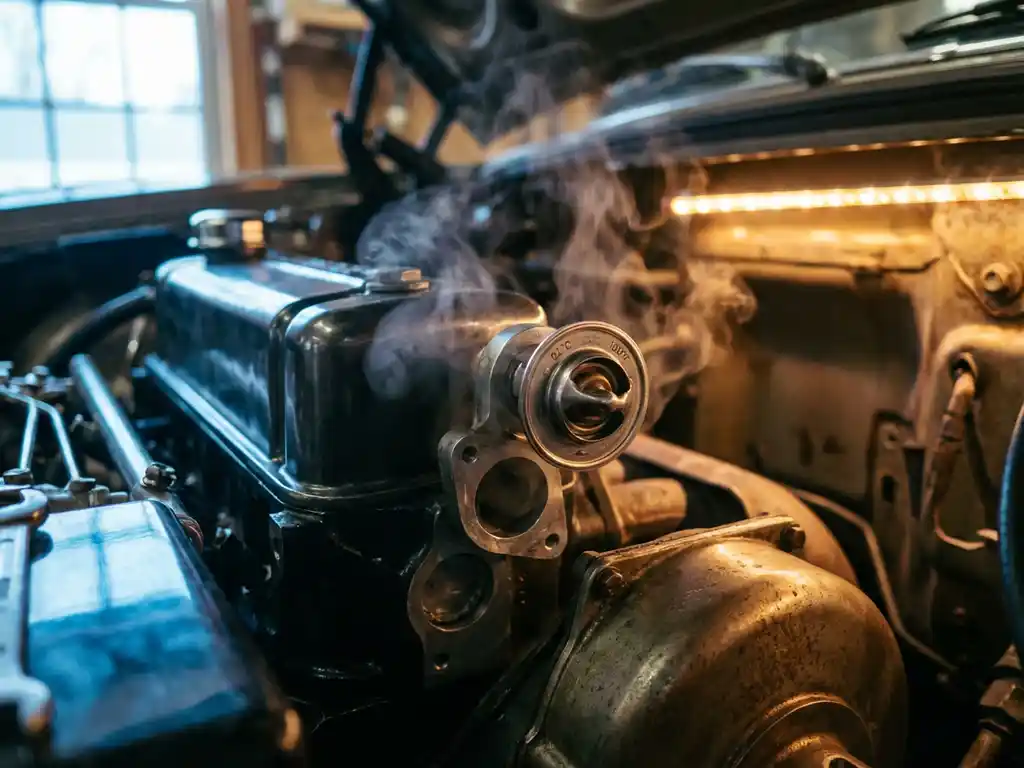
When automotive engineers discuss the most challenging aspects of vehicle emissions control, the conversation inevitably turns to the critical first few minutes after engine start-up. The warm-up phase represents a unique proving ground, where warm-up phase emissions measurements reveal the true performance of thermal management systems. Understanding why OEMs focus so intensely on this specific period requires examining both the technical realities of engine behavior and the regulatory landscape that shapes modern automotive development.
Modern vehicles must meet increasingly stringent emissions standards, yet the period when engines are most prone to producing excess pollutants happens to be when they are cold. This creates a fascinating engineering challenge that drives innovation in automotive emissions measurement and thermal management technologies across the industry.
Why Cold-Start Emissions Create the Biggest Challenge
Cold-start emissions can account for up to 80% of total hydrocarbon emissions during standardized test cycles, making this brief period disproportionately important for overall vehicle compliance. When an engine starts at ambient temperature, the combustion chambers have not reached optimal operating conditions, fuel does not vaporize completely, and catalytic converters remain below their light-off temperature of approximately 300°C.
The physics behind this challenge are straightforward but significant. Cold metal surfaces cause fuel droplets to condense rather than burn completely, while oil viscosity remains high, creating additional friction and less efficient combustion. Meanwhile, the three-way catalytic converter that normally reduces nitrogen oxides, carbon monoxide, and hydrocarbons by more than 95% remains essentially inactive until it reaches operating temperature.
This temperature gap creates what engineers call the “cold-start penalty,” where engine warm-up emissions can spike to levels 10 to 40 times higher than under normal operating conditions. The faster an engine reaches its optimal operating temperature, the shorter this penalty period becomes, which explains why thermal management systems have become so important in modern vehicle design.
How Regulatory Standards Drive Warm-up Phase Testing
Regulatory bodies worldwide have recognized that real-world driving patterns often involve multiple cold starts throughout the day, making warm-up emissions a critical component of overall environmental impact. The EPA’s Federal Test Procedure and Europe’s WLTP both incorporate cold-start scenarios that specifically measure vehicle emissions testing performance during the first 505 seconds of operation.
These testing protocols do not just measure total emissions over a drive cycle. They specifically track emissions minute by minute during warm-up, creating detailed profiles that reveal exactly how quickly vehicles can transition from cold start to clean operation. This granular approach means OEMs cannot simply optimize for steady-state performance and ignore the warm-up phase.
Recent regulatory updates have made these requirements even more stringent. Real Driving Emissions (RDE) testing in Europe now includes cold-start conditions under various ambient temperatures, while California’s Low Emission Vehicle III standards have reduced allowable warm-up emissions by an additional 70% compared with previous generations.
What Makes Thermal Management Critical During Engine Warm-up
Effective thermal management during warm-up involves precisely controlling coolant flow to balance competing priorities: warming the engine block quickly while ensuring the catalytic converter reaches its activation temperature as soon as possible. Traditional thermostats open at fixed temperatures, but modern thermal management for emissions control requires more sophisticated approaches.
Advanced thermal management systems use electronically controlled thermostats that can vary coolant flow based on engine load, ambient temperature, and emissions requirements. During cold starts, these systems may initially restrict coolant flow to help the engine reach operating temperature faster, then gradually increase circulation as conditions stabilize.
The impact on emissions performance can be dramatic. Optimized thermal management can reduce the time to catalyst light-off by 30 to 50%, directly translating to lower engine temperature-related emissions during the critical warm-up period. This improvement becomes even more significant in hybrid vehicles, where the internal combustion engine may start and stop multiple times during a single trip.
Common Warm-up Emissions Testing Challenges for OEMs
OEMs face several recurring challenges when conducting OEM emissions testing during warm-up phases. Temperature repeatability tops the list, as ambient conditions significantly affect cold-start performance. A test conducted at 20°C will produce different results than one at -7°C, requiring extensive testing across temperature ranges to ensure compliance in all markets.
Catalyst aging presents another complexity. Fresh catalytic converters perform differently from aged units, and emissions regulations require testing with catalysts that have been artificially aged to simulate real-world degradation. This aging process affects warm-up performance differently than steady-state operation, creating additional variables in the testing matrix.
Test repeatability becomes particularly challenging during warm-up because small variations in initial conditions can cascade into larger differences in emissions output. Factors such as fuel temperature, oil viscosity, and even the thermal mass of engine components can influence results, requiring careful standardization of pre-test conditioning procedures.
How BTT Solutions Helps with Warm-up Emissions Control
We understand that managing emissions during the warm-up phase requires precision-engineered thermal management components that respond quickly and reliably to changing engine conditions. Our advanced thermostat technology addresses these challenges through several key innovations:
- Electronically controlled thermostats that optimize coolant flow patterns specifically for faster catalyst warm-up
- Precision temperature sensors that provide real-time feedback for adaptive thermal management strategies
- Wax-element technology that ensures consistent performance across the wide temperature ranges required for global vehicle deployment
- Integrated solutions that work seamlessly with hybrid powertrains and their unique warm-up requirements
Our thermal management solutions help OEMs reduce warm-up phase emissions while maintaining engine durability and performance. With eight global locations and deep expertise in automotive applications, we work closely with manufacturers to develop custom solutions that meet specific emissions targets and regulatory requirements. Contact our engineering team to discuss how our thermal management technology can help optimize your vehicle’s warm-up emissions performance.
Related Articles
- Can engine efficiency be improved by upgrading the intake manifold?
- Should thermostat testing procedures differ for industrial versus residential use?
- Why does engine temperature affect component wear?
- What causes thermostat corrosion in coastal driving conditions?
- How do automotive thermostats compare to industrial temperature control systems?


