
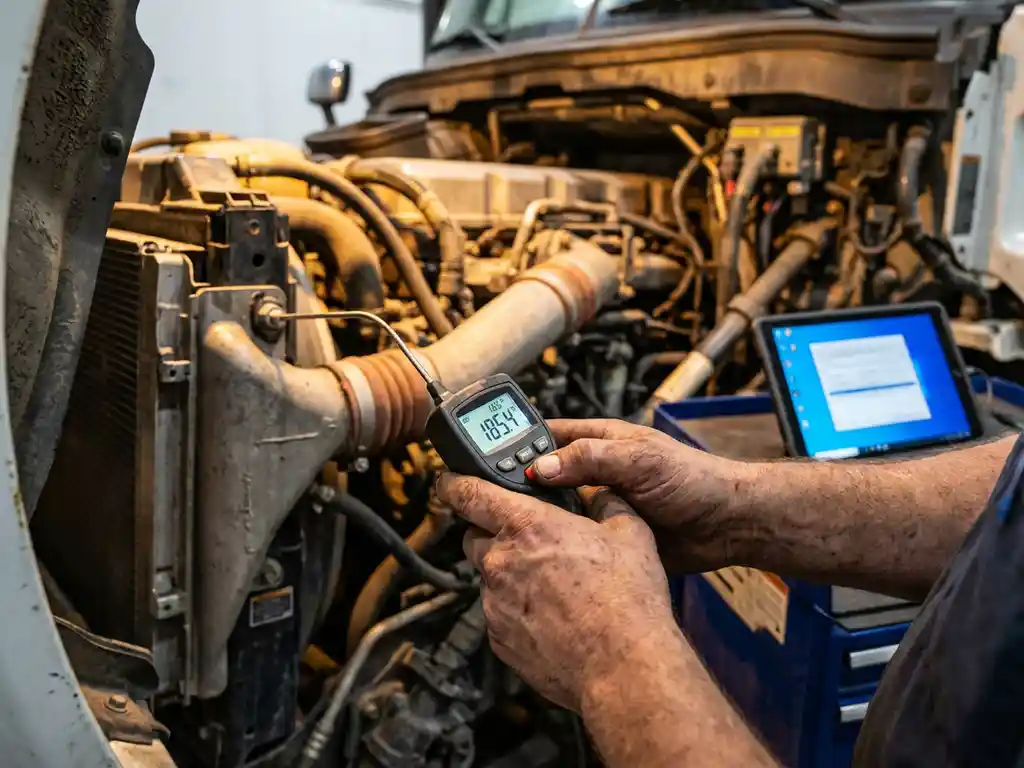
Fleet operators constantly seek ways to improve their bottom line while maintaining reliable vehicle performance. One area that often gets overlooked is thermal efficiency, yet it plays a major role in determining fuel costs, maintenance schedules, and overall fleet performance. When your vehicles run at optimal temperatures, you see immediate benefits in fuel consumption and long-term savings through reduced wear and tear.
Understanding which metrics to track can transform how you manage your fleet’s thermal performance. The right data helps you identify problems before they become costly repairs and optimize your vehicles for maximum efficiency across different operating conditions.
Why Thermal Efficiency Matters for Fleet Operations
Poor thermal management costs fleet operators thousands of dollars annually through increased fuel consumption and premature component failures. When engines operate outside their optimal temperature range, they burn more fuel to achieve the same performance levels. This inefficiency compounds across an entire fleet, turning small temperature variations into significant operational expenses.
Modern fleet management requires precise temperature control to meet emissions standards and fuel economy targets. Vehicles that maintain consistent operating temperatures between 85 and 105°C typically achieve 15 to 20% better fuel efficiency than those with erratic thermal patterns. This improvement directly translates into reduced operating costs and extended component life across your fleet.
The environmental impact also matters to many fleet operators today. Efficient thermal management reduces emissions by ensuring complete fuel combustion and optimal catalytic converter performance. This helps fleets meet regulatory requirements while supporting sustainability goals that many companies now prioritize.
Engine Temperature Variance and Fuel Consumption Tracking
Temperature variance tracking reveals how consistently your engines maintain optimal operating conditions throughout their duty cycles. Engines that experience frequent temperature swings consume significantly more fuel than those that maintain steady thermal states. You should monitor both peak temperatures and the rate of temperature change during warm-up and cool-down periods.
Fuel consumption patterns directly correlate with thermal stability in most fleet applications. Vehicles showing temperature spikes above 110°C or extended periods below 80°C typically demonstrate 10 to 25% higher fuel consumption rates. Modern telematics systems can capture this data in real time, allowing you to identify problematic vehicles before they affect your operating budget.
Cold-start performance particularly affects urban delivery fleets and short-haul operations. Vehicles that reach optimal operating temperature within three to five minutes show markedly better fuel efficiency than those requiring more than 10 minutes. This metric becomes especially important for fleets with frequent stop-and-start operations, where engines regularly cycle through warm-up phases.
Coolant System Performance and Maintenance Intervals
Coolant system efficiency determines how effectively your vehicles dissipate excess heat and maintain stable operating temperatures. Key metrics include coolant flow rates, pressure differentials, and temperature gradients between engine inlet and outlet points. These measurements help predict when maintenance interventions will be necessary.
Monitoring coolant degradation through regular sampling provides early warning signs of system problems. Fresh coolant typically maintains pH levels between 7.5 and 8.5, while degraded coolant shows increased acidity and reduced heat-transfer properties. This data helps you optimize maintenance schedules based on actual system performance rather than arbitrary time intervals.
Thermostat response times offer another valuable metric for assessing coolant system health. Properly functioning thermostats should open within 2 to 3°C of their rated temperature and fully open within 10 to 15°C above that point. Delayed or erratic thermostat operation often indicates impending system failures that could sideline vehicles unexpectedly.
Thermal Load Distribution Across Fleet Vehicle Types
Different vehicle types in your fleet generate varying thermal loads based on their operational profiles and engine configurations. Heavy-duty trucks typically operate at higher baseline temperatures than light commercial vehicles, requiring different thermal management strategies. Understanding these patterns helps optimize maintenance schedules and identify vehicles operating outside normal parameters.
Seasonal variations significantly affect thermal load distribution across vehicle categories. Summer operations may push air-conditioned delivery vehicles beyond their thermal capacity, while winter conditions can prevent proper engine warm-up in cold-weather regions. Tracking these patterns allows you to adjust operational procedures and maintenance timing for optimal performance year-round.
Load-specific thermal profiles help predict component wear patterns across your fleet. Vehicles that consistently operate under high thermal stress require more frequent cooling system maintenance and component replacement. This data enables proactive maintenance planning that prevents unexpected breakdowns and extends overall vehicle life.
How BTT Solutions Supports Fleet Thermal Management
We understand the challenges fleet operators face in maintaining optimal thermal performance across diverse vehicle types and operating conditions. Our precision-engineered thermostats and temperature sensors provide the reliable thermal control that modern fleets require for maximum efficiency and minimal downtime.
Our thermal management solutions offer several key benefits for fleet operations:
- Precise temperature control that maintains optimal engine operating ranges
- Reduced fuel consumption through improved thermal stability
- Extended component life through consistent thermal management
- Enhanced reliability for demanding fleet applications
Ready to improve your fleet’s thermal efficiency? Contact our team to discuss how our thermal management solutions can help optimize your fleet performance and reduce operating costs.


