
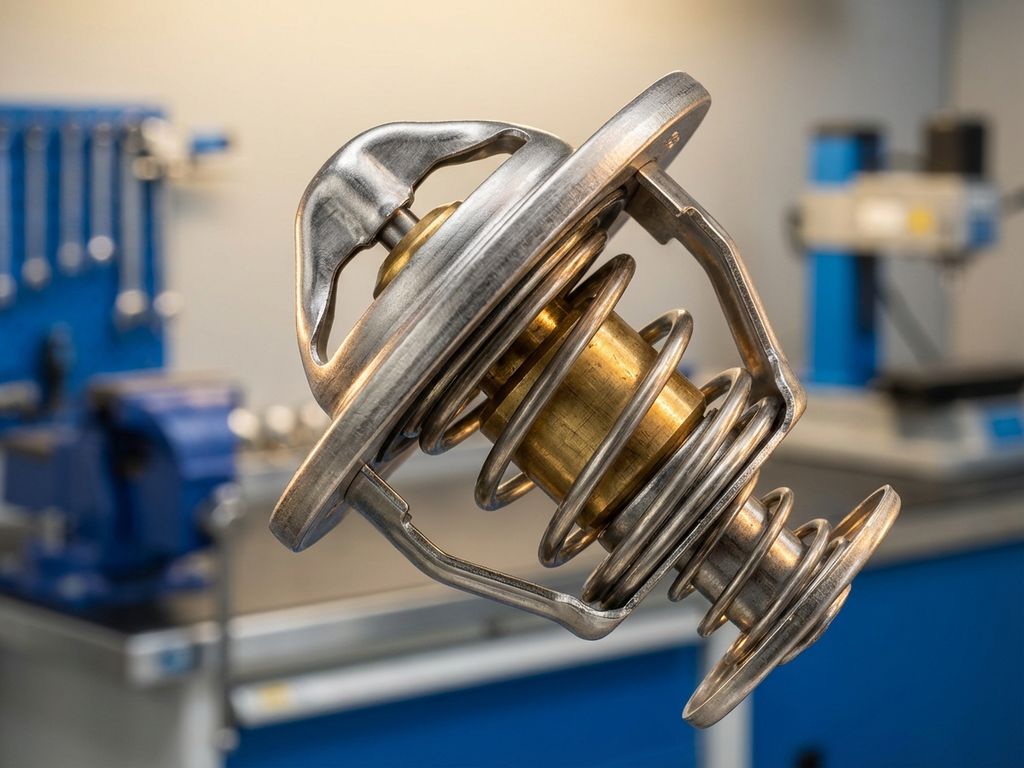
Automotive thermostats contain several key components that work together to regulate engine temperature effectively. The main parts include the thermostat valve, wax element (thermostatic element), spring mechanism, and housing assembly. Each component plays a crucial role in controlling coolant flow and maintaining optimal engine operating temperatures for performance and efficiency.
What exactly is an automotive thermostat and why is it crucial?
An automotive thermostat is a temperature-controlled valve that regulates coolant flow between the engine and radiator. It opens and closes automatically based on engine temperature, allowing the engine to reach optimal operating temperature quickly while preventing overheating.
The thermostat serves as the primary gatekeeper for your engine’s cooling system. When the engine is cold, the thermostat remains closed, forcing coolant to circulate only within the engine block. This allows the engine to warm up rapidly, reducing wear and improving fuel efficiency during cold starts.
Once the engine reaches its optimal operating temperature (typically 82–95°C), the thermostat opens to allow coolant flow to the radiator. This precise temperature control is essential for several reasons. Proper engine temperature ensures complete fuel combustion, reduces harmful emissions, and maintains optimal oil viscosity for lubrication. Without a functioning thermostat, engines run too cold or overheat, leading to increased fuel consumption, higher emissions, and potential engine damage.
What are the core components that make a thermostat work?
The main thermostat components include the thermostat valve, wax element, spring mechanism, and housing assembly. Each component has a specific function that contributes to precise temperature regulation and reliable coolant flow control.
The thermostat valve is the primary flow control mechanism, typically made from brass or stainless steel for corrosion resistance. This valve opens and closes the coolant passage between the engine and radiator. The valve design varies, but most modern automotive thermostats use a poppet-style valve that provides reliable sealing when closed.
The wax element serves as the temperature-sensing component, containing a special wax mixture that expands predictably with temperature changes. This expansion creates the force needed to operate the valve mechanism. The spring mechanism provides the closing force, ensuring the valve returns to the closed position when temperatures drop.
The housing assembly contains all components and provides mounting points for installation in the cooling system. Modern housings often include additional features such as bypass valves, bleed holes for air removal, and integrated temperature sensors for electronic engine management systems.
How does the wax element control engine temperature?
The wax element operates through thermal expansion and contraction, containing a specially formulated wax that melts and expands at precise temperatures. As the wax heats up, it expands against a piston or diaphragm, creating mechanical force that opens the thermostat valve.
The wax mixture is carefully engineered to begin expanding at a specific temperature, typically starting around 82°C and reaching full expansion by 95°C. This narrow temperature range ensures precise control over when the thermostat opens and closes. The wax element provides several advantages over other temperature-sensing methods, including reliability, accuracy, and the ability to generate substantial mechanical force.
When engine temperature drops, the wax cools and contracts, allowing the spring mechanism to close the valve. This cycle repeats continuously during engine operation, maintaining consistent engine temperature regardless of driving conditions. The wax element’s response time is carefully calibrated to prevent temperature fluctuations while providing adequate cooling when needed.
Modern wax formulations can withstand thousands of heating and cooling cycles without degradation, ensuring long-term reliability. The sealed design prevents contamination and maintains consistent performance throughout the thermostat’s service life.
What’s the difference between mechanical and electronic thermostat components?
Mechanical thermostats rely solely on wax element expansion for operation, while electronic thermostats incorporate additional sensors and actuators controlled by the engine management system. Both types serve the same basic function but offer different advantages for various applications.
Traditional mechanical thermostats operate independently using only the wax element and spring mechanism. They are simple, reliable, and cost-effective, making them suitable for most standard automotive applications. The opening temperature is fixed during manufacturing and cannot be adjusted during operation.
Electronic thermostats feature additional components such as heating elements, temperature sensors, and electronic controls. The engine management system can modify the thermostat’s opening temperature based on driving conditions, engine load, and emissions requirements. This allows for more precise temperature control and improved fuel efficiency.
Electronic systems can implement features such as faster warm-up during cold starts, extended warm-up periods for reduced emissions, and variable opening temperatures based on engine load. However, they are more complex and expensive than mechanical versions, requiring additional wiring and integration with the vehicle’s electronic systems.
The choice between mechanical and electronic thermostats depends on the specific application requirements, cost considerations, and desired level of temperature control precision.
How do thermostat housing and sealing components affect performance?
Thermostat housing design directly impacts coolant flow characteristics, sealing reliability, and overall system performance. Proper housing integration ensures optimal coolant circulation while preventing leaks that could compromise cooling system effectiveness.
The housing must be designed to accommodate the thermostat’s operating mechanism while providing smooth coolant flow paths. Poor housing design can create turbulence, restrict flow, or cause uneven temperature distribution. Modern housings often incorporate flow-directing features that optimize coolant circulation patterns.
Sealing components, including gaskets and O-rings, prevent coolant leaks at the housing interfaces. These seals must withstand constant temperature cycling, coolant chemicals, and system pressure. High-quality sealing materials such as silicone or fluoroelastomer compounds provide long-term reliability under these demanding conditions.
Many housings include integrated features such as air bleed valves, temperature sensor mounting points, and bypass passages. These features eliminate the need for separate components and improve system integration. The housing material, typically aluminum or engineered plastics, must resist corrosion and thermal cycling while maintaining dimensional stability.
How BTT Solutions helps with automotive thermostat components
We specialize in manufacturing high-precision thermostat components and complete thermal management solutions for automotive applications. Our expertise covers all aspects of thermostat design, from individual components to integrated thermal management systems.
Our comprehensive automotive thermostat solutions include:
- Precision-engineered wax elements with custom temperature profiles
- High-performance valve assemblies for optimal flow control
- Advanced housing designs optimized for specific applications
- Integrated electronic control systems for modern vehicles
- Complete thermal management solutions combining multiple components
We work closely with automotive manufacturers to develop custom thermostat solutions that meet specific performance requirements, packaging constraints, and cost targets. Our patented technologies enable improved fuel efficiency, reduced emissions, and enhanced engine performance across various vehicle platforms.
Contact us to discuss your automotive thermostat component requirements and discover how our thermal management expertise can optimize your engine cooling system performance.


