
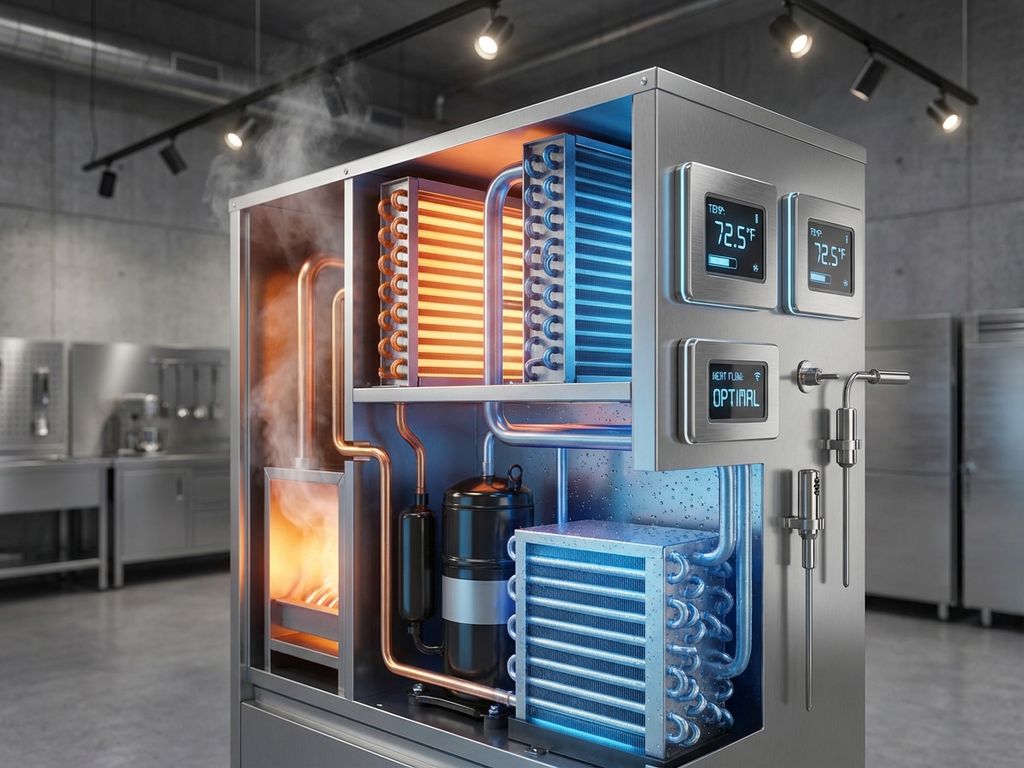
Thermal management in HVAC systems controls temperature distribution and energy flow to maintain comfortable indoor environments efficiently. Proper thermal management in HVAC systems balances heating, cooling, and ventilation while minimising energy waste. This coordination between components ensures optimal building thermal management, reduces operating costs, and extends equipment lifespan through precise temperature regulation.
What is thermal management in HVAC systems and why does it matter?
Thermal management in HVAC systems refers to the coordinated control of heat transfer, temperature regulation, and energy distribution throughout a building’s heating, ventilation, and air conditioning network. It encompasses how thermal control systems monitor, adjust, and optimise temperature levels while managing energy consumption efficiently.
The importance of effective thermal management cannot be overstated. When HVAC temperature regulation functions properly, buildings maintain consistent comfort levels while consuming minimal energy. This coordination prevents hot and cold spots, reduces strain on equipment, and ensures that heating and cooling resources are directed where they are needed most.
Modern thermal management solutions integrate multiple components working together. Temperature sensors continuously monitor conditions, while thermal control systems make real-time adjustments to maintain optimal performance. This systematic approach to building thermal management creates environments that are both comfortable for occupants and cost-effective for property owners.
The impact extends beyond immediate comfort. Proper thermal optimisation in HVAC systems can significantly reduce energy bills, lower carbon footprints, and prevent premature equipment failure. Buildings with well-designed thermal management experience fewer maintenance issues and longer equipment lifecycles.
How does poor thermal management affect HVAC system performance?
Poor thermal management creates cascading problems that compromise HVAC system performance, increase operating costs, and reduce equipment lifespan. When thermal control systems malfunction or operate inefficiently, energy waste becomes inevitable as systems work harder to maintain desired temperatures.
Uneven temperature distribution is one of the most noticeable effects. Rooms may become too hot or too cold, forcing the system to overcorrect and consume excessive energy. This imbalance strains components as they cycle on and off frequently, leading to premature wear and potential breakdowns.
Energy costs escalate when thermal management in HVAC systems lacks proper coordination. Heating and cooling equipment may operate simultaneously in different zones, wasting energy and creating inefficiencies. Without precise thermal optimisation HVAC controls, systems cannot respond appropriately to changing conditions.
Component degradation accelerates under poor thermal management conditions. Compressors, heat exchangers, and circulation pumps experience increased stress when systems operate outside optimal parameters. This leads to more frequent repairs, unexpected downtime, and costly emergency service calls.
The cumulative effect reduces overall HVAC system performance significantly. Buildings with inadequate thermal management solutions often experience comfort complaints, higher utility bills, and shortened equipment lifecycles that require earlier replacement investments.
What are the key components that control thermal management in HVAC systems?
Thermostats and control units serve as the central command centres for thermal management in HVAC systems. These devices monitor ambient temperatures, compare them to desired settings, and signal other components to adjust heating or cooling output accordingly.
Temperature sensors throughout the building provide critical feedback for effective HVAC temperature regulation. These sensors detect temperature variations in different zones, enabling thermal control systems to respond precisely to changing conditions rather than relying on single-point measurements.
Thermal valves regulate fluid flow within heating and cooling circuits. These components control how much heated or cooled water circulates through radiators, underfloor heating systems, or cooling coils, directly impacting temperature distribution and energy efficiency.
Heat exchangers facilitate thermal transfer between different system fluids while maintaining separation. In building thermal management applications, these components ensure efficient heat transfer from primary heating sources to distribution systems without mixing fluids.
Advanced thermal management solutions often include zone control panels that coordinate multiple thermal control systems simultaneously. These sophisticated units can manage different areas independently, optimising comfort and efficiency across entire buildings.
Circulation pumps and fans move heated or cooled air and water throughout the system. Variable-speed controls on these components enable thermal optimisation HVAC systems to adjust flow rates based on demand, reducing energy consumption during partial-load conditions.
How can you improve thermal efficiency in existing HVAC systems?
Upgrading thermal control systems represents the most impactful improvement for existing HVAC installations. Modern programmable thermostats and smart controls provide precise HVAC temperature regulation while learning usage patterns to optimise energy consumption automatically.
Regular calibration of temperature sensors ensures accurate readings throughout the system. When sensors provide reliable data, thermal management in HVAC systems can make appropriate adjustments without overshooting target temperatures or wasting energy through incorrect responses.
Implementing zone-based controls allows different areas to maintain independent temperature settings. This targeted approach to building thermal management prevents energy waste in unoccupied spaces while ensuring comfort where it is needed.
Maintenance practices significantly impact thermal efficiency. Cleaning heat exchangers, replacing filters, and checking thermal valve operation ensure components function optimally. Well-maintained systems require less energy to achieve desired thermal management outcomes.
Insulation improvements complement thermal optimisation HVAC upgrades by reducing heat loss and heat gain. Better insulation allows thermal control systems to maintain temperatures more easily, reducing the workload on heating and cooling equipment.
Adding variable-speed drives to pumps and fans enables more precise flow control. These upgrades allow thermal management systems to adjust circulation rates based on actual demand rather than operating at constant speeds regardless of load conditions.
How BTT Solutions helps with HVAC thermal management optimisation
We provide precision-engineered thermal control systems specifically designed for HVAC applications, including advanced thermostats, temperature sensors, and thermal valves that optimise building thermal management performance. Our products integrate seamlessly into existing systems while delivering measurable improvements in energy efficiency and temperature control.
Our thermal management solutions for HVAC systems include:
- High-precision thermostats that provide accurate temperature regulation with minimal energy waste
- Advanced temperature sensors that deliver reliable feedback for optimal system response
- Thermal control valves that regulate fluid flow with exceptional precision and durability
- Integrated control systems that coordinate multiple components for maximum thermal efficiency
- Zone management solutions that enable independent temperature control across different building areas
These components work together to create comprehensive thermal management HVAC systems that reduce energy consumption, improve comfort levels, and extend equipment lifespan. Our solutions are engineered for reliability and designed to integrate with both new installations and existing system upgrades. BTT Solutions has extensive experience in delivering thermal optimisation solutions across various industries and building types.
Contact us today to discuss how our thermal optimisation HVAC solutions can improve your building’s energy efficiency and comfort levels while reducing operating costs.
Related Articles
- What is the difference between a thermostat valve and thermostat bellows?
- Why is reducing cold start emissions a priority for automotive OEMs?
- What are the most common automotive thermostat component failures?
- Can you improve engine efficiency with better thermal management?
- 7 Key Factors When Selecting an Automotive Thermostat Supplier


