
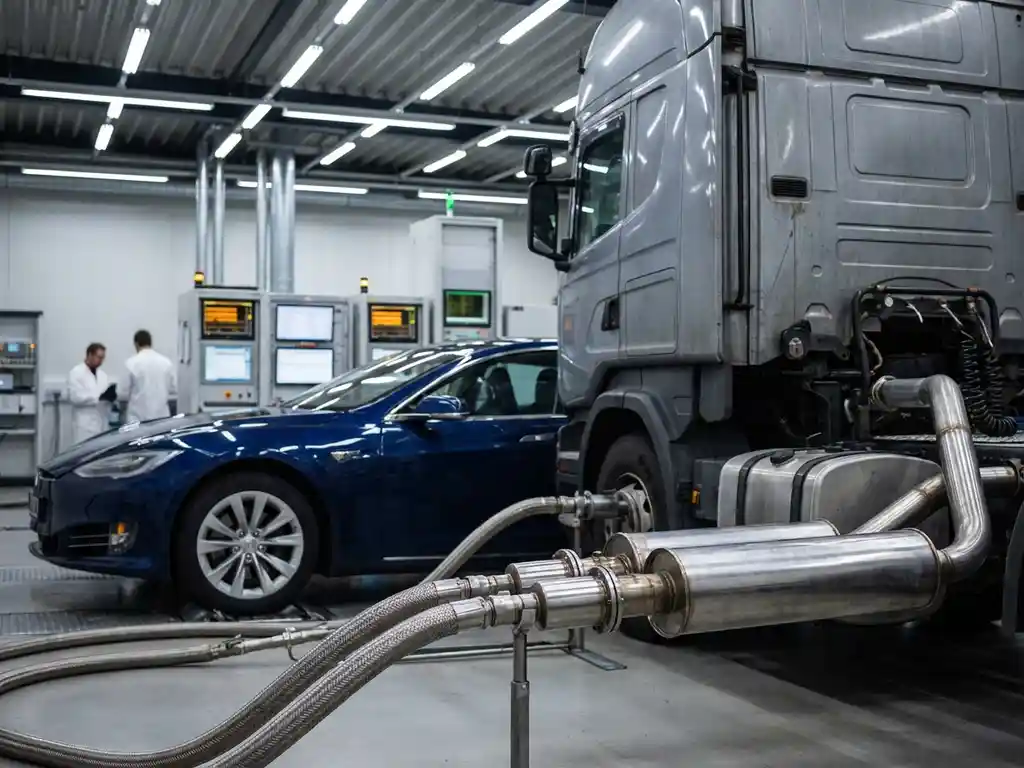
The automotive industry operates under a complex web of emission regulations that vary significantly by vehicle type, market, and intended use. While both passenger and commercial vehicles must meet stringent environmental standards, the regulatory frameworks governing each category differ substantially in their approach, testing procedures, and compliance requirements.
Understanding these regulatory differences is increasingly important as manufacturers navigate global markets and develop thermal management solutions that meet diverse compliance standards. The distinction between passenger and commercial vehicle emission standards reflects the unique operational demands, usage patterns, and environmental impact profiles of each vehicle category.
Why Emission Standards Vary Between Vehicle Categories
Passenger and commercial vehicles face fundamentally different regulatory approaches due to their distinct operational characteristics and environmental impact profiles. Passenger cars typically follow standardized driving cycles and predictable usage patterns, making it easier to establish uniform testing procedures and limits across different models.
Commercial vehicles, however, present a more complex regulatory challenge. These vehicles vary dramatically in size, weight, engine displacement, and duty cycles. A delivery van operating in urban environments faces different demands than a long-haul truck or piece of construction equipment. Regulators must account for these operational differences when setting emission standards, often creating multiple subcategories within commercial vehicle classifications.
The regulatory framework also considers the economic impact on different vehicle segments. Commercial vehicle operators often face tighter profit margins and longer vehicle replacement cycles than passenger car owners. This economic reality influences how quickly new emission standards are phased in and the flexibility provided for compliance across different commercial vehicle categories.
Key Regulatory Differences in Global Markets
European Union regulations treat passenger and commercial vehicles through distinctly different testing protocols and limit structures. Passenger vehicles must comply with Euro 6 standards using the Worldwide Harmonized Light Vehicles Test Procedure, while commercial vehicles follow separate heavy-duty emission standards with different testing methodologies and limit values.
In the United States, the Environmental Protection Agency oversees passenger vehicle standards through the Tier 3 program, while commercial vehicles fall under separate heavy-duty engine and vehicle standards. These commercial standards often include work-based testing that better reflects real-world operating conditions, unlike the standardized cycles used for passenger cars.
Asian markets such as Japan and China have developed their own regulatory approaches, creating additional complexity for global manufacturers. Japan’s Post New Long-Term regulations and China’s National VI standards each establish unique requirements that do not always align with European or American approaches, requiring manufacturers to develop region-specific compliance strategies.
How Thermal Management Supports Emission Compliance
Advanced thermal management systems play a vital role in helping both passenger and commercial vehicles meet increasingly stringent emission standards. Precise temperature control enables engines to reach optimal operating temperatures more quickly, reducing cold-start emissions, which represent a significant portion of total vehicle emissions during regulatory testing cycles.
For commercial vehicles, thermal management becomes even more critical due to the diverse operating conditions these vehicles encounter. Effective coolant temperature regulation helps maintain consistent engine performance across varying load conditions, ensuring emission control systems function properly whether the vehicle is idling in traffic or operating under full load on highways.
The integration of intelligent thermostats and temperature sensors allows modern vehicles to optimize engine warm-up strategies and maintain precise operating temperatures. This precision directly impacts the effectiveness of emission control technologies such as selective catalytic reduction systems and diesel particulate filters, which require specific temperature ranges to function effectively.
Common Compliance Challenges Across Vehicle Types
Both passenger and commercial vehicle manufacturers face the challenge of balancing emission compliance with fuel efficiency and performance requirements. Stricter emission standards often require additional emission control equipment that can impact fuel consumption and vehicle cost, creating engineering trade-offs that affect both vehicle categories.
Real-world driving conditions frequently differ from laboratory testing environments, creating compliance risks for both vehicle types. Commercial vehicles face particular challenges due to their varied duty cycles and operating environments, while passenger vehicles must maintain compliance across diverse driving styles and maintenance practices among individual owners.
The rapid evolution of emission standards across global markets creates ongoing compliance challenges. Manufacturers must develop flexible platforms that can adapt to changing regulatory requirements while maintaining cost-effectiveness across different vehicle categories and market regions.
How BTT Solutions Helps with Emission Compliance
We specialize in developing high-precision thermal management components that help both passenger and commercial vehicle manufacturers meet stringent emission regulations across global markets. Our advanced thermostat technology and temperature sensors provide the precise control needed for optimal emissions-system performance.
Our comprehensive approach to emission compliance support includes:
- Custom thermostat solutions designed for specific vehicle categories and regulatory requirements
- Temperature sensors that enable precise monitoring and control of emission control systems
- End-to-end thermal management solutions that optimize engine warm-up and operating temperature control
- Global manufacturing capabilities that support compliance across different regional standards
Ready to explore how our thermal management expertise can support your emission compliance strategy? Contact our technical team to discuss your specific requirements and learn more about our comprehensive product portfolio designed for automotive applications.


