
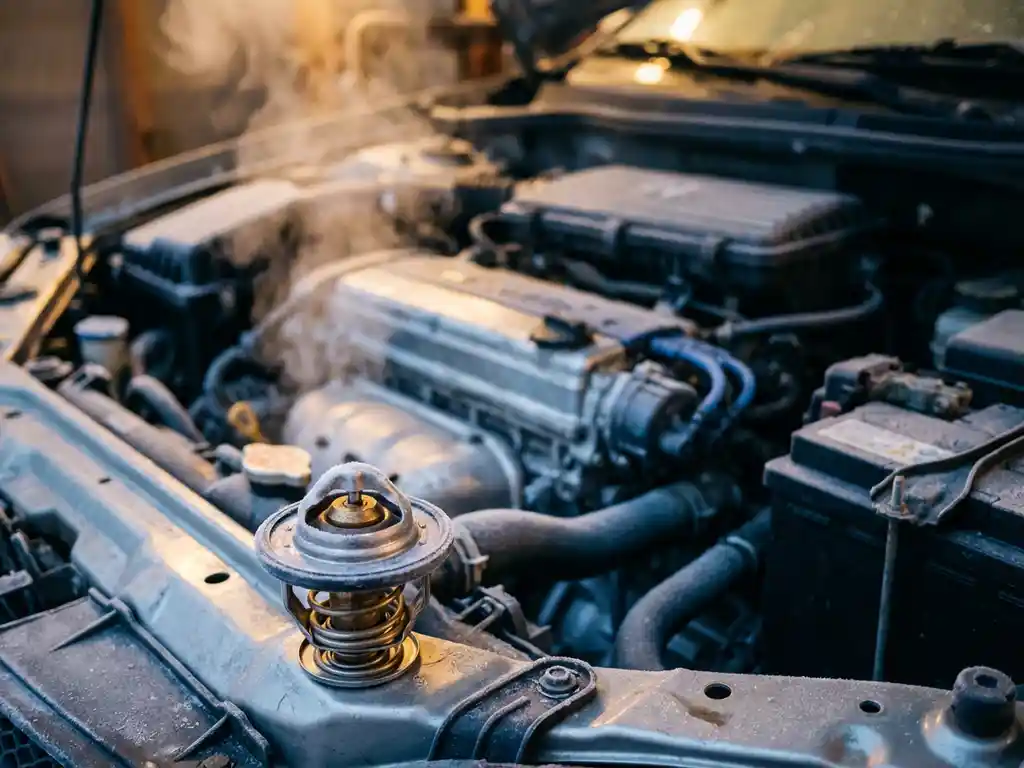
Ever notice how your car seems to guzzle fuel during the first few minutes of driving, especially on chilly mornings? You’re not imagining things. Cold-start fuel consumption is a real phenomenon that affects every vehicle, and understanding why it happens can help you make smarter decisions about your driving habits and vehicle maintenance.
When your engine sits overnight in cold weather, it faces unique challenges that can dramatically impact fuel economy. The combination of thick oil, cold metal components, and incomplete combustion creates a perfect storm for increased fuel use. Let’s explore what’s really happening under your hood during those crucial first minutes of operation.
Why Cold Engines Consume More Fuel Than Warm Ones
Cold engines operate at a significant disadvantage compared to their warmed-up counterparts. When temperatures drop, your engine oil becomes thicker and more resistant to flow, creating additional friction that the engine must overcome. This increased resistance forces your engine to work harder, burning more fuel just to maintain basic operation.
The fuel system also struggles in cold conditions. Gasoline doesn’t vaporize as readily when it’s cold, which means your engine’s computer must inject more fuel to create a combustible mixture. Think of it like trying to start a campfire with damp wood—you need more fuel to get the same result. Modern engines compensate by running what’s called a “rich” fuel mixture, using up to 40% more fuel than normal operating conditions require.
Metal components throughout your engine contract in cold weather, affecting tolerances and creating gaps where energy is lost. Your catalytic converter, which helps burn excess fuel and reduce emissions, also needs time to reach its optimal operating temperature. Until it warms up, your engine runs less efficiently and consumes more fuel to compensate for incomplete combustion.
How Engine Temperature Affects Combustion Efficiency
Combustion efficiency drops significantly when engine temperatures fall below optimal ranges. At ideal operating temperatures of around 90–105°C (195–220°F), fuel burns completely and efficiently. However, during cold starts, combustion chambers may be 55°C (100°F) or more below this target, resulting in incomplete combustion and wasted energy.
Cold combustion chambers struggle to ignite fuel mixtures properly. The cooler metal surfaces absorb heat from the combustion process, reducing the intensity and completeness of the burn. This means some fuel passes through your engine unburned, contributing nothing to power generation while still being drawn from your tank.
Your engine’s computer tries to compensate by advancing ignition timing and enriching the fuel mixture, but these adjustments come at the cost of fuel economy. The engine management system prioritizes smooth operation and emissions control over efficiency during warm-up, knowing that optimal fuel economy will return once proper operating temperatures are reached.
What Happens During the Engine Warm-Up Process
The warm-up process involves multiple systems working together to bring your engine to its optimal operating temperature. Your cooling system initially restricts coolant flow to help the engine heat up faster, while the oil pump works overtime to circulate thickened lubricant through critical components. During this phase, your engine may consume 20–50% more fuel than normal, depending on ambient temperature and engine design.
Modern engines use sophisticated thermal management strategies during warm-up. The thermostat remains closed initially, preventing coolant from flowing to the radiator and allowing the engine to reach operating temperature more quickly. Some advanced systems even use electric heating elements or thermal storage devices to speed up this process and reduce the period of increased fuel consumption.
As components gradually warm up, fuel consumption begins to normalize. The catalytic converter reaches its light-off temperature, oil viscosity decreases, and combustion efficiency improves. Most engines reach acceptable operating temperatures within 3–5 minutes of driving, though complete thermal equilibrium may take 10–15 minutes, depending on conditions.
Modern Thermal Management Solutions for Cold Starts
Today’s automotive industry has developed innovative approaches to minimize cold-start fuel consumption through advanced thermal management technologies. Electric coolant pumps, variable-flow thermostats, and thermal storage systems help engines reach optimal temperatures faster than ever before. These solutions can reduce warm-up time by 30–50% compared to traditional systems.
Sophisticated engine management systems now use predictive algorithms that adjust fuel delivery, ignition timing, and airflow based on real-time temperature data from multiple sensors. Some vehicles even precondition their engines using waste-heat recovery systems or electric heating elements, dramatically reducing the cold-start penalty on fuel economy.
Hybrid and electric vehicle technologies are also changing the game. Many hybrids can operate on electric power during cold starts, eliminating fuel consumption entirely during initial operation. When the internal combustion engine does start, it benefits from pre-warming strategies that minimize the traditional cold-start fuel penalty.
How BTT Solutions Helps with Cold-Start Efficiency
We specialize in developing precision thermal management components that directly address cold-start fuel consumption challenges. Our advanced thermostat technology and temperature-control solutions help engines reach optimal operating temperatures faster, reducing the period of increased fuel use that affects every vehicle.
Our innovative thermal management solutions include:
- High-precision thermostats that optimize coolant-flow timing for faster warm-up
- Advanced temperature sensors that provide real-time data for improved engine management
- Thermal control components designed for maximum efficiency across automotive applications
- Custom solutions for industrial and building applications where temperature control affects energy consumption
If you’re looking to improve thermal efficiency in your automotive, industrial, or building applications, we’d love to discuss how our thermal management solutions can help reduce energy consumption and optimize performance. Contact our team to learn more about our precision-engineered components and how they can benefit your specific application.
Related Articles
- How is a wax pellet thermostat used in floor heating systems?
- What is thermal shock testing and does it apply to thermostats?
- What is the cost impact of poor thermal management on fleet fuel bills?
- What thermal management components are needed for fuel efficiency?
- What materials are used in wax element thermostats?


