
Modern vehicles face increasingly stringent emissions standards, and real-world driving emissions tests have become the ultimate proving ground for automotive technology. Unlike controlled laboratory conditions, these tests expose vehicles to unpredictable traffic patterns, varying weather conditions, and diverse driving behaviors that challenge every component under the hood.
The role of thermal components in meeting these demanding emissions tests extends far beyond simple temperature control. These precision-engineered systems orchestrate the delicate balance between engine performance and environmental compliance, making the difference between passing and failing crucial regulatory standards.
Why Real-World Driving Emissions Tests Challenge Traditional Thermal Systems
Real-world driving emissions tests, commonly known as RDE testing, push thermal systems beyond their traditional comfort zones. Unlike laboratory dynamometer tests that follow predictable cycles, RDE testing subjects vehicles to constantly changing conditions that mirror actual driving experiences.
Traditional thermal systems often struggle with the rapid temperature fluctuations inherent in real-world scenarios. Stop-and-go traffic creates thermal cycling that can cause components to expand and contract repeatedly, while highway driving demands sustained high-temperature performance. These varying conditions expose weaknesses in thermal management that might never surface in controlled testing environments.
The challenge becomes even more complex when considering cold starts, which represent some of the highest-emission periods for any vehicle. During these critical moments, thermal components must rapidly bring the engine to its optimal operating temperature while minimizing the time spent in high-emission states.
How Thermal Components Control Engine Temperature for Emissions Compliance
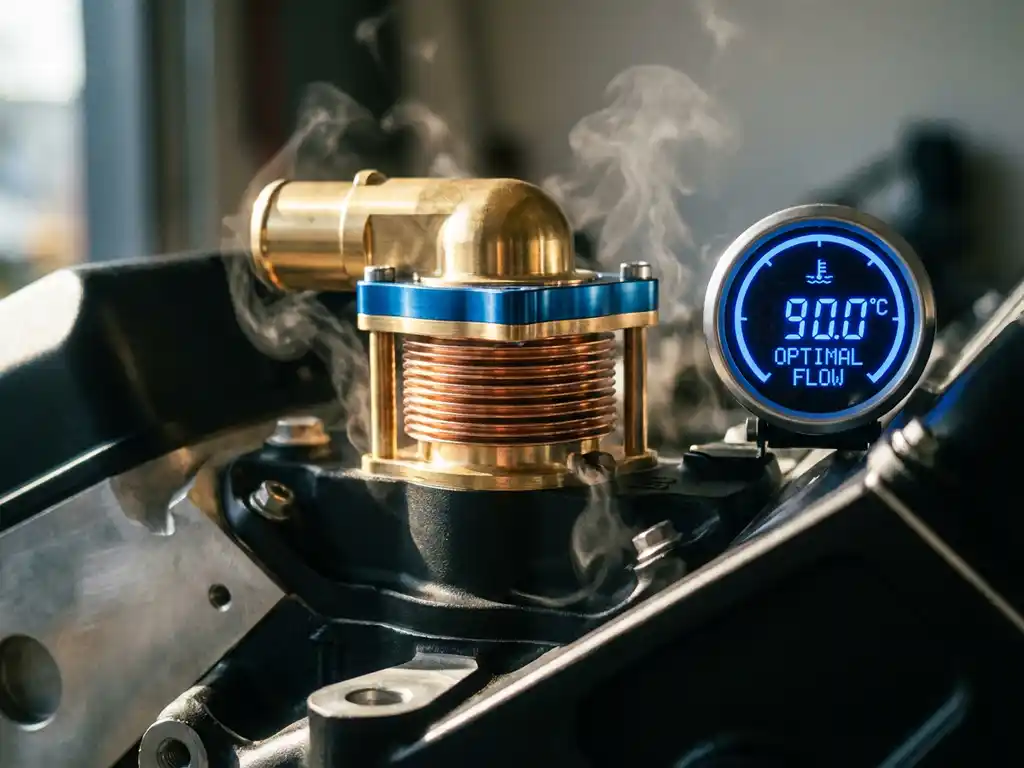
Thermal components serve as the conductors of an intricate temperature orchestra within modern engines. Thermostats regulate coolant flow to maintain optimal combustion temperatures, while temperature sensors provide real-time feedback that enables precise adjustments to fuel injection and ignition timing.
When engines operate within their designed temperature ranges, combustion becomes more complete and efficient. This improved combustion directly translates to lower emissions of harmful pollutants such as nitrogen oxides, carbon monoxide, and unburned hydrocarbons. The precision required for this process demands thermal components that respond accurately to temperature changes within fractions of a degree.
Modern thermal management systems also play a vital role in aftertreatment system performance. Catalytic converters and particulate filters require specific temperature ranges to function effectively, and thermal components ensure these systems reach and maintain their optimal operating windows throughout the driving cycle.
What Makes Precision Thermal Management Important for Modern Vehicles
The automotive industry’s shift toward more complex powertrains has elevated the importance of precision thermal management to unprecedented levels. Hybrid and electric vehicles introduce additional thermal challenges, requiring sophisticated temperature control for battery systems alongside traditional engine components.
Precision in thermal management directly impacts fuel efficiency, which correlates strongly with emissions performance. When thermal components maintain engines at optimal temperatures, fuel consumption decreases and emissions output follows suit. This relationship becomes particularly important during RDE testing, where efficiency gains translate directly to compliance success.
Advanced thermal management systems also enable more aggressive engine calibrations that would be impossible with less precise temperature control. These calibrations can optimize performance while maintaining emissions compliance, but they require thermal components that respond consistently across varying operating conditions.
Common Thermal Management Failures That Cause Emissions Test Issues
Thermal component failures often manifest as gradual performance degradation rather than complete system breakdowns. Thermostats that open too early or too late can cause engines to operate outside their optimal temperature ranges, leading to increased emissions that may not be immediately apparent during routine operation.
Temperature sensor drift represents another common failure mode that can significantly impact emissions performance. When sensors provide inaccurate temperature readings, engine management systems make incorrect adjustments to fuel delivery and ignition timing, resulting in suboptimal combustion and elevated emissions.
Coolant system leaks and blockages create thermal imbalances that force engines to compensate through less efficient operating strategies. These compensation mechanisms often prioritize component protection over emissions performance, leading to test failures even when engines appear to run normally under casual observation.
How BTT Solutions Helps with Real-World Emissions Compliance
We understand that meeting real-world driving emissions standards requires thermal components that perform consistently across diverse operating conditions. Our precision-engineered thermal management solutions address the specific challenges that RDE testing presents to modern vehicles.
Our comprehensive approach to emissions compliance includes:
- High-precision thermostats that maintain tight temperature control across varying driving conditions
- Advanced temperature sensors designed for long-term accuracy and reliability
- Integrated thermal management systems optimized for both traditional and hybrid powertrains
- Custom solutions tailored to specific vehicle platforms and emissions requirements
With our expertise in automotive thermal management and commitment to innovation, we help manufacturers achieve emissions compliance while maintaining the performance and efficiency that drivers expect. Contact our team to discover how our thermal solutions can support your emissions compliance objectives.
Related Articles
- Why do OEMs measure emissions during the warm-up phase specifically?
- What causes thermostat corrosion in coastal driving conditions?
- What are the latest thermostat technologies for automotive in 2026?
- When should you upgrade thermal management systems?
- How do thermal management systems control coolant temperature?


