
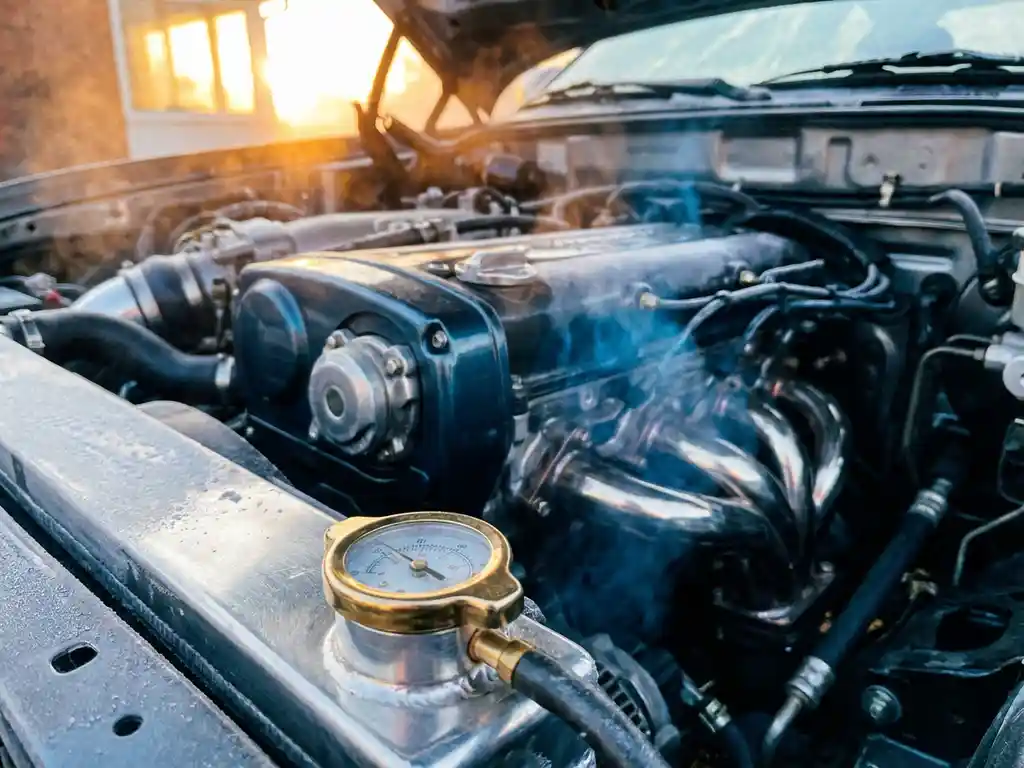
The automotive industry faces increasing pressure to reduce emissions across all operating conditions, but regulators are paying particular attention to a specific challenge: cold-start emissions. When engines start from a cold state, they produce significantly higher pollutant levels than during normal operation, creating a substantial environmental impact that traditional emission-control systems struggle to address effectively.
Recent regulatory developments worldwide are tightening standards for these initial moments of engine operation, pushing manufacturers to rethink their approach to emission control. Understanding why regulators are focusing on this area—and how advanced solutions can address these challenges—is becoming increasingly important for automotive manufacturers and suppliers navigating the evolving compliance landscape.
What Are Cold-Start Emissions and Why They Matter
Cold-start emissions occur during the first few minutes after engine startup, when the catalytic converter hasn’t reached its optimal operating temperature. During this period, engines can produce up to 80% of their total trip emissions, despite representing only a small fraction of driving time. The catalytic converter, which normally reduces harmful pollutants by up to 99%, operates at significantly reduced efficiency when cold.
The environmental impact extends beyond individual vehicles. With millions of cars starting cold multiple times each day, these brief periods contribute disproportionately to urban air pollution. Nitrogen oxides, carbon monoxide, and unburned hydrocarbons released during cold starts accumulate in metropolitan areas, particularly during morning commute hours, when atmospheric conditions often trap pollutants near ground level.
Modern engines face additional challenges, as efficiency improvements have reduced waste-heat generation, meaning engines take longer to warm up than their predecessors. This extended warm-up period prolongs the high-emission phase, making effective thermal-management solutions more important than ever for meeting stringent environmental standards.
New Regulatory Standards Driving Industry Changes
Regulatory bodies worldwide are implementing increasingly strict cold-start emission requirements. The European Union’s Euro 7 standards, set to take effect in the coming years, will include specific provisions for cold-start performance testing. These regulations require manufacturers to demonstrate emission-control effectiveness from the moment of ignition, not just during steady-state operation.
In the United States, the Environmental Protection Agency has introduced real-world driving-emissions tests that capture cold-start scenarios more accurately than previous laboratory conditions. California’s Advanced Clean Cars II program goes further, establishing specific cold-start emission limits that decrease progressively through 2035. These standards recognize that laboratory test cycles often underestimate real-world cold-start impacts.
China’s National VI emission standards already include cold-start provisions, and other markets are following suit with similar requirements. The global trend toward stricter cold-start regulations reflects growing scientific understanding of their environmental impact and technological advances that make better control achievable.
How Advanced Thermal Management Reduces Cold-Start Impact
Effective thermal-management systems address cold-start emissions by accelerating engine and exhaust-system warm-up. Advanced thermostat technology plays a central role by precisely controlling coolant flow to optimize heat distribution throughout the engine block and cylinder head. This targeted approach ensures critical components reach operating temperature faster while maintaining optimal thermal balance.
Modern thermal-management solutions incorporate multiple strategies to minimize cold-start impact. Thermal-storage systems can retain heat between engine cycles, reducing the severity of subsequent cold starts. Variable-flow cooling systems adjust coolant circulation based on real-time temperature monitoring, directing heat where it is needed most during warm-up phases.
Integration with exhaust aftertreatment systems represents another area of advancement. Coordinated thermal management ensures catalytic converters reach light-off temperature quickly while preventing thermal shock that could damage sensitive emission-control components. This holistic approach to temperature management delivers measurable improvements in cold-start emission performance.
Compliance Strategies for Manufacturers and Suppliers
Successful compliance with evolving cold-start regulations requires comprehensive planning that begins early in the vehicle development process. Manufacturers must integrate thermal-management considerations into the initial design phases rather than treating them as afterthoughts. This proactive approach allows for optimization of engine architecture, cooling-system layout, and control strategies so they work together effectively.
Testing and validation strategies need to be updated to reflect new regulatory requirements. Traditional emissions testing focused primarily on steady-state conditions, but modern compliance demands extensive evaluation of cold-start scenarios. Manufacturers must develop testing protocols that capture real-world cold-start conditions across various ambient temperatures and operating conditions.
Supply-chain partnerships become increasingly important as compliance requirements grow more complex. Working with specialized thermal-management suppliers who understand both technical requirements and regulatory trends helps manufacturers navigate evolving standards efficiently. These partnerships provide access to proven technologies and expertise that can accelerate compliance while maintaining cost-effectiveness.
How BTT Solutions Helps with Cold-Start Emission Compliance
We understand the complex challenges manufacturers face in meeting stringent cold-start emission requirements. Our advanced thermal-management components are specifically designed to address these regulatory pressures through precise temperature control and rapid warm-up capabilities. Here’s how we support your compliance efforts:
- High-precision thermostats that optimize coolant flow during critical warm-up phases
- Temperature sensors that provide real-time feedback for intelligent thermal-management systems
- Proven end-to-end solutions tested across automotive applications worldwide
- Expert engineering support to integrate our components seamlessly into your designs
Our global experience with automotive manufacturers gives us unique insight into regulatory trends and technical solutions that deliver results. From initial design consultation through production support, we partner with you to ensure your vehicles meet current and future emissions standards. Contact our team to discuss how our thermal-management expertise can support your cold-start emission compliance strategy.
Related Articles
- Why is a precise thermostat mechanism critical for fuel efficiency?
- Can switching to synthetic oil genuinely improve engine efficiency?
- What are the consequences of thermal cycling on engine durability?
- What is the business impact of failing to meet emission targets for OEMs?
- How do oil temperature regulators work in hydraulic systems?


