
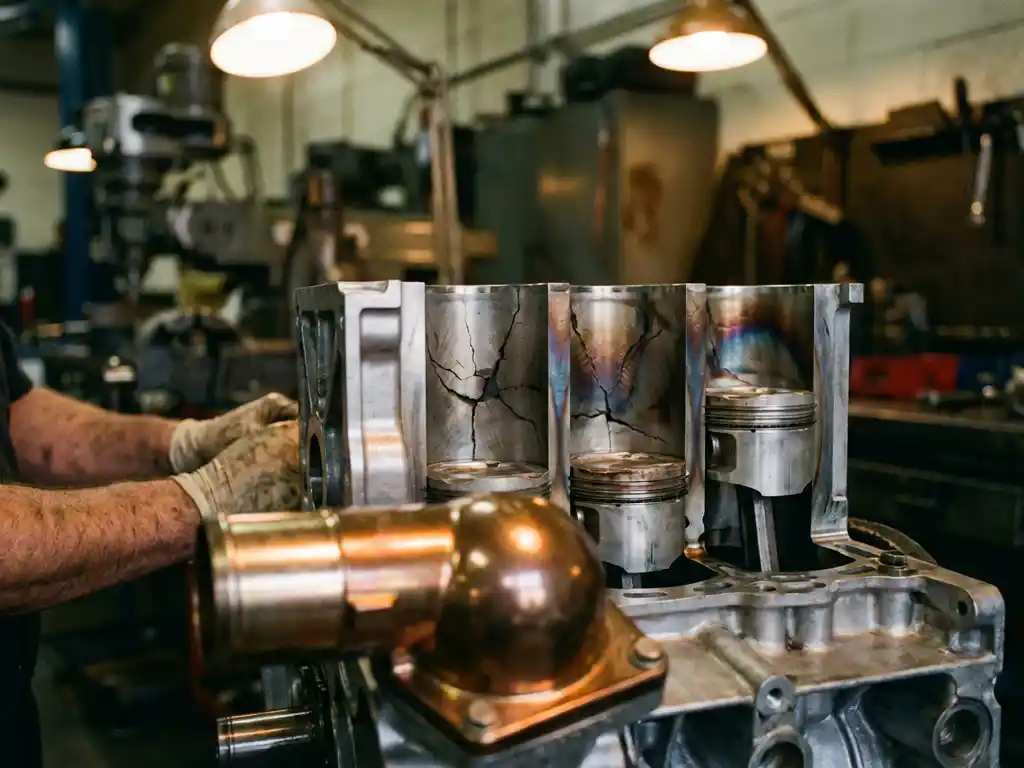
Modern engines face a constant battle against one of their most persistent enemies: temperature fluctuations. Every time you start your car on a cold morning or push your engine hard on the highway, thermal cycling occurs. This repetitive heating-and-cooling process might seem harmless, but it creates significant stress on engine components that can dramatically affect long-term durability and performance.
Understanding how thermal cycling affects your engine helps you make better decisions about maintenance, component selection, and overall vehicle care. The consequences extend far beyond simple wear, influencing everything from fuel efficiency to catastrophic component failure.
What Is Thermal Cycling and Why Does It Matter for Engines
Thermal cycling refers to the repeated expansion and contraction of materials as temperatures rise and fall during normal engine operation. When you start a cold engine, components rapidly heat from ambient temperature to operating levels of around 90–105°C. During shutdown, these same parts cool back down, creating a continuous cycle of thermal stress.
This process matters because different engine materials expand and contract at different rates. Aluminum pistons, steel cylinder liners, and cast-iron blocks all respond differently to temperature changes. These mismatched expansion rates create internal stresses that accumulate over thousands of cycles, gradually weakening material bonds and creating microscopic cracks that grow over time.
How Thermal Stress Damages Critical Engine Components
Thermal stress manifests in several destructive ways throughout your engine. The most common damage occurs at material interfaces where different metals meet. Cylinder head gaskets, for example, must seal between aluminum heads and iron blocks while accommodating their different expansion rates. Over time, this constant movement degrades gasket materials and can lead to compression loss.
Piston rings experience particularly severe effects from thermal cycling. As pistons heat up, they expand within their cylinders, but the expansion isn’t uniform. The crown heats faster than the skirt, creating internal stresses that can cause ring-groove wear or even piston cracking. Similarly, valve seats expand and contract repeatedly, potentially causing valve recession or seat cracking that affects compression and combustion efficiency.
Cooling-system components also suffer from thermal cycling. Radiators experience stress where plastic tanks meet aluminum cores, while thermostats must operate reliably despite constant temperature fluctuations. These components play a vital role in managing the thermal-cycling process itself, making their reliability critical for overall engine protection.
Common Engine Failures Caused by Poor Thermal Management
Head gasket failure represents one of the most expensive consequences of inadequate thermal management. When cooling systems can’t maintain stable temperatures, excessive thermal cycling accelerates gasket degradation. The resulting coolant leaks, oil contamination, and compression loss often require complete engine rebuilds.
Warped cylinder heads frequently result from uneven heating and cooling patterns. Modern aluminum heads are particularly susceptible because they conduct heat rapidly but also distort easily under thermal stress. Once warped, heads require expensive machining or replacement to restore proper sealing surfaces.
Cracked engine blocks, while less common, represent catastrophic thermal-cycling failures. These typically occur when cooling-system problems allow localized overheating, creating thermal shock that exceeds the material’s stress limits. Cast-iron blocks may develop hairline cracks that gradually expand, while aluminum blocks can crack suddenly under extreme thermal stress.
Advanced Thermal-Management Solutions for Engine Protection
Modern automotive engineering addresses thermal cycling through sophisticated temperature-control strategies. Advanced cooling systems use electronically controlled thermostats that respond more precisely to temperature changes, reducing the severity of thermal cycling. These systems maintain tighter temperature tolerances and enable faster warmup, minimizing the time engines spend in harmful temperature-transition phases.
Multi-zone cooling approaches divide engines into separate thermal-management regions, allowing different areas to reach optimal temperatures independently. This reduces thermal gradients within the engine and minimizes stress from uneven heating patterns. Some systems even use variable-flow pumps that adjust coolant circulation based on real-time temperature monitoring.
Advances in materials science also help engines withstand thermal cycling. New alloys with matched coefficients of thermal expansion reduce stress at component interfaces, while improved gasket materials maintain sealing integrity through more thermal cycles. Thermal-barrier coatings on pistons and combustion chambers help isolate critical components from extreme temperature fluctuations.
How BTT Solutions Helps with Engine Thermal Protection
We understand that effective thermal management starts with precision-engineered components designed specifically for harsh automotive environments. Our thermal-management solutions address thermal-cycling challenges through several key innovations:
- High-precision thermostats that maintain tighter temperature control, reducing the severity of thermal cycling
- Advanced temperature sensors that enable real-time monitoring and proactive thermal management
- Patented wax elements designed to withstand millions of thermal cycles without performance degradation
- Integrated cooling-system components that work together to minimize temperature fluctuations
Our engineering team works directly with automotive manufacturers to develop custom thermal-management solutions that extend engine life and improve reliability. If you’re dealing with thermal-cycling challenges in your applications, contact our experts to discuss how our proven thermal-management technology can protect your engines from temperature-related damage.


