
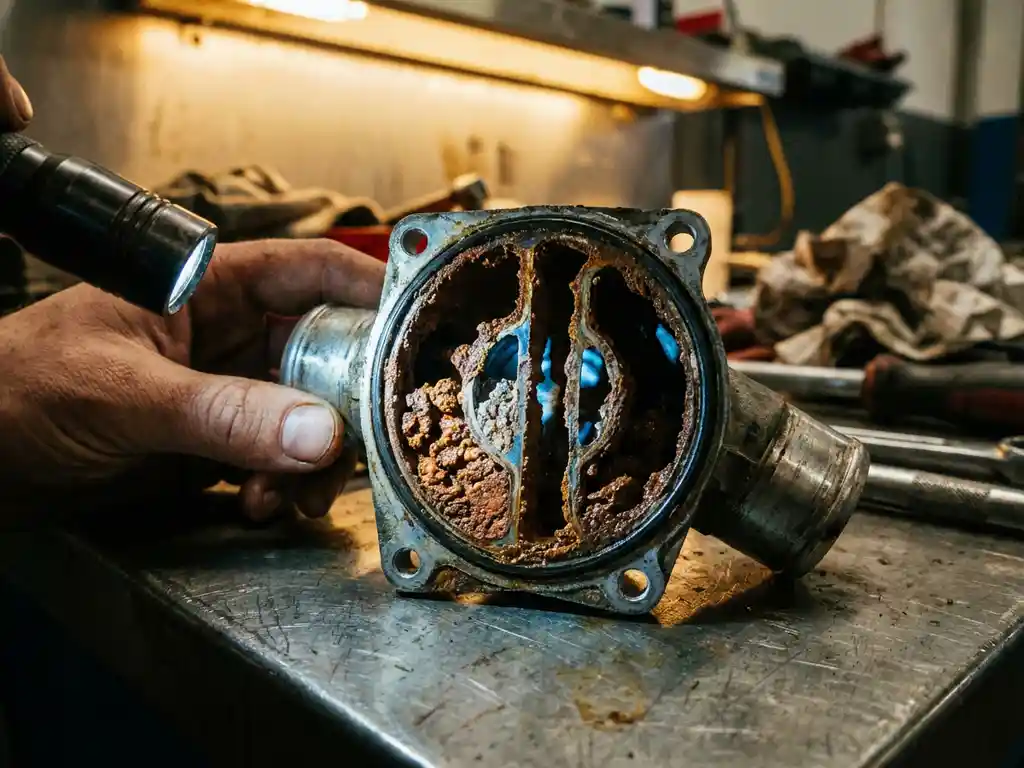
When your car’s engine starts acting up, one culprit you might not immediately think about is blocked thermostat coolant passages. These small but vital channels play a huge role in keeping your engine at the right temperature. When they get clogged, the consequences can range from poor performance to serious engine damage.
Understanding what happens when these passages become blocked can help you spot problems early and avoid costly repairs. Let’s dive into how these systems work and what goes wrong when they don’t.
What are thermostat coolant passages, and how do they work?
Thermostat coolant passages are small channels within the thermostat housing that allow coolant to flow between the engine and the radiator once the engine reaches operating temperature. The thermostat acts as a temperature-controlled valve, opening and closing these passages to regulate coolant flow and maintain an optimal engine temperature.
When your engine is cold, the thermostat stays closed, blocking the passages and preventing coolant from flowing to the radiator. This allows the engine to warm up quickly. Once the engine reaches its target temperature (typically around 85–95°C or 185–203°F), the thermostat opens, allowing coolant to flow through the passages to the radiator, where it can cool down before returning to the engine.
This system works through a wax element inside the thermostat that expands when heated. As the wax expands, it pushes a piston that opens the valve, creating a pathway for coolant flow. The precision of this mechanism is what makes modern automotive thermostats so effective at maintaining consistent engine temperatures.
What causes thermostat coolant passages to become blocked?
Thermostat coolant passages become blocked primarily due to coolant contamination, corrosion buildup, and debris accumulation over time. The most common cause is using improper coolant mixtures or neglecting regular cooling-system maintenance.
Several factors contribute to passage blockages:
- Rust and corrosion from old or contaminated coolant that create particles
- Scale buildup from hard water or improper coolant ratios
- Debris from a failing water pump or deteriorating hoses
- Sediment accumulation from infrequent coolant changes
- Chemical reactions between incompatible coolant types
Poor maintenance practices accelerate these problems. When coolant isn’t changed according to the manufacturer’s recommendations, it loses its protective properties and becomes acidic. This acidic coolant corrodes metal components throughout the cooling system, creating particles that can lodge in the narrow thermostat passages.
How do you know if your thermostat coolant passages are blocked?
You can identify blocked thermostat coolant passages through several warning signs: engine overheating, temperature-gauge fluctuations, poor heater performance, and coolant leaks around the thermostat housing. The most obvious symptom is an engine that consistently runs too hot or too cold.
Watch for these specific indicators:
- Temperature gauge reading higher than normal or fluctuating wildly
- Engine taking much longer than usual to warm up
- Weak or cold air from the heater even when the engine is warm
- Coolant bubbling in the reservoir when the engine is running
- White steam or a sweet smell from the engine bay
You might also notice that the upper radiator hose stays cool while the lower hose gets hot, indicating that coolant isn’t circulating properly through the thermostat. Professional diagnosis often involves checking coolant flow rates and temperature differentials across the thermostat housing to confirm blockages.
What happens to your engine when coolant passages are blocked?
When coolant passages are blocked, your engine experiences severe temperature-regulation problems that can lead to overheating, reduced performance, and potentially catastrophic engine damage. The blocked passages prevent proper coolant circulation, causing hot spots and uneven temperature distribution throughout the engine.
The immediate effects include reduced engine efficiency and increased wear on internal components. Your engine may run rough, lose power, or consume more fuel as it struggles to maintain optimal operating conditions. Cooling-system pressure can also increase dramatically, potentially causing hoses to burst or gaskets to fail.
Long-term consequences are much more serious. Persistent overheating can warp cylinder heads, damage head gaskets, or even crack the engine block. These repairs often cost thousands of euros and may require complete engine replacement. Additionally, overheating can damage other components, such as the water pump, radiator, and various sensors throughout the cooling system.
The heating system in your vehicle will also suffer, leaving you without proper cabin heat during cold weather. This isn’t just uncomfortable; it can also create safety issues with window defogging and visibility.
How BTT Solutions helps with thermostat coolant passage problems
We understand the critical role that properly functioning thermostat systems play in engine performance and longevity. Our precision-engineered automotive thermostats are designed to help prevent the common issues that lead to coolant passage blockages.
Here’s how we address these challenges:
- Advanced materials that resist corrosion and scale buildup
- Precision-machined passages that maintain optimal flow characteristics
- Rigorous quality testing to ensure consistent performance
- Compatible designs that work seamlessly with modern coolant formulations
Our thermostats undergo extensive testing to ensure they maintain proper flow rates and temperature control throughout their service life. By choosing quality components and following proper maintenance schedules, you can avoid the costly problems associated with blocked coolant passages. Contact us to learn more about how our thermostat solutions can protect your engine’s cooling system.
Related Articles
- How accurate is a wax element material in controlling fluid flow?
- 4 Key Metrics Fleet Operators Use to Measure Thermal Efficiency
- Why does engine temperature consistency matter for fuel economy?
- 5 Reasons Why OEMs Choose Wax Element Thermostats Over Electronic Alternatives
- What are the benefits of thermal management systems?


