
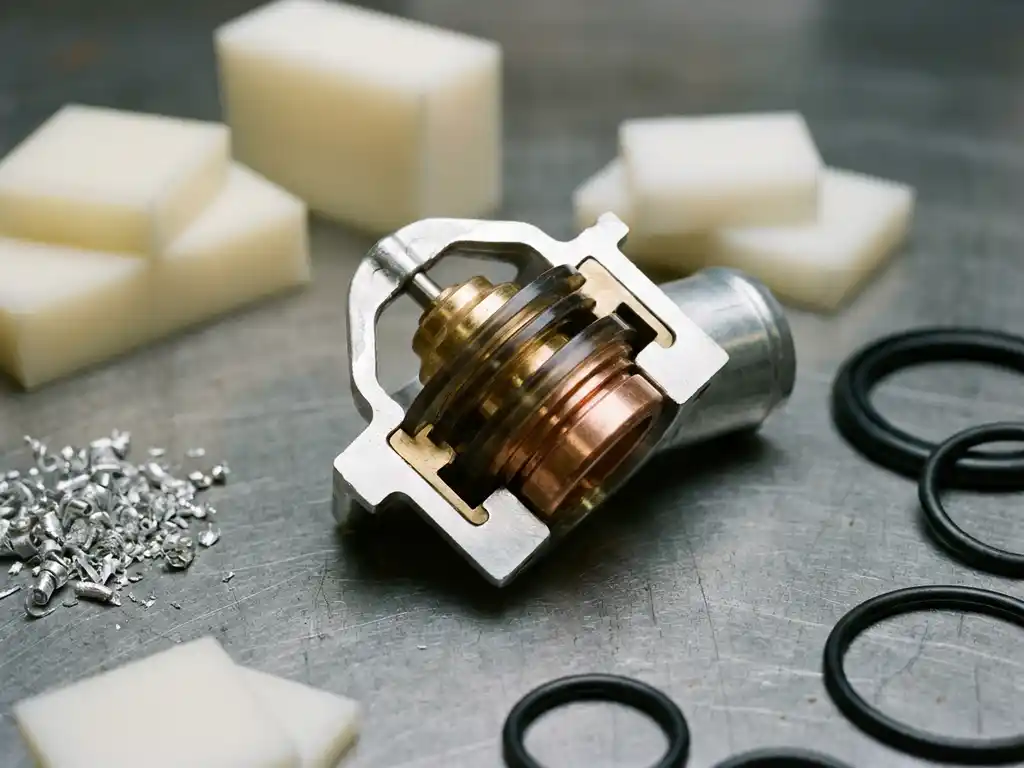
Housing materials are one of the most consequential decisions in thermostat component design. The material surrounding the thermostatic element directly affects how accurately the component responds to temperature changes, how long it lasts under operating stress, and whether it can meet the tightening performance standards demanded across automotive, industrial, and HVAC applications. The sections below walk through the key questions engineers and procurement teams typically ask when evaluating housing material options.
Which housing materials are most commonly used in thermostat components?
The most widely used materials in thermostat component design are engineering-grade plastics, aluminum, and brass. Each brings a different balance of thermal conductivity, weight, corrosion resistance, and machinability. The right choice depends heavily on the operating environment, the fluid or medium the housing contacts, and the temperature range the component must handle.
Engineering plastics such as polyamide (PA) and polyphenylene sulfide (PPS) dominate many modern automotive thermostat housings because they are lightweight, resist many coolants, and can be molded into complex geometries at scale. Aluminum is favored where higher structural strength and better heat dissipation are needed, while brass remains common in industrial and HVAC applications where corrosion resistance and long service intervals are priorities.
- Engineering plastics (PA, PPS, PBT): Lightweight, cost-effective, corrosion-resistant, suitable for most coolant-facing applications
- Aluminum: Strong, thermally conductive, widely used in high-load automotive and industrial settings
- Brass: Excellent corrosion resistance, traditional choice for HVAC, heating systems, and water-based circuits
- Die-cast zinc: Occasionally used where complex shapes and moderate thermal loads intersect
How does housing material affect thermostat performance and precision?
Housing material directly influences thermostat performance by affecting how quickly and uniformly heat transfers to the thermostatic element inside. A material with poor thermal conductivity can introduce a lag between the actual fluid temperature and the temperature the wax element or sensor experiences, which reduces precision and can cause the thermostat to open or close at the wrong moment.
This matters most in high-precision applications where tight temperature tolerances are non-negotiable. In modern engine management, for example, a thermostat that opens even a few degrees late can affect combustion efficiency and emissions output. The housing material also determines how well the component maintains dimensional stability under repeated thermal cycling. If the housing expands or contracts at a rate that is incompatible with the internal element, the sealing surfaces can degrade, introducing leakage or inconsistent valve behavior over time.
Thermal expansion behavior in the housing is therefore not just a durability concern but a precision concern. Engineers working on thermostat component design need to match the coefficient of thermal expansion of the housing to the other materials in the assembly to prevent stress buildup that could alter opening temperatures across the product’s service life.
What’s the difference between plastic and metal thermostat housings?
The core difference between plastic and metal thermostat housings comes down to thermal conductivity, weight, and structural load capacity. Metal housings conduct heat faster and handle higher mechanical loads, while plastic housings are lighter, resist corrosion, and offer more design flexibility at lower production cost.
Plastic thermostat housings
Modern engineering plastics have closed much of the performance gap with metals in many applications. High-performance polymers like PPS can withstand continuous temperatures well above 200°C and resist aggressive coolants and oils. Their lower density reduces overall system weight, which is a meaningful advantage in automotive applications where every gram contributes to fuel consumption. They also allow for more complex integrated geometries, reducing the number of separate parts in an assembly.
Metal thermostat housings
Aluminum and brass housings still lead where structural integrity, high-pressure resistance, or rapid heat transfer is the priority. In heavy-duty industrial applications or marine systems, where the housing may be exposed to significant mechanical vibration or high-pressure fluid circuits, metal provides a margin of safety that plastics cannot always match. Metal housings also tend to perform more predictably over very long service intervals, which is why they remain the standard in many industrial thermomanagement components.
How do housing materials influence thermostat lifespan and reliability?
Housing material selection is one of the primary drivers of thermostat durability and long-term reliability. The material must resist chemical degradation from the fluids it contacts, maintain its mechanical properties through thousands of thermal cycles, and preserve dimensional accuracy so the valve mechanism continues to function correctly throughout the product’s intended service life.
Corrosion is the most common failure mode in metal housings, particularly in water-based heating and cooling circuits where the fluid chemistry can vary. Brass and stainless steel offer strong corrosion resistance, while standard aluminum may require protective coatings in aggressive environments. For plastic housings, the risk is chemical compatibility: not all polymers resist every coolant additive or oil type equally, so material selection must account for the specific fluid the housing will encounter.
Thermal cycling fatigue is a subtler but equally important factor. Every time a thermostat opens and closes, the housing expands and contracts. Over millions of cycles, materials that are poorly matched to the thermal environment can develop micro-cracks at sealing surfaces or joint interfaces. Choosing thermostat durability materials that are specifically rated for the expected cycle count and temperature range is essential for components that need to perform reliably over vehicle or system lifetimes measured in years or decades.
What role do housing materials play in emission and efficiency targets?
Housing materials play a meaningful supporting role in meeting emission and efficiency targets, primarily through their influence on warm-up behavior and thermal precision. A thermostat that reaches its operating temperature faster and holds it more accurately helps the engine or system run in its optimal efficiency window for more of its operating time, which directly reduces fuel consumption and emissions output.
Lighter plastic housings contribute to vehicle-level weight reduction, which is a well-established lever for improving fuel economy. More directly, housing materials that enable tighter manufacturing tolerances allow the thermostatic element to operate with greater precision, meaning the engine spends less time running too cold (inefficient combustion) or too hot (increased NOx emissions). As regulatory pressure on emissions continues to intensify in 2026, the ability to specify housing materials that support tighter temperature control is becoming a genuine competitive differentiator for component manufacturers and the OEMs they supply.
How are housing material requirements different across automotive, industrial, and HVAC applications?
Housing material requirements vary significantly across automotive, industrial, and HVAC applications because each environment presents a different combination of operating temperatures, fluid types, mechanical loads, and service interval expectations. There is no universal best material – the right choice is always application-specific.
Automotive applications
In passenger vehicles and commercial vehicles, the emphasis is on weight reduction, high-cycle durability, and compatibility with modern coolant formulations. Engineering plastics are increasingly dominant here, supported by stringent validation testing to ensure they meet OEM lifetime requirements. Precise thermal expansion behavior in the housing is critical because modern engine management systems depend on the thermostat operating within very tight temperature bands to optimize combustion and meet emissions standards. Learn more about our background in automotive thermomanagement and how these requirements have shaped our product development.
Industrial applications
Industrial thermomanagement components are often exposed to more aggressive conditions: higher pressures, wider temperature swings, less predictable fluid chemistry, and much longer expected service intervals. Metal housings, particularly brass and aluminum alloys, remain common because they offer the structural robustness and chemical resistance that many industrial circuits demand. The priority shifts from weight saving to reliability over long maintenance cycles, often measured in years rather than months.
HVAC and building technology
In heating systems, radiators, and underfloor heating circuits, the fluid temperatures are generally lower but the corrosion exposure from water-based systems can be significant over time. Brass has a long track record in these applications and remains widely specified. However, as building technology evolves and system designers look to reduce costs and improve installation flexibility, engineered plastics are gaining ground in some HVAC thermostat housing applications where operating conditions allow it.
How BTT Solutions supports your housing material decisions
Choosing the right thermostat housing material is rarely straightforward. It involves balancing performance requirements, fluid compatibility, manufacturing constraints, and cost targets that are unique to every application. That is exactly where we can help.
At BTT Solutions, we work directly with engineers and procurement teams to identify the housing material and component configuration that best fits their specific thermomanagement requirements. Our product advisory covers:
- Material selection for thermostat housings across plastic, aluminum, and brass options
- Wax element and thermostat insert specification matched to your operating temperature range
- Guidance on thermal expansion behavior and dimensional compatibility for your assembly
- Application-specific recommendations for automotive, industrial, and HVAC environments
- Support for emission and efficiency targets through precision component design
We are a focused, mid-sized team with deep expertise in high-precision thermomanagement components, which means you get direct access to specialists rather than being passed through layers of account management. Whether you are developing a new platform or optimizing an existing design, we bring the technical depth and responsiveness to move quickly. Get in touch with our team to discuss your housing material requirements and find the right solution for your application.
Related Articles
- How do you validate a thermostat for use in safety-critical applications?
- What certifications should an automotive thermostat manufacturer have?
- What is the difference between a thermostat and a temperature sensor?
- Why is thermal management important in automotive design?
- How is a thermostat calibrated during manufacturing?


